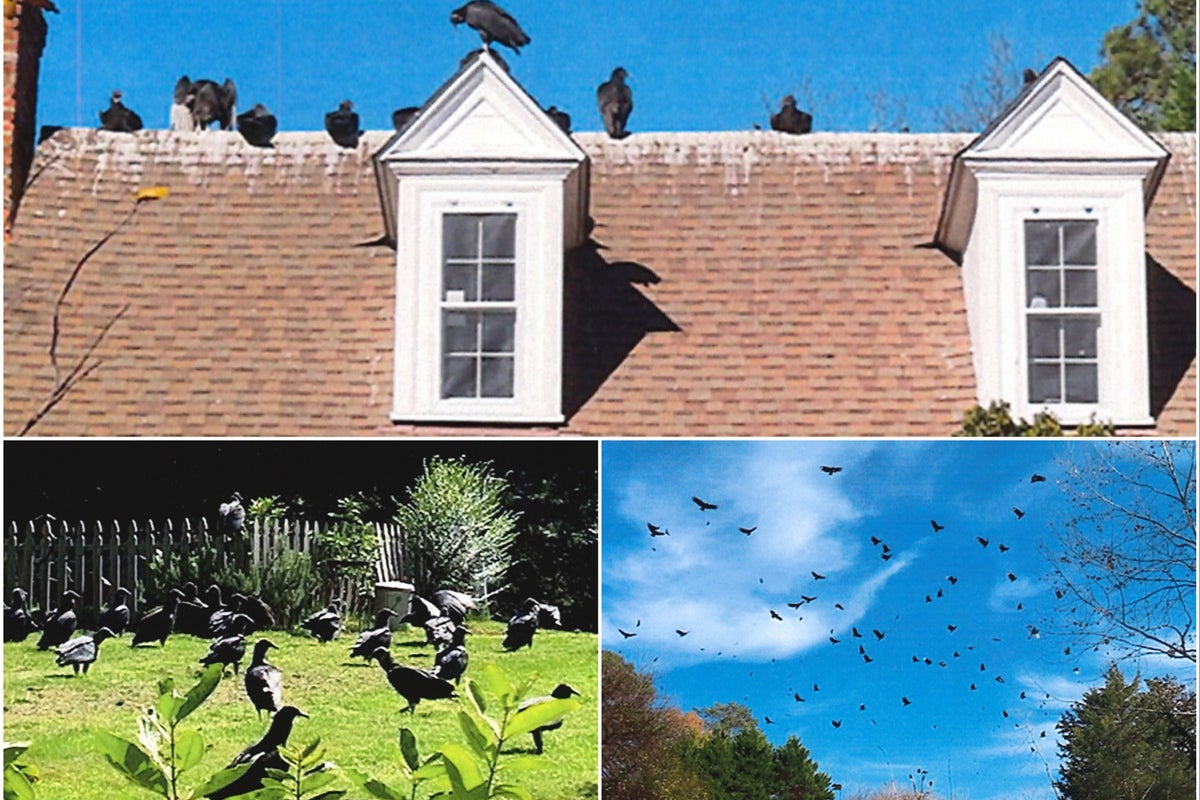
The residents of Bunnlevel, North Carolina, are currently losing their minds because a few dozen black vultures have decided to treat a local cul-de-sac like a five-star resort. The neighbors are complaining about the smell. They’re crying about bird droppings on their shingle roofs. They’re pointing fingers at a couple that dares to feed the local wildlife.
The town says it’s a public health crisis. The neighbors say it’s a nightmare. They’re both wrong.
What we’re witnessing in North Carolina isn't a "pest infestation." It’s a biological audit of a failed ecosystem. While the suburbanites reach for their air horns and pressure washers, they’re missing the point: the vulture is the only thing standing between your manicured lawn and a genuine disease outbreak.
The Lazy Consensus of "Nuisance" Wildlife
The standard narrative—pushed by lazy local news cycles and agitated HOA presidents—is that vultures are "gross." This is a fundamental misunderstanding of biological utility. We have spent decades sanitizing our living spaces, pushing out "ugly" predators and scavengers, only to be surprised when the natural world bites back.
Vultures are the Janitorial Corps of the planet. They aren't just eating trash; they are neutralizing threats that would kill a human in forty-eight hours.
Consider the gastric acidity of a black vulture. We are talking about a pH level near zero. Their stomachs are literal vats of acid capable of dissolving anthrax, botulism, and cholera. When a deer dies in the woods behind your $500,000 "custom build," it becomes a breeding ground for pathogens. If a vulture eats it, those pathogens die. If the vulture isn't there because you scared it off with a Mylar balloon, those pathogens seep into the groundwater or get carried into your house by your Golden Retriever.
The neighbors in Bunnlevel aren't fighting birds; they are fighting the very mechanism that keeps their neighborhood sterile.
Why "Don’t Feed the Animals" Is a Failed Policy
The primary villain in the competitor’s story is a couple who reportedly feeds the vultures. The town wants to fine them. The neighbors want them evicted.
The "Don't Feed the Animals" mantra is the favorite tool of the bureaucrat because it shifts the blame from systemic environmental failure to individual behavior. In reality, vultures don't congregate in massive numbers just because someone threw out a handful of cat food. They congregate because the local environment is providing a massive, unaddressed caloric surplus.
In North Carolina, that surplus comes from roadkill, improper waste management, and the destruction of traditional roosting sites. By clearing forests to build another "Meadow View" subdivision, developers destroy the high-canopy trees where these birds naturally live. The birds don't disappear; they adapt. They move to the next best thing: your dark, heat-absorbing asphalt shingles.
Feeding them is a symptom, not the cause. If the neighbors want the birds gone, they shouldn't be harassing the couple next door. They should be looking at the 400% increase in road-tossed deer carcasses and the lack of apex predators in the county.
The Suburban Hypocrisy of "Nature"
People move to the "countryside" of North Carolina because they want to be "near nature." What they actually mean is they want a high-definition wallpaper of nature that doesn't poop on their car.
Suburbanites love the "good" animals—the songbirds, the deer, the butterflies. But nature isn't a Disney movie; it’s a closed-loop system. You cannot have the deer without the scavenger. When you invite the "cute" wildlife into your backyard with bird feeders and salt licks, you are effectively setting a table for the "ugly" wildlife to clear.
Black vultures (Coragyps atratus) are highly social, extremely intelligent, and biologically essential. In India, the near-extinction of vulture populations led to a massive spike in feral dog populations and, subsequently, a rabies epidemic that cost the country billions and tens of thousands of lives.
When you drive vultures out of a neighborhood, you aren't creating a cleaner space. You are opening a vacancy for rats, feral cats, and disease-carrying insects. You are trading a bird that looks scary for a bacterium that will actually kill you.
Your Roof Is Not a Sacred Temple
The most common complaint in these neighbor disputes involves property damage. Vultures have a habit of picking at rubber seals, caulking, and roof shingles.
I’ve seen homeowners spend thousands on "vulture effigies"—plastic owls or hanging dead-bird decoys—to protect their investments. It’s a waste of money. Vultures pick at roofs because they are curious and social. They aren't trying to destroy your home; they are interacting with an environment that we forced upon them.
If you’re worried about your property value, stop looking at the birds and start looking at your landscape. The obsession with "clean" suburban aesthetics is what creates these friction points. We build houses that look like giant, warm rocks (perfect for roosting) and then get offended when a rock-dwelling bird decides to sit on them.
The Real Cost of "Managing" Wildlife
The USDA Wildlife Services often gets called in to "disperse" these colonies. This usually involves pyrotechnics, lasers, or lethal removal.
Here is the inconvenient truth: it doesn't work.
Vultures are philopatric. They have an incredible memory for locations. You can blast them with sirens today, but they—or their offspring—will be back next season because the biological conditions that invited them (heat thermals from the pavement and available food) haven't changed.
The town of Bunnlevel is threatening legal action against the couple feeding the birds. This is a classic "government-as-the-hammer" solution. It satisfies the angry mob, but it does nothing to address the fact that the suburban sprawl has disrupted the local scavenger-to-carcass ratio.
Instead of fines, the town should be looking at "vulture restaurants"—dedicated areas away from residential zones where carcasses are placed to draw the birds out of the cul-de-sacs. But that would require a budget and an admission that the birds belong here. It’s much easier to fine a retiree.
The Myth of the "Aggressive" Vulture
One of the most pervasive lies in these local news reports is the idea that vultures are a threat to pets or children.
Black vultures are scavengers. They lack the powerful talons of hawks or eagles. Their feet are flat, more like a chicken’s, designed for walking on the ground, not snatching up a Pomeranian. While they can be bold in large groups, the "danger" they pose is almost entirely psychological. They represent death, so we fear them. We project our anxieties about mortality onto a bird that is literally trying to keep the environment clean.
If your neighborhood has a vulture problem, you don't have a bird problem. You have a waste problem. You have a development problem. You have a lack-of-predator problem.
Stop Whining and Start Coexisting
The "vulture couple" in North Carolina isn't the problem. The problem is a suburban culture that views any interaction with the raw, unpolished side of nature as a violation of their rights.
We have spent the last century trying to dominate the landscape. We’ve paved it, manicured it, and lit it up with streetlights. And now, when a highly efficient, ancient species of scavenger decides to take advantage of the mess we’ve made, we call the cops.
The vultures aren't taking over your neighborhood. They’re just waiting for you to realize that you’re living in theirs.
Stop trying to "fix" the bird situation. Fix your relationship with the ecosystem. If you can’t handle a scavenger on your roof, you shouldn't have moved to the woods in the first place. Put down the air horn, cancel the HOA meeting, and let the birds do the job they’ve been doing since before your subdivision was a twinkle in a developer’s eye.
The vultures aren't the villains. They're the only ones working for free to keep your neighborhood from rotting.