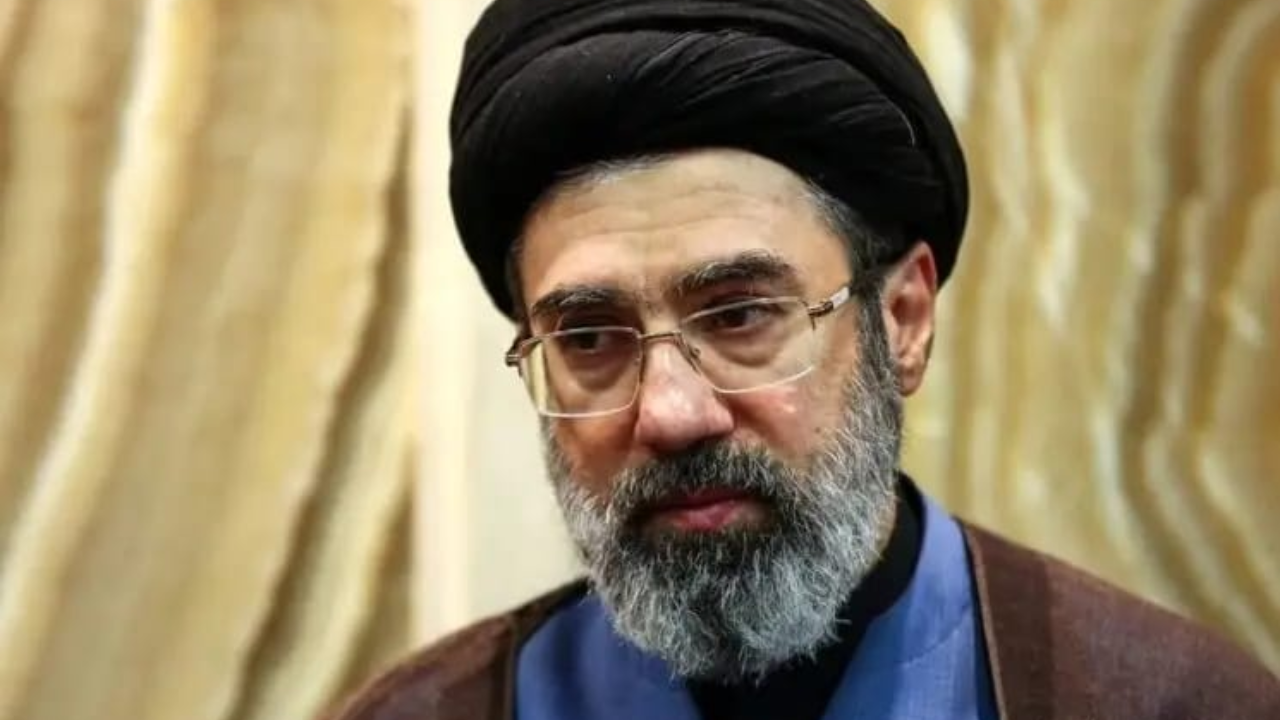
The stability of the Iranian political system hinges on a singular, high-stakes transition: the selection of the third Supreme Leader. While the Assembly of Experts is the constitutional body charged with this task, the actual mechanism of power transfer is a function of institutional alignment between the Office of the Supreme Leader (Beyt-e Rahbari), the Islamic Revolutionary Guard Corps (IRGC), and the clerical establishment in Qom. Mojtaba Khamenei, the second son of Ali Khamenei, has emerged not merely as a familial successor, but as the central node in a complex web of security and financial interests designed to ensure system survival beyond his father’s tenure.
The Architecture of Influence: Beyond Hereditary Logic
To interpret Mojtaba Khamenei’s rise through the lens of a "monarchical" succession is a category error that ignores the unique bureaucratic-theocratic synthesis of the Islamic Republic. His authority is not derived from a formal title, but from his role as the primary gatekeeper to the Beyt. This position allows him to manage the flow of information and access to the current Supreme Leader, effectively presiding over the informal shadow government that directs Iran’s strategic orientation.
The Security-Intelligence Nexus
Mojtaba’s most potent asset is his deep integration with the IRGC’s intelligence apparatus and the Basij paramilitary forces. Unlike his father, who spent years building a religious and political resume in the public eye, Mojtaba operates within the "Deep State" of the security services.
- The 2009 Proof of Concept: His role in suppressing the Green Movement signaled his commitment to "Securitized Clericalism"—a doctrine that prioritizes regime stability over republican legitimacy.
- The Intelligence Consolidation: He was instrumental in the elevation of figures like Hossein Taeb, the former head of the IRGC Intelligence Organization. This alliance created a feedback loop where the security services provide the muscle for political purges, while the Beyt provides the religious and legal cover.
The Three Pillars of Succession Viability
For any candidate to succeed Ali Khamenei, they must satisfy three structural requirements. Mojtaba’s candidacy is defined by how he optimizes for these variables while navigating the inherent risks of his profile.
1. The Clerical Credentialing Process
The Supreme Leader must, by law, be a high-ranking cleric. Mojtaba’s transition from Hojatoleslam to Ayatollah was a calculated move to meet the minimum threshold of the 1989 constitutional revision. In 2022, state-affiliated media began referring to him as "Ayatollah," a designation that met with silence from the grand maraji of Qom. This silence is not necessarily endorsement; it is a recognition of the shift in power from the seminary to the garrison. The "quietist" clerics in Qom view his rise with suspicion, fearing that a hereditary succession would permanently damage the religious credibility of the Velayat-e Faqih (Guardianship of the Jurist).
2. IRGC Alignment and Resource Control
The IRGC is no longer just a military wing; it is a multi-sector conglomerate controlling an estimated 20-30% of the Iranian economy. The Corps requires a leader who will protect its economic interests and maintain its "Forward Defense" strategy in the Levant and Yemen. Mojtaba’s long-standing relationship with the IRGC leadership makes him a known quantity. He represents continuity in a system that views radical change as an existential threat.
3. Management of the Financial Parastatals
The Supreme Leader controls a massive network of charitable foundations known as Bonyads, such as Setad (Execution of Imam Khomeini’s Order). These entities operate outside of parliamentary oversight. Mojtaba’s involvement in the management of these assets provides the financial patronage necessary to buy loyalty during a transition period. A successor without control over this "shadow economy" would be a lame-duck leader from day one.
The Cost Function of a Mojtaba Succession
Despite his institutional advantages, Mojtaba’s path is obstructed by significant internal and external frictions. The "Cost Function" of his succession includes the potential for civil unrest and the alienation of traditional power brokers.
The Legitimacy Deficit
The 1979 Revolution was framed as an overthrow of hereditary monarchy. Installing the son of the current leader creates a rhetorical crisis for the regime. It validates the criticism that the Islamic Republic has devolved into the very system it sought to replace. This deficit is a liability that rivals like the late Ebrahim Raisi did not possess. With Raisi’s death in a 2024 helicopter crash, a major "official" rival was removed, but the vacuum increased the visibility—and the target—on Mojtaba.
The Internal Resistance
Not all elements of the IRGC or the traditional conservative factions (Osulgarayan) favor a dynastic shift. There are "Pragmatic Conservatives" who believe a succession that looks too much like a coronation will trigger a popular uprising. The risk of widespread civil disobedience, similar to the "Woman, Life, Freedom" protests of 2022, acts as a deterrent. If the security costs of installing Mojtaba exceed the benefits of his perceived stability, the IRGC may pivot to a "Council of Leadership" or a less polarizing figure.
The Mechanism of the Secret Committee
The Assembly of Experts maintains a highly classified committee of three members who have already vetted and narrowed down a list of potential successors. While the names are secret, the criteria are transparent:
- Anti-Western Orthodoxy: The candidate must be committed to the "Look to the East" policy, strengthening ties with Russia and China.
- Internal Cohesion: The candidate must be able to mediate between the competing factions of the IRGC and the Ministry of Intelligence (MOIS).
- Theological Flexibility: The candidate must be willing to use religious rulings to justify state interests (Maslahat).
Mojtaba fits these criteria more precisely than any other living figure. His lack of a public profile is actually a tactical advantage; he has few public failures or unpopular policy stances directly tied to his name, unlike past presidents.
The Pivot Toward Totalitarian Consolidation
The shift from Ali Khamenei to Mojtaba Khamenei would represent a transition from "Competitive Authoritarianism" to a more "Monolithic Totalitarianism." Under the current Leader, there has always been a modicum of competition between the presidency and the Beyt. A Mojtaba-led system likely eliminates this friction, as the presidency would become a purely administrative role, subordinate to the security-clerical alliance centered in the Leader’s office.
This consolidation creates a bottleneck. By centralizing all power in a single family and its security entourage, the regime loses its ability to use "elections" or "cabinet reshuffles" as a pressure valve for public anger. In this scenario, every failure of the state—from inflation to water shortages—is attributed directly to the Leader.
Strategic Forecast: The Managed Transition
The most probable scenario is a "managed transition" where Ali Khamenei abdicates or secures the vote of the Assembly of Experts while he is still alive. This "living succession" would allow the elder Khamenei to suppress dissent using his remaining prestige, effectively installing Mojtaba before a power vacuum can form.
If this occurs, expect a two-stage stabilization process:
- The Immediate Purge: A rapid crackdown on both reformist remnants and "rival" conservative factions to signal strength.
- Economic Concessions: An attempt to use Bonyad resources to temporarily stabilize the Rial and provide subsidies, buying a "honeymoon" period with the lower-income base of the Basij.
The durability of a Mojtaba Khamenei era will not be determined by his religious scholarship, but by his ability to maintain the "loyalty-for-loot" contract with the IRGC. If the Iranian economy continues its structural decline, the cost of maintaining this loyalty will rise, forcing the regime into increasingly desperate domestic or regional escalations to justify its existence. Investors and regional actors should prepare for a leader who is more insular, more reliant on the security apparatus, and less concerned with the traditional optics of revolutionary legitimacy.


