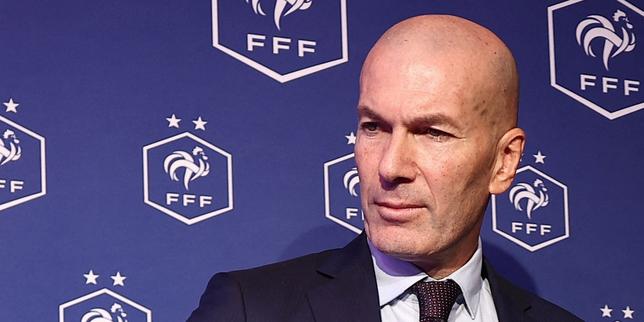
National team management operates under a distinct set of operational constraints compared to club football. A national coach faces severe structural limitations: zero transfer windows, minimal training contact hours, and a compressed tournament cycle where tactical cohesion must be achieved through instinct rather than exhaustive drill repetition. Within this high-variance environment, the hypothetical transition of Zinedine Zidane to the French national team managership represents a convergence of elite pedigree and systemic risk. Evaluating this potential appointment requires moving past romanticized narratives of legendary status and instead analyzing the underlying mechanics of international succession, cultural authority, and tactical continuity.
The Institutional Weight of Cultural Authority
In elite sports governance, a manager's currency is divided into two distinct ledgers: tactical innovation and psychological leverage. Zidane occupies a singular tier regarding the latter. His legacy as a player who secured a World Cup and a European Championship for France provides immediate institutional immunity from external media pressure—a primary destabilizing factor for any occupant of the French dugout. Discover more on a related issue: this related article.
When a coach possesses absolute authority rooted in peer-level respect, the player-manager dynamic shifts from contractual obedience to voluntary alignment. This dynamic is critical during major tournaments where squad harmony degrades under the weight of ego and fatigue. Zidane demonstrated this capability at Real Madrid, where managing generational egos required a specific brand of stoic diplomacy rather than micro-managed tactical dictation.
However, relying entirely on aura introduces a structural vulnerability. Cultural authority decays rapidly when results diverge from expectations. Without the daily operational cadence of a club facility to fix structural flaws, a national team manager must convert prestige into immediate tactical clarity. If the psychological lift fails to yield results within the first three competitive fixtures, the currency of past glory depreciates sharply. More analysis by CBS Sports delves into similar perspectives on this issue.
Tactical Frameworks and the Myth of the Pragmatist
Popular discourse frequently mischaracterizes Zidane as a manager who succeeds purely through man-management rather than tactical structure. Empirical observation of his tenure at Real Madrid reveals a different operational reality: a preference for asymmetric spatial occupation, fluid central overloads, and tactical flexibility dependent on elite midfield recycling.
In the context of the French national team, the tactical imperative differs from club management. France possesses an extraordinary talent surplus, particularly in transitional speed and physical dueling capacity. A transition to Zidane's methodology would likely formalize a shift away from pragmatic, low-block counter-attacking structures toward a proactive, possession-dominant blueprint that maximizes the technical ceilings of elite midfielders and dynamic wide forwards.
The friction point lies in the pool of available players. International managers cannot scout profiles to fit a bespoke tactical requisition; they must optimize the intersection of available club-trained profiles. Zidane’s historical reliance on elite technicians (such as Toni Kroos and Luka Modrić) implies that any deployment of the French squad would necessitate finding equivalent distribution hubs within the national setup. If the central midfield axis lacks the press-resistance required to sustain prolonged possession phases, the system experiences structural failure under high-intensity defensive pressure.
The Succession Lifecycle and Continuity Risk
Any managerial succession carries an inherent transition cost. Didier Deschamps’ tenure established a hyper-stable, risk-averse operational baseline characterized by defensive solidity, tournament resilience, and defined structural hierarchies. Replacing a long-tenured incumbent with a distinct personality disrupts established communication channels and cultural norms within the federation.
Transitions of this magnitude typically follow a predictable efficiency curve:
- Phase One (The Honeymoon Window): Immediate tactical adjustments yield a surge in squad motivation, accompanied by favorable media reception and simplified qualification fixtures.
- Phase Two (The Stress Test): The first major tournament encounter against an elite tactical opponent exposes latent structural weaknesses in the new system.
- Phase Three (Institutional Calibration): The manager either adapts the tactical architecture to international football realities or faces accelerated scrutiny from the governing body.
The risk for France is not a lack of talent, but the friction of modernization. Moving from a defensive-first paradigm to a proactive, possession-based framework requires an adjustment period that international calendars rarely accommodate. Qualification matches offer minimal tactical rehearsal time, forcing managers to rely heavily on club-level habits that may conflict with national team requirements.
Resource Allocation and Talent Optimization
The core challenge for any incoming French manager is the allocation of central attacking minutes among a crowded cohort of elite forwards. Modern international football penalizes rigidity. Squads must maintain multiple tactical modes—shifting from high-press initiation to mid-block containment depending on game state and opponent capability.
Zidane’s operational history indicates a preference for structural stability over constant experimentation. He favors a settled core, often utilizing a core group of trusted operators to maintain stability across competitions. While this builds exceptional cohesion among starters, it can compress the talent pipeline for emerging prospects, creating a performance ceiling if the core group experiences physical decline or loss of form.
Maximizing the French roster requires designing tactical routes that accommodate multiple stylistic profiles without fracturing defensive equilibrium. The structural advantage France holds over continental rivals is sheer depth; the strategic failure mode is the inability to integrate that depth into a cohesive collective framework during compressed tournament windows.
To execute a successful transition, the French Football Federation must weigh the diminishing returns of continuity against the high-variance potential of a cultural and tactical reset. The appointment would not merely change the voice in the dressing room; it would redefine the strategic risk profile of one of international football's most potent institutions.