The air inside the San Francisco courtroom in the spring of 1979 was thick with a heavy, collective exhaustion. It was the kind of silence that settles over a room when everyone knows they are witnessing history, even if they cannot yet comprehend the damage being done to the floorboards beneath them.
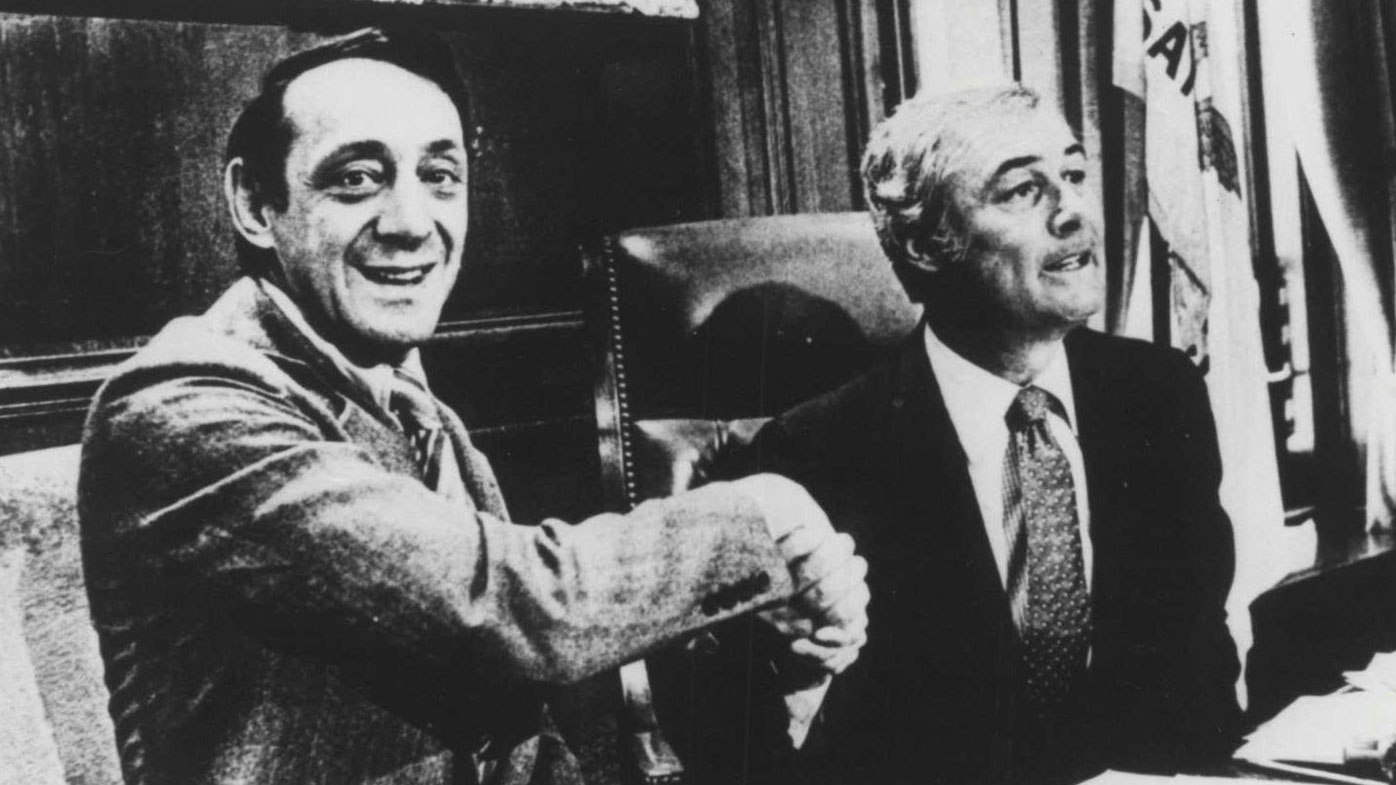
Dan White sat at the defense table. He looked less like a double assassin and more like a deflated high school quarterback whose glory days had vanished a decade prior. He was a former police officer, a former firefighter, and a former city supervisor. To the naked eye, he was the boy next door. But on November 27, 1978, that same boy next door had slipped through a basement window of City Hall to bypass metal detectors. He carried a .38-caliber revolver and extra ammunition in his pockets. Within minutes, San Francisco Mayor George Moscone and Supervisor Harvey Milk—the first openly gay elected official in California history—lay dead in pools of blood on their office floors.
It was an open-and-shut case of cold-blooded, premeditated murder. Or so the world believed.
What happened over the course of that trial did not just shock the city. It shattered the public’s foundational trust in the legal system and birthed a cynical cultural myth that still haunts our lexicon today: the Twinkie defense.
The Anatomy of a Collapse
To understand how a man could execute two city leaders and walk away with a conviction for mere voluntary manslaughter, you have to look past the sensational headlines. You have to look at the trash can in Dan White’s apartment.
Before the killings, White was known as a fitness fanatic, a clean-cut man who obsessed over his health. But as his political career derailed and financial pressures mounted, something shifted. His defense team, led by attorney Douglas Schmidt, did not argue that White was insane. Instead, they spun a narrative of profound, paralyzing depression.
As a metaphor for White's unraveling mental state, the defense pointed to his sudden, drastic change in diet. The man who once lived on salads and lean meats began consuming an avalanche of junk food. Coca-Cola. Hostess Twinkies. Potato chips.
Enter Dr. Martin Blinder, a prominent psychiatrist called to the stand. He testified that when individuals become severely depressed, they frequently turn to junk food to cope. This sudden influx of refined sugar and chemicals, Blinder argued, exacerbated an already volatile chemical imbalance in White’s brain. The defense team argued that this sugar-fueled state of mind meant White was incapable of the premeditation required for a first-degree murder conviction.
The media, hungry for a bizarre hook, seized upon the testimony. They distilled weeks of complex psychiatric debate into a single, absurd phrase. They told the world that Dan White’s lawyers claimed Twinkies made him do it.
The Misunderstood Precedent
The outrage was instant, blinding, and entirely justified, though it was aimed at a slight mischaracterization of the legal strategy. The defense never actually claimed the Twinkies caused the murders. They used the junk food as a symptom, a physical manifestation of a mind that had completely lost its bearings.
Yet, the legal reality was no less terrifying than the media myth. The jury, comprised largely of conservative, working-class citizens who identified with White’s demographic background, bought into the broader argument of "diminished capacity." This was a legal doctrine in California that allowed a jury to find a defendant lacked the capacity to form specific intent due to mental illness or intoxication.
Consider the mechanics of that decision. The prosecution relied heavily on the sheer brutality and calculation of the act—the basement window entry, the re-loading of the gun between shootings. They expected the facts to speak for themselves. They assumed the jury would see a political assassination.
Instead, the defense humanized a killer by focusing on his vulnerabilities, his downward spiral, and his chemical-laden comfort food. They took a monster and turned him into a tragic figure pushed to the brink by stress and sugar. When the jury returned with a verdict of voluntary manslaughter rather than first-degree murder, the courtroom gasped. White was sentenced to just over seven years in prison. With good behavior, he would be out in less than five.
The city exploded.
Fire on Market Street
That night, the collective grief of San Francisco's marginalized communities, particularly the gay community that had found a savior in Harvey Milk, turned to white-hot rage. The White Night Riots tore through the civic center. Police cruisers were overturned and set ablaze. Market Street became a war zone of shattered glass and tear gas.
The fury stems from a deep, intrinsic human need for the punishment to fit the crime. When the legal system allows a technicality, or a clever psychiatric narrative, to absolve a killer of the ultimate responsibility, it breaks a sacred social contract. The public felt a sickening realization: justice was not blind; it was easily manipulated by a narrative of self-pity and junk food.
The legacy of that verdict changed the landscape of American law almost immediately. The public backlash was so severe that in 1982, California voters overwhelmingly passed Proposition 8, which effectively abolished the diminished capacity defense in the state. No longer could a defendant argue that mental illness short of legal insanity prevented them from intending to kill. The loophole was closed, welded shut by the memory of a city in flames.
The Final, Bitter Taste
The story of Dan White did not end with his release from prison in 1984. He returned to San Francisco, a ghost haunting a city that loathed his very existence. He lived in the shadows, unable to escape the stigma of the crime or the mockery of the defense that saved him.
In October 1985, less than two years after his release, White went into the garage of his wife's home. He attached a garden hose to the exhaust pipe of his yellow Buick LeSabre, climbed inside, and turned on the engine. He died of carbon monoxide poisoning at the age of 39.
Ultimately, the sugar-coated defense bought him freedom from a prison cell, but it could not buy him a life. It left behind a cynical blueprint for high-profile defense strategies and an enduring warning about what happens when a courtroom values the comfort of a killer over the lives of his victims. The myth of the Twinkie defense remains a bitter pill to swallow, a reminder that sometimes, the narratives we construct in the pursuit of justice only serve to obscure the truth.
The blood on the City Hall floor was real. The grief was real. And no amount of sugar could ever sweeten the stain of a compromised verdict.