The air in August did not move. It sat heavy, thick with the smell of scorched asphalt and dry dust, pressing against windows like an uninvited guest who refused to leave the porch long after the party had ended.
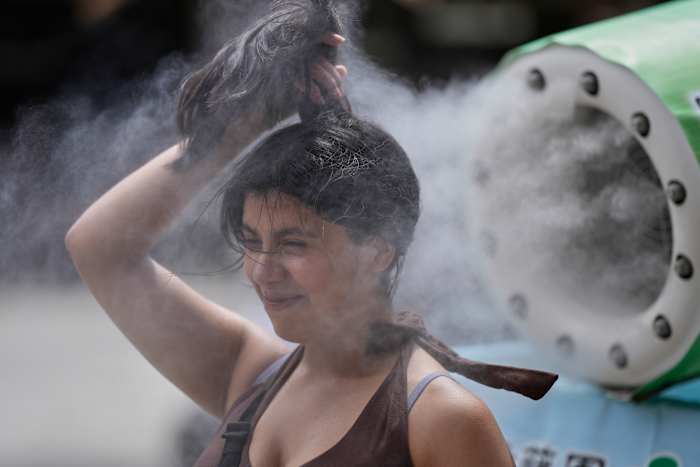
Across the northern hemisphere, millions of people woke up to the exact same routine. Check the phone. Look at the triple-digit forecast. Calculate how long the walk from the air-conditioned office to the car would feel. We treat these numbers as temporary annoyances. We treat them like bad weather.
They are not bad weather. They are a new address.
Scientists dropped the numbers on a table that felt less like a conference room and more like a crime scene. August had broken the ceiling again. According to global climate monitoring systems, it was officially recorded as the hottest August Earth has ever measured, capping off a relentless sequence of months that have redefined what normal feels like.
Consider what happens next: the headlines flash for twenty-four hours, the algorithms pivot to the next crisis, and we go back to turning our thermostats down two degrees lower than yesterday.
I remember standing on a cracked concrete patio in late August, watching the leaves of a mature maple tree curl inward, crisp and brown before September had even whispered its name. That tree had stood for fifty years. It knew the rhythms of the seasons better than any calendar. Yet, it stood helpless under a sky that felt bruised by heat. That is the core of the crisis. It is not an abstract spreadsheet managed by meteorologists in Geneva. It is the slow, agonizing dehydration of the world outside your window.
Let us be honest about the numbers for a moment, stripped of their clinical detachment. When scientists talk about global temperature anomalies rising by fractions of a degree, it sounds small. Insignificant, even. But think of it this way: your body runs at a steady ninety-eight point six degrees. If that internal thermostat creeps up by just two degrees, you are sweating, shivering, delirious, and fighting for your balance. The planet operates on a similar, razor-thin margin of equilibrium. Shift the baseline by a fraction, and the engine starts to throw sparks.
We have normalized the abnormal.
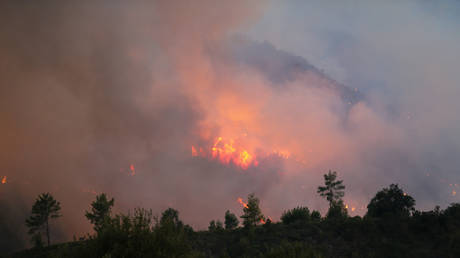
A red flag warning becomes just another Tuesday. A water restriction notice becomes a sign on the community lawn. Wildfire smoke turns the noon sun the color of a bruised peach, and we simply slip an N95 mask over our faces, mutter a complaint about the visibility, and drive to the grocery store anyway. We adapt because we must. But adaptation without acknowledgment is just slow surrender.
Take a hypothetical resident named Elena, living in a brick-lined apartment in a major metropolitan center. Elena does not care about statistical datasets or global carbon budgets. Elena cares about her seven-year-old son, who woke up with a nosebleed because the bedroom air was too dry, too hot, and too stale. She cares that the electric bill for running a rattling window unit ate half of her grocery budget. She cares that the asphalt outside radiates heat long after midnight, preventing her neighborhood from ever truly cooling down.
Elena is living inside the data.
The heat does not distribute itself equally. It hunts for the vulnerable. It pools in urban concrete canyons where trees are scarce and air conditioning is a luxury. It weighs heaviest on the elderly, the outdoor laborers, the children whose bodies have not yet learned how to regulate under siege. When scientists report that August broke records, they are tallying the invisible weight pressing down on millions of Elenas.
We talk about climate change as a future threat, a looming shadow on the horizon of 2050. That luxury of time has evaporated. The future arrived early, wearing the face of an endless summer that refuses to cool its heels.
There is a strange psychological comfort in denial. It is easier to believe that this year is just a fluke, a weird glitch in the atmospheric matrix, than to accept that the foundation has shifted. If it is a fluke, we just have to wait it out. If it is the new baseline, we have to change everything. How we build our cities. How we power our homes. How we value the shade of a single tree.
The August heat left a mark that won't wash off with the first autumn rain. It lingers in the parched soil, in the depleted reservoirs, and in the quiet realization that the seasons we grew up with are gone, replaced by something hotter, louder, and infinitely more demanding.
The sun goes down, but the heat remains trapped in the stone.