When an execution fails, the immediate reaction is shock. But for the legal system, it triggers a rigid framework built nearly eighty years ago.
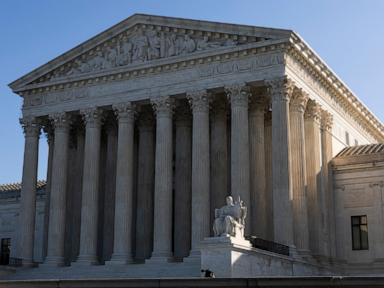
Most people assume that if a state fails to kill a condemned inmate on the first try, the Constitution steps in to call the whole thing off. The reality is much darker and far more procedural. The highest court in the United States has never viewed a botched execution as an automatic get-out-of-death-free card. Instead, the legal battleground centers around a cold distinction: was the failure an accident, or was it torture?
The Precedent Set by Willie Francis
The foundation for modern legal thought on surviving a botched execution dates back to 1947. In Louisiana ex rel. Francis v. Resweber, a 17-year-old named Willie Francis survived an electrocution attempt because the portable electric chair was improperly set up by local officials.
Francis argued that subjecting him to a second trip to the death chamber violated the Fifth Amendment's protection against double jeopardy and the Eighth Amendment's ban on cruel and unusual punishment.
The Supreme Court disagreed. In a 5-4 decision, the justices ruled that the state could try again. The majority opinion reasoned that the failure was an accident, an unforeseen breakdown in machinery rather than a malicious attempt to subject the prisoner to psychological torment or double punishment. Justice Felix Frankfurter noted in a concurring opinion that an uncompassionate sequence of repeated, intentional failures might cross a constitutional line, but a single mechanical mishap did not.
That ruling left open a terrifying loophole: surviving once doesn't mean you're safe. It just means the state gets a do-over, provided they fix the technical glitch.
How Modern Courts Handle Method Challenges
Decades after Resweber, the legal focus shifted from electric chairs to lethal injections, gas chambers, and newly implemented protocols. When executions go sideways today—such as executioners spending an hour probing for veins, drugs failing to render a person unconscious, or equipment malfunctions halting the process—lawyers immediately file emergency stays.
However, the Supreme Court's modern standard under cases like Baze v. Rees, Glossip v. Gross, and Bucklew v. Precythe makes it exceptionally difficult for death row inmates to block execution methods.
To win an Eighth Amendment challenge today, a prisoner cannot simply argue that a procedure is painful or that a previous attempt failed. They must satisfy a heavy burden of proof:
- Demonstrate that the state's chosen method creates a substantial risk of severe, avoidable pain.
- Propose a known and available alternative method that would significantly reduce that risk.
If an inmate survives an initial attempt because of operator error or a flawed protocol, the state often responds by tweaking the procedure, replacing the chemicals, or certifying the equipment—then scheduling a new date.
Where the Law Breaks Down
The core tension in these cases lies in the definition of "accidental." If a state repeats the exact same negligent behavior or ignores warnings from medical professionals that a protocol is unsafe, does that cross the line from an unfortunate accident into cruel and unusual punishment?
Legal scholars argue that repeated failures or gross incompetence by prison staff change the constitutional equation. When execution teams lack medical training, or when protocols repeatedly result in agonizing delays and visible suffering, the state is arguably inflicting wanton pain. Yet, federal courts frequently give immense deference to state corrections departments, treating execution mishaps as operational hiccups rather than systemic constitutional violations.
Surviving an execution leaves an inmate in a unique legal purgatory. They face physical trauma, profound psychological distress, and the looming certainty that the state will return to finish the process. Until the Supreme Court decides to revisit the boundaries established in 1947, a botched execution remains less of a constitutional barrier and more of a temporary pause on a fatal clock.