Imagine driving for nearly 4,000 miles along a single body of water without ever encountering a single bridge. That is the reality of the Amazon River. It discharges roughly 219,000 cubic meters of water into the Atlantic Ocean every single second. It holds more water than the Nile and the Mississippi combined. It is an absolute powerhouse of nature.
Yet, if you look at a map of its main channel stretching from Peru through Colombia and across Brazil, you won't find a single span of concrete or steel connecting the northern and southern banks.
Why hasn't modern engineering conquered this giant? It isn't because we lack the technology. We have built bridges across the freezing waters of the Bering Strait and erected massive structures over treacherous sea channels in China. The real reason the Amazon remains bridge-free comes down to a mix of brutal geography, shifting mud, and a simple lack of cars.
The Water That Won't Stay Put
Building a bridge requires a stable environment. The Amazon River offers the exact opposite.
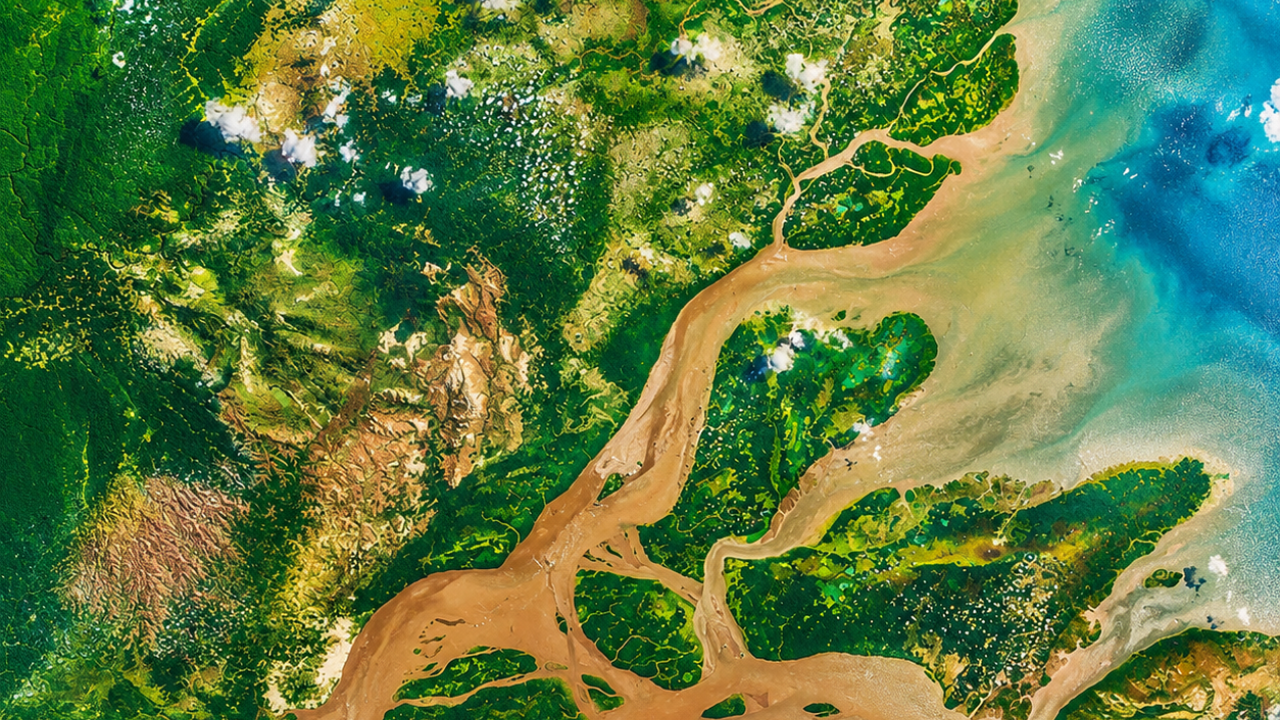
During the dry season, the river is already massive, stretching between two and six miles wide depending on the section. You could build a bridge across that. But when the tropical rains hit, the entire landscape transforms. The water level rises by more than thirty feet. That modest three-mile crossing suddenly explodes into a thirty-mile-wide inland sea.
[Dry Season Channel: 3 miles wide] ---> [Rainy Season Floodplain: 30 miles wide]
To build a permanent bridge, you wouldn't just be spanning the main river channel. You would have to construct miles of elevated viaducts over soft, swampy floodplains that spend half the year underwater.
The riverbed itself is a civil engineer's nightmare. There is no easily accessible bedrock near the surface to anchor heavy concrete pillars. Instead, the ground consists of deep, unstable sediment and soft mud. The immense force of the current constantly erodes the banks, carves out new paths, and shifts massive sandbanks overnight.
If you anchored a bridge pier in the mud today, the river might literally move out from under it over the next decade, or swallow the foundation entirely.
To make matters worse, the current carries massive amounts of debris. We aren't just talking about loose branches. The Amazon frequently detaches entire floating islands of vegetation called matupás. These tangled masses of roots and soil can grow up to ten acres in size. When a multi-acre island of solid earth and plants crashes into a bridge support at seven kilometers per hour, the structural forces are catastrophic.
The Highway Built of Water
The logistical headaches are massive, but governments conquer hard geography when the economic rewards make sense. Look at the bridge over the Rio Negro near Manaus. Completed in 2011, this two-mile cable-stayed span connects Manaus to the smaller town of Iranduba. It technically crosses an Amazon tributary rather than the main channel itself, proving that building in this environment is possible if the cash and willpower are there.
But for the main body of the Amazon, the financial math completely falls apart.
Bridges connect roads. The Amazon basin has almost no roads. Outside of a few major hubs like Manaus, Santarém, or Macapá, the surrounding rainforest is sparsely populated. Millions of square miles of dense jungle contain few human settlements.
The major cities that do exist along the river are almost exclusively built on just one side. Manaus dominates the northern bank. Santarém sits on the south. Because these cities grew up around the water, their industries face the river, not the opposite shore.
People living in the region don't need to get to the other side of the river. They need to go up or down it. The Amazon River is the highway.
Typical Highway System:  [City A] ======= Bridge ======= [City B]
Amazon River System:     [Town 1] ~~~~ Ferry/Boat ~~~~ [Town 2] ~~~~ [Town 3]
Boats, barges, and ferries handle everything. They haul passengers, fuel, timber, and groceries. Macapá, a state capital with half a million residents near the river's mouth, has no highway connection to the rest of Brazil. You get there by boat or you fly. Building a multi-billion dollar bridge to connect a roadless jungle bank to another roadless jungle bank makes absolutely no sense.
The High Cost of Connecting Nowhere
Whenever humans cut roads and pour concrete into pristine environments, destruction follows. The lack of bridges acts as a natural shield for the rainforest.
History shows what happens when governments try to force asphalt into the jungle. In the 1970s, Brazil constructed the BR-319 highway, an 870-kilometer road cutting through the core of the forest from Manaus to Porto Velho. The jungle fought back. Constant rain washed away the pavement, mud swallowed vehicles, and the road became virtually impassable for decades.
More importantly, data from conservation groups like Imazon shows that roughly 95% of all deforestation in the Amazon happens within 5.5 kilometers of a road. Roads act as a starting point for illegal logging, land grabbing, and cattle ranching.
Building a bridge over the main channel would immediately trigger the expansion of a permanent road network. It would open up previously untouched, highly biodiverse ecosystems to heavy machinery and exploitation.
Right now, regional transport remains slow but sustainable. Ferries take time, and they can be expensive, but they don't require clearing millions of trees. For the people who live along the banks, navigating the shifting waters by boat is just part of daily life. The river provides the food, the transport, and the livelihood.
If you want to experience the Amazon, forget about a road trip. Pack your bags, buy a ticket for a multi-day riverboat hammock cruise, and accept that some places on Earth are meant to be traversed by water, not concrete.