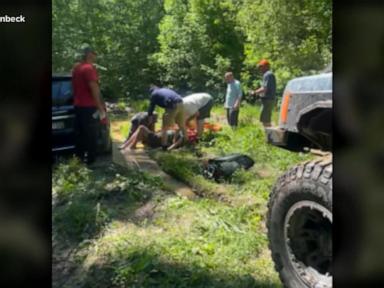
The local news cycle loves a miracle. When a missing woman was pulled from a muddy ravine after three days of being trapped, the media did exactly what it always does. They ran footage of flashing ambulance lights. They interviewed relieved neighbors. They framed the entire ordeal as a triumph of the human spirit against insurmountable odds.
It is a heartwarming narrative. It is also dangerously wrong.
The lazy consensus surrounding wilderness survival stories is that survival is a matter of grit, willpower, and some mystical "will to live." We treat these incidents as unpredictable Acts of God, and the survivors as heroes who outlasted the elements.
But as someone who has spent two decades analyzing search and rescue data, training field operatives, and dissecting why people die in the woods, I see these stories differently. Survival isn’t a miracle. It is usually the messy byproduct of a compounding series of human errors, followed by sheer, unearned luck.
If you find yourself stuck in the mud for 72 hours, your grit didn't save you. The calendar did. And relying on the media's romanticized version of survival will get you killed.
The Myth of the "Fighter"
Let’s dismantle the biggest lie first: the idea that mental toughness keeps you alive in a physical crisis.
When a person gets stuck, lost, or pinned down, a predictable physiological cascade begins. The brain floods the body with cortisol and adrenaline. In a vacuum, these chemicals are useful for sprinting away from a predator. In a prolonged survival situation, they are poison.
Adrenaline spikes your heart rate and accelerates dehydration. Cortisol impairs the prefrontal cortex—the exact part of your brain required to map a way out or ration your energy. The media calls it "fighting for survival." In reality, the victim is usually experiencing a prolonged panic attack that burns through precious caloric reserves and water weight.
Consider the reality of being trapped in wet mud or marshland for three days:
- Hypothermia doesn't care about your attitude: Even in moderate summer temperatures, damp ground strips body heat away through conduction up to 25 times faster than air.
- Dehydration follows strict math: The human body can suppress the sensation of thirst under extreme stress, but it cannot suppress kidney failure. You have roughly 100 hours before lack of water becomes fatal, regardless of your willpower.
- Positional asphyxiation and necrosis: Depending on how a person is trapped, prolonged immobility causes blood pooling, muscle breakdown (rhabdomyolysis), and acute renal failure.
The woman survived three days not because she "refused to give up," but because the ambient temperature, the specific moisture level of the soil, and her baseline physiological health happened to align within the strict mathematical margins of human endurance.
To credit "spirit" is to ignore the physics of the human body.
Why "People Also Ask" Queries Are Teaching You How to Die
If you look at internet search trends during a high-profile rescue, the same questions pop up every time. The problem is that the answers provided by survival blogs and self-proclaimed experts are rooted in outdated Boy Scout mythology.
"What should you do first if you get stuck in the woods?"
The standard advice is always to build a shelter or look for water. This is terrible advice.
The absolute first thing you should do is stop moving and master your breathing. The moment you realize you are lost or trapped, your primary enemy is your own kinetic energy. People die because they try to force their way out of a bad situation, escalating a minor mistake into a fatal trauma.
I have seen missing persons maps where the subject walked a dozen miles away from the search grid simply because their panic convinced them that over-exertion equaled progress.
"How long can a person survive without food and water?"
The conventional wisdom relies on the "Rule of Threes": 3 minutes without air, 3 days without water, 3 weeks without food.
This rule is a useless abstraction. In a high-humidity environment, you might last four days without water. In an arid desert, you could be dead from heatstroke and dehydration in six hours.
By teaching people these rigid timelines, we create a psychological ticking clock. When a trapped person hits the 72-hour mark, they often give up mentally because they believe they have hit a hard biological ceiling.
"Should you try to extract yourself from deep mud or quicksand?"
The internet will tell you to pull your legs out or try to swim.
Here is the brutal reality: the vacuum created by deep mud can require thousands of Newtons of force to break. If you try to yank your legs out vertically, you will dislocate your hips or tear ligaments, rendering yourself entirely helpless.
The Anatomy of the Error Chain
Accidents do not happen in isolation. In aviation, we talk about the "error chain"—a sequence of minor, seemingly insignificant decisions that conclude in a catastrophe. Wilderness emergencies follow the exact same architecture.
Imagine a scenario where a hiker decides to take a shortcut off a designated trail because the path looks clear.
[Shortcut Taken] ➔ [Minor Disorientation] ➔ [Increased Pace/Panic] ➔ [Misstep into a Ravine] ➔ [Immobilization]
The competitor’s article focuses entirely on the final link in that chain: the rescue. They ignore the four links that preceded it.
True safety isn't knowing how to survive for three days in the mud; it is having the self-awareness to not step off the trail in the first place. It is the unsexy discipline of telling someone exactly where you are going and when you will be back.
If the search and rescue teams don't know your coordinates, your survival plan isn't a plan—it's a lottery ticket.
The Dark Side of the "Miracle" Narrative
There is a distinct downside to celebrating these survival stories without criticizing the behavior that caused them. It breeds a culture of dangerous complacency.
When the public sees a headline about someone surviving three days in the elements with zero gear, the subconscious takeaway is: The wilderness is forgiving. People assume that if a casual walker can survive a major crisis through sheer luck, then they don't need to carry a satellite communicator, a basic first-aid kit, or extra layers.
They treat nature like an amusement park with a built-in safety net. It isn't. The wilderness is entirely indifferent to your existence. It will freeze your joints, dry out your tongue, and shut down your organs without a shred of malice or mercy.
Stop looking at these rescues as feel-good stories. They are near-miss reports. They should be studied with clinical detachment, not celebrated with emotional sentimentality.
The Unconventional Blueprint for Not Dying
If you want to actually survive a worst-case scenario, discard the romantic notions of heroism and follow a cold, operational protocol.
1. Kill the Ego
The moment you suspect you are lost, admit it. Do not try to save face by walking a little further to see if the trail reappears. Sit down. Your ego wants you to keep moving so you don't feel foolish. Your ego is a liability.
2. Become an Object
If you are trapped or immobilized, stop trying to fight the environment. Your goal is to decrease your surface area to minimize heat loss if it's cold, or maximize it if you need to cool down. If you are stuck in mud, shift your weight to distribute your mass horizontally. Do not thrash. Thrashing liquefies the surrounding soil, packing it tighter around you when it settles.
3. Engine Management
Treat your body like a car with a leaking fuel tank. Every movement must have a guaranteed return on investment. If screaming for help isn't producing an echo or a response, stop screaming. You are just drying out your airway and burning calories. Save your voice for when you actually hear searchers nearby.
The local news will continue to broadcast these survival stories with sweeping music and triumphant voiceovers. They will interview the doctors who talk about the "miracle of recovery."
Do not buy into the theater.
The woman pulled from the mud survived because her biology held out just long enough for a coordinated team of professionals to solve a geometry problem and track her down. It was a victory of logistics and luck over physics.
Next time you go outdoors, leave the "will to live" at home and pack a personal locator beacon instead. Nature does not grade on a curve.