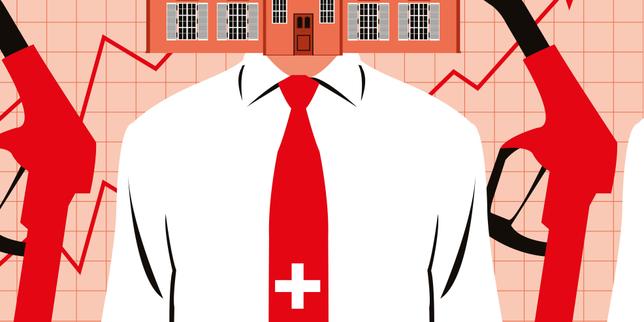
Switzerland doesn't have a single oil well. It has no coastline. Yet, if you want to understand why your gas prices are volatile or how energy giants are posting record-breaking numbers, you have to look at the quiet streets of Geneva and Zug. The superprofits of oil traders in Switzerland aren't just a byproduct of market swings. They're the result of a perfectly calibrated machine that thrives on global instability.
While the world deals with inflation and energy transitions, Swiss-based firms like Vitol, Trafigura, and Gunvor have been quietly banking billions. These aren't just "good years." We're seeing a fundamental shift in how energy wealth is concentrated. You might think the big money stays in Texas or Riyadh, but a massive chunk of it actually flows through the land of chocolate and watches.
The mechanics of Swiss oil trading superprofits
Oil trading is essentially the world's most expensive game of "buy low, sell high," played with massive leverage. Swiss firms dominate this space because they've mastered the art of the middleman. When the war in Ukraine broke out, it didn't just disrupt supply. It created price discrepancies between different regions. Traders love this. This is what they call "arbitrage."
If oil is $80 in one port and $85 in another due to a sudden logistical bottleneck, the Swiss traders are the ones with the ships and the credit lines to bridge that gap. They make money on the spread. In 2022 and 2023, these spreads became canyons. Vitol reported a net profit of around $15 billion in 2022. To put that in perspective, that’s more than many sovereign nations produce in a year.
It’s not just luck. These companies have better data than most governments. They track every tanker, monitor every pipeline glitch, and use satellite imagery to count the floating roofs on storage tanks in China. They know the supply is tight before the headlines even hit the wires. They aren't just reacting to the market; they are the market's nervous system.
Transparency is the enemy of the trade
Switzerland’s appeal isn't just about its central location in Europe. It's about the shadows. Unlike publicly traded companies like Shell or BP, many of the biggest Swiss traders are privately held. They don't have to answer to thousands of prying shareholders or disclose every detail of their operations in quarterly earnings calls.
This lack of transparency makes it incredibly difficult to track exactly where the money is coming from. NGOs like Public Eye have been screaming about this for years. They argue that the Swiss commodity sector is a "black box." When you operate in a black box, you can take risks that a public company wouldn't dare. You can move fast. You can pivot.
The Swiss government has historically taken a light-touch approach to regulation here. Why wouldn't they? These firms bring in massive tax revenue and provide high-paying jobs. But as the profits grow to obscene levels, the pressure for "commodity oversight" is mounting. People are starting to ask why a sector that handles a significant portion of the world's energy has less oversight than a local regional bank.
Why the volatility of 2026 keeps the party going
You'd think high prices would be bad for business. Actually, for a trader, the price level matters less than the "swing." If oil stayed at a flat $75 for five years, these firms would struggle to justify their overhead. They need chaos.
The current geopolitical climate is a goldmine for them. We're seeing fragmented markets where Russian oil flows to India and China through "shadow fleets," while Middle Eastern crude gets rerouted to Europe to fill the gap. Every time a tanker has to take a longer route around the Cape of Good Hope instead of through the Suez Canal, costs go up. Traders charge for that risk.
They also act as banks. Many oil-producing nations or small refineries don't have the cash flow to manage their own exports. Swiss traders step in with massive credit lines. They provide the liquidity that keeps the physical oil moving. In return, they take a cut of every barrel. It’s a toll-booth business model on a global scale.
The human cost and the ethical divide
We need to talk about the disconnect. While a trader in Geneva is checking his bonus, a family in a developing nation might be struggling to afford kerosene because of the very market volatility that fuels those profits. It’s a harsh reality. These firms argue they're just providing a service—balancing supply and demand. They say without them, the world would run out of fuel even faster.
There’s some truth to that, but it ignores the power imbalance. These companies have the "market power" to influence prices through their sheer volume of trade. When you control the storage and the transport, you control the timing of when oil hits the market.
Moving beyond the Swiss loophole
If you're looking for a change in how this works, don't hold your breath for a sudden surge in Swiss regulation. The "commodity hub" status is a crown jewel for the Swiss economy. However, there are shifts happening. The EU is pushing for more stringent reporting on "non-financial" impacts, and international tax deals are slowly closing some of the most egregious loopholes.
If you want to track where the real power in the energy sector lies, stop looking at the oil fields and start looking at the balance sheets of the firms in Geneva. They are the ones who turned a global energy crisis into a masterclass in wealth accumulation.
To keep a pulse on this, you should monitor the "Bernie Sanders" style movements within the Swiss parliament. There are active proposals to create a specific regulatory body for commodity traders, similar to how FINMA oversees banks. If that passes, the era of the "black box" might finally start to crack. Until then, the superprofits will keep rolling in every time the world gets a little more unstable. Keep an eye on the spread between Brent and WTI crude—that's where the next billion-dollar bonus is being made right now.