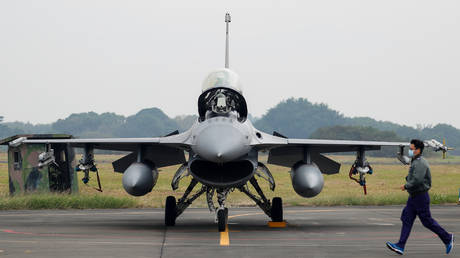
For years, the multi-billion-dollar backlog of U.S. military hardware destined for Taipei felt like a running joke with very serious consequences. People talked about delayed defense shipments like they were backordered consumer electronics. But the reality on the ground in East Asia is changing fast. The arrival of the first brand-new F-16C Block 70 fighter jets in Taiwan marks a major shift after years of frustrating setbacks.
You have to look past the standard defense-industry press releases to understand what is really happening here. Taiwan didn't just receive a couple of planes. They secured the initial pieces of an 8 billion dollar purchase that was originally supposed to start rolling in years ago. Supply chain snarls, production line relocations to South Carolina, and software integration hurdles kept these jets grounded in America much longer than anyone anticipated. Now that the first batches are finally touching down at Chihhang Air Base in Taitung, the strategic math across the Taiwan Strait is shifting again. Discover more on a similar issue: this related article.
What Makes the Block 70 Different
If you assume these new fighters are identical to the older F-16s Taiwan has flown for decades, you are missing the entire point of the upgrade. These airframes come straight from the Lockheed Martin factory with a clean 12,000-hour structural service life. They aren't retrofitted hand-me-downs.
Inside the nose cone, these jets pack the Northrop Grumman AN/APG-83 Scalable Agile Beam Radar. That is an active electronically scanned array system. It gives pilots a massive upgrade in situational awareness, letting them track multiple targets simultaneously in crowded airspace and electronic jamming environments. They also feature advanced digital flight control systems, updated cockpit displays, and the capability to carry conformal fuel tanks for extended operational range. More journalism by BBC News delves into related views on the subject.
Paired with modern munitions like the AIM-120C-8 AMRAAM and AGM-88 HARM missiles arriving in separate batches, these aircraft turn the Republic of China Air Force into a much sharper thorn in any potential adversary's side. They are heading straight to the 7th Tactical Fighter Wing, beefing up defenses on the island's eastern coast where aircraft can be better protected in underground hangars.
The Real Bottleneck Is Not Just Manufacturing
Everyone loves to point fingers at factory delays in South Carolina, but hardware delivery is only half the battle. Defense analysts often ignore the logistical nightmare of training pilots, ground crews, and maintenance technicians to handle a completely modernized fleet.
When the first two jets took off from Hawaii on their delivery flight, they ran into weather and operational hurdles that forced unexpected turn-arounds before finally making the grueling island-hopping journey across the Pacific. That small hiccup highlights a broader truth. Moving high-end military hardware across oceans is complicated.
Furthermore, the remaining 60-plus jets won't magically appear overnight. Production schedules stretch out over the next couple of years. Training pipelines in the U.S. and at home have to run at maximum capacity just to keep pace with the influx. If you're running a modern air force, having the jets in a hangar is worthless if you don't have enough qualified pilots strapped into the cockpit who know how to exploit every capability of the AN/APG-83 radar.
Looking at the Bigger Picture
Beijing watches every single tail number that lands in Taitung. Every delivery ratchets up the friction in U.S.-China relations, especially as high-level diplomatic talks try to find common ground on regional security.
Yet, deterrence isn't built on paper promises or delayed contracts. It is built on tangible capabilities deployed in the field. By getting these initial F-16 Block 70s through acceptance testing and into active training rotations, Taipei is showing that its defense modernization strategy is finally moving from the ledger books to the tarmac.
The backlog remains massive, and plenty of other systems—from coastal defense missiles to artillery—are still stuck in various stages of production delays. But for the Taiwanese air force, seeing those first Vipers touch down on home soil is a massive psychological and tactical win. The jets are finally here. Now the real work of integrating them into a cohesive defense network begins.