Every October, Taipei puts on the same diplomatic theater, and Western wire services eat it up without chewing.
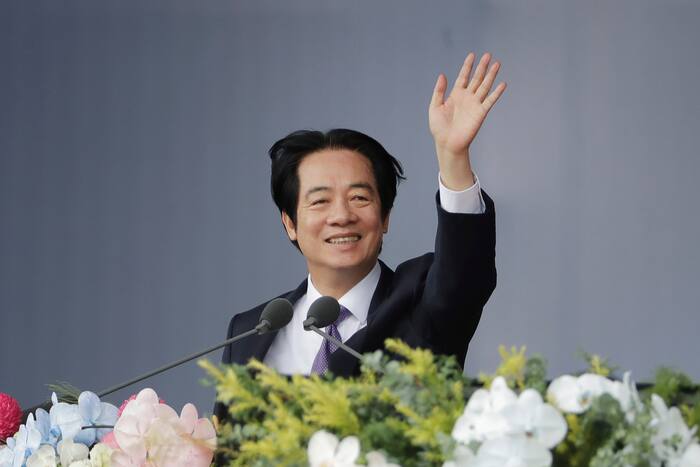
The headline writes itself: Taiwan's President Lai Ching-te steps up to the podium for his National Day speech, invokes shared values, and calls on Indo-Pacific democracies to unite and maintain peace across the Taiwan Strait. Foreign policy commentators nod along. Editorial boards praise the moral clarity. Think tank fellows retweet the pull quotes about freedom standing against authoritarianism.
It sounds noble. It reads well in Brussels and Washington. And if Taipei actually relies on it as a national security doctrine, it will get Taiwan swallowed whole.
The lazy consensus in international journalism treats Lai's appeal to "Indo-Pacific democracies" as a serious strategic deterrent. It isn't. It is a public relations campaign masquerading as defense policy. While mainstream coverage frames this speech as a bold rallying cry for regional stability, it completely misses the brutal reality of East Asian power politics. Democracies do not fight wars because of shared constitutional values. Nations go to war over hard national interests, geography, and economic survival—and right now, almost none of the "Indo-Pacific democracies" Lai is appealing to have any intention of bleeding for Taipei.
The Myth of the Democratic Cavalry
Let's strip away the diplomatic pleasantries and look at the map. When Taipei calls on "Indo-Pacific democracies" to help keep the peace, who is actually on the receiving end of that phone call?
Japan. South Korea. The Philippines. Australia. India.
On paper, this looks like an impressive coalition. In practice, it is a collection of nations with wildly divergent threat perceptions, paralyzing domestic constraints, and deep economic dependencies on Beijing. Treating them as a unified ideological bloc is the single biggest analytical error in modern coverage of the Taiwan Strait.
Take South Korea. Seoul has spent the last decade trying to avoid making a binary choice between Washington and Beijing, and for good reason. South Korea's primary existential threat isn't a blockade of Kaohsiung; it is 25,000 North Korean artillery tubes aimed directly at Seoul. If a shooting war breaks out over Taiwan, South Korea's military will be pinned to the 38th Parallel, watching Pyongyang for signs of opportunistic aggression. Expecting Seoul to dispatch destroyers to the Bashi Channel out of democratic solidarity is pure fantasy.
Look at India. New Delhi is a proud democracy with a bloody border dispute against China in the Himalayas. Yet India's foreign policy is built on fierce strategic autonomy, not ideological crusades. When Russia invaded Ukraine—a textbook case of an authoritarian power invading a neighboring democracy—New Delhi didn't join Western sanctions. It bought discounted Russian oil by the supertanker. India will happily tie down Chinese troops in Ladakh to serve Indian interests, and it might quietly share intelligence, but the Indian Navy is not going to steam into the South China Sea to break a Chinese blockade of Taiwan.
Even the Philippines, which has signed critical defense access agreements with the United States under the Enhanced Defense Cooperation Agreement (EDCA), is acting out of narrow territorial self-preservation over Second Thomas Shoal and Scarborough Shoal—not out of an abstract commitment to Taiwanese democracy. Manila wants American muscle to protect Philippine fishermen and outposts. Getting dragged into a full-scale superpower war over Taipei's political status is Manila's worst nightmare.
I have sat in enough closed-door tabletop war games in Washington and Taipei to know how this actually plays out. Every time a participant tries to build a scenario where an "Indo-Pacific democratic coalition" automatically rallies to Taiwan's defense on Day One, the simulation breaks down within three moves. Once you factor in domestic political paralysis, shipping insurance collapses, and Beijing's immediate threats of economic and missile retaliation against third-party interveners, the coalition evaporates. What remains is a bilateral standoff between Washington and Beijing, with Tokyo nervously calculating how much of its own infrastructure it is willing to risk.
Strategic Clarity vs. Strategic Self-Delusion
To understand why Lai's rhetoric is so dangerous, you have to understand the difference between ideological alignment and collective security.
Ideological alignment means countries like each other's forms of government and issue joint communiqués at summits. Collective security—the kind enshrined in NATO's Article 5—means an attack on one is legally and militarily treated as an attack on all, backed by integrated command structures, pre-positioned munitions, and binding treaties.
Taiwan has ideological alignment with dozens of nations. It has collective security with zero.
Not one major Indo-Pacific democracy maintains formal diplomatic relations with Taipei. None of them have a mutual defense treaty with Taiwan. Even the United States, Taiwan's indispensable security guarantor, operates under the deliberately ambiguous framework of the 1979 Taiwan Relations Act, which obligates Washington to provide Taiwan with defensive arms and maintain the capacity to resist coercion, without legally committing American troops to fight.
When Lai frames Taiwan's security around a call to fellow democracies, he is trying to manufacture the illusion of an Article 5 alliance through sheer rhetorical repetition. The danger is that Taiwanese voters—and worse, Taiwanese policymakers—start believing their own press releases.
Strategic theorists like John Mearsheimer and Stephen Walt have spent decades warning about what happens when small states confuse liberal internationalist rhetoric with hard realist guarantees. When a vulnerable state overestimates the willingness of ideological friends to rescue it, it tends to underinvest in its own painful, unglamorous survival measures while overplaying its diplomatic hand.
Why Beijing Loves This Framing
Here is the irony that mainstream commentators completely miss: Beijing isn't rattled by Lai calling on Indo-Pacific democracies. In many ways, this exact framing plays directly into the Chinese Communist Party's hands.
For years, Beijing has worked relentlessly to convince the Global South and neighboring Asian states that the tension in the Taiwan Strait is not about Chinese expansionism, but about an American-led ideological containment ring designed to stifle China's rise. Every time Taipei frames the cross-Strait standoff as "Democracies vs. Autocracies," it validates Beijing's narrative for fence-sitting nations in Southeast Asia.
Think about how that lands in Jakarta, Kuala Lumpur, or Bangkok. Southeast Asian governments do not want to be drafted into a Cold War ideological crusade. Many of them aren't full-fledged Western-style democracies themselves. When Taipei pitches its survival as a test of democratic solidarity, it inadvertently alienates the very ASEAN nations whose airspace, ports, and diplomatic neutrality would be decisive in a regional crisis.
Worse, rhetorical appeals to outside democracies give Beijing an easy propaganda victory at home. Xi Jinping can point to Lai's speeches as proof that Taipei is actively colluding with "external interference forces" to permanently sever Taiwan from the mainland. That lowers the domestic political cost for Beijing to tighten the noose through gray-zone warfare—persistent airspace incursions, cyberattacks on Taiwan's power grid, undersea cable cuts, and strangling quarantine drills around Taiwan's ports.
What People Get Wrong About Deterrence in the Strait
If you follow the standard commentary around Taiwan's National Day, you will run into the same recycled questions: Can regional democracies deter China? Will Japan intervene if China invades Taiwan? How can Taiwan build stronger alliances?
Every single one of those questions starts from a flawed premise. They all assume that Taiwan's primary security problem is a lack of diplomatic support from neighbors.
It isn't. Taiwan's primary security problem is that it has spent decades preparing for the wrong war while failing to make an invasion or blockade prohibitively expensive on its own.
Let's be brutally honest about the military balance. No diplomatic coalition is going to stop the People's Liberation Army (PLA) if Taiwan cannot survive the first 72 to 96 hours of a conflict on its own. Geography is unforgiving. Taiwan sits roughly 100 miles off the coast of mainland China, squarely inside the range of thousands of PLA ballistic and cruise missiles, long-range rocket artillery, and land-based air defense systems. Meanwhile, the nearest major American air bases in Okinawa and Guam are hundreds or thousands of miles away.
If Taiwan's air force is destroyed on the tarmac in the first three hours, and its major surface warships are sunk in port before Washington or Tokyo can even convene an emergency cabinet meeting, all the speeches about democratic solidarity in the world won't matter. You cannot liberate a rubble pile after a fait accompli.
The Porcupine Alternative Nobody Wants to Pay For
If speeches to Indo-Pacific democracies won't save Taiwan, what actually works?
The answer is unsexy, expensive, and politically painful: unilateral asymmetric denial, often called the "porcupine strategy."
Instead of begging foreign democracies to promise rescue, Taipei needs to turn the island into an indigestible fortress that makes a Chinese amphibious assault or prolonged blockade look like a guaranteed regime-ending catastrophe for Beijing. That means shifting away from high-prestige conventional weapons—like expensive fighter jets and large surface destroyers that look great in National Day parades but won't survive the opening salvo of a missile barrage—and going all-in on survivable, distributed lethality.
Imagine a scenario where Taiwan stops trying to win air and sea superiority in the Strait and focuses entirely on making the Strait an impassable death zone for an invasion fleet. That looks like:
- Mass-produced mobile coastal defense missiles: Thousands of truck-mounted anti-ship missiles hidden in tunnels, mountain caves, and urban parking garages across the island, making it impossible for PLA targeting sensors to wipe them out in a first strike.
- Smart sea mines and unmanned surface vessels: Cheap, autonomous naval mines and explosive drone boats that can be deployed rapidly to turn Taiwan's few viable invasion beaches into burning scrapyards.
- Hardened, decentralized energy and communications grids: Taiwan imports roughly 97% of its energy, making it catastrophically vulnerable to a blockade. Building hardened microgrids, stockpiling months of liquefied natural gas and coal reserves, and deploying redundant satellite communications networks does far more to deter Beijing than any joint statement from Canberra or Tokyo.
- A serious, combat-ready reserve force: Right now, Taiwan's civil defense and military reserve system suffers from chronic undertraining and bureaucratic inertia. Turning the civilian population into a genuinely trained, equipped territorial defense force—on the model of Finland or Switzerland—sends an unmistakable signal to Beijing that even if PLA troops make it ashore, they will bleed out in a years-long urban insurgency.
This approach has massive downsides, and we shouldn't pretend otherwise. Turning Taiwan into a hardened porcupine requires sky-high defense spending—closer to 5% of GDP rather than the current 2.5%—which means painful trade-offs in domestic social spending, higher taxes, and real disruption to everyday civilian life. It also risks spooking foreign investors who prefer to view Taiwan strictly as a peaceful semiconductor hub rather than a frontline garrison state.
Furthermore, pure asymmetric defense leaves Taiwan vulnerable to sub-threshold gray-zone coercion. Mobile anti-ship missiles don't help much when Chinese coast guard cutters are stopping and inspecting commercial cargo ships bound for Keelung without firing a single shot.
Stop Outsourcing Survival to Speeches
This is why Lai's National Day rhetoric falls so flat when you look past the headlines. It is always easier for a political leader to stand at a podium and call on foreign democracies to uphold the rules-based order than it is to tell their own citizens that peacetime complacency is over, taxes are going up, conscription has to get brutal, and the island must prepare to fight alone before anyone else shows up.
The competitor coverage of Lai's speech treats his words as the main event, as if diplomatic phrasing is a kinetic weapon capable of altering the balance of power in the Western Pacific. It isn't. Foreign leaders will applaud the speech, issue carefully worded statements supporting "peace and stability," and go right back to managing their trade deficits with Beijing.
History is merciless to small nations that mistake applause for allies. When the gray hulls finally appear on the horizon, nobody is coming to save Taiwan because of a shared love of ballot boxes. They will only come if Taiwan proves it can survive the first punch—and no speech on National Day can buy a single hour of that survival.