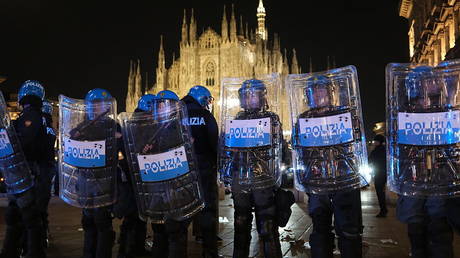
The heavy acrid smoke of tear gas hung thick over the cobblestones of Piazza del Duomo as lines of riot police moved in with batons raised. For days, downtown Milan transformed from a global capital of high fashion and commerce into a theater of open street combat. Commercial storefronts shuttered their heavy iron gates, luxury boutiques found themselves barricaded behind reinforced glass, and sirens wailed through the financial heart of northern Italy.
These violent confrontations between protesters and law enforcement are not isolated anomalies born of spontaneous teenage anger. They are the bloody symptom of a severe economic pressure cooker that has been left to whistle too long without relief.
When thousands of demonstrators flooded Italian streets over the cost-of-living crisis, mainstream bulletins rushed to frame the chaos as mindless vandalism by hooded youth. That narrative offers comforting simplicity to politicians in Rome, but it misses the entire point of the explosion. Inflation has steadily outpaced wage growth for years. Energy prices remain volatile, housing in urban centers like Milan has reached absurdly punitive multiples of average salaries, and the social safety net has worn completely threadbare.
What happened in Milan and neighboring Bologna is an expression of deep structural exhaustion. The modern Italian metropolis demands hyper-productivity from its working class while offering virtually zero upward mobility in return. Young adults working gig-economy shifts or entry-level corporate positions watch their earnings vanish entirely into rent and groceries, locked out of traditional milestones like homeownership or stable savings.
Social media platforms served as the organizing nervous system for these demonstrations, bypassing traditional labor unions and formal political parties entirely. This decentralized mobilization makes the unrest uniquely difficult for the state to manage or negotiate with. There is no single desk across from government ministers where grievances can be neatly filed. Instead, thousands of fragmented, frustrated individuals converged on city centers because digital forums offered them a collective voice that institutional politics repeatedly ignored.
Prime Minister Giorgia Meloni’s administration responded with swift condemnation, framing the unrest as criminal behavior that threatens public order. Emergency cabinet sessions were hastily called, and police reinforcements flooded the northern industrial hubs. Yet cracking down on manifestations of urban rage does nothing to address the macroeconomic conditions that sparked the fire in the first place.
History shows that when peaceful avenues for economic survival narrow, violent friction takes their place. The shattered windows of luxury boutiques and the burnt-out municipal bins are physical manifestations of a broken social contract. Until Italian policymakers address the root causes of wage stagnation and generational poverty, the relative quiet in the Duomo square remains entirely temporary.
Violent Clashes Erupt Between Police and Protesters in Milan | Italy
This footage captures the volatile street confrontations in Milan as demonstrators clashed with police lines amid growing nationwide frustration over economic pressures.