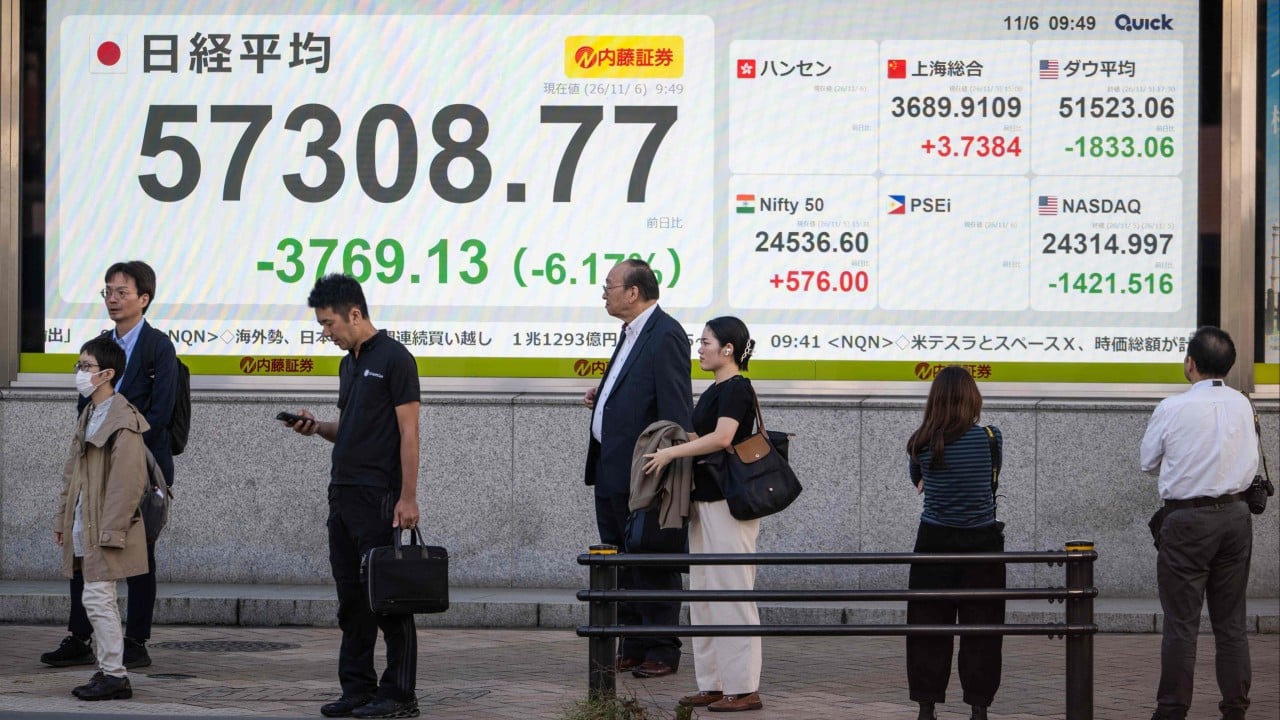
The market did not drop 5% because of who won the election. It dropped because institutional algorithms priced in legislative gridlock months ago, only to realize that gridlock actually freezes the exact corporate tax extensions and deregulation bills mega-cap technology firms needed to justify their bloated valuations.
When the closing bell rang following the midterm results, financial television anchors scrambled to blame political uncertainty. That is the lazy narrative. Wall Street loves gridlock when the economy is expanding at a moderate clip and interest rates are falling. A divided Congress typically means neither party can pass sweeping tax hikes or aggressive regulatory overhauls, creating a predictable environment for capital allocation.
This cycle is different. The technology sector entered the election cycle carrying historically stretched price-to-earnings multiples, propped up by massive capital expenditures in artificial intelligence infrastructure and an expectation of imminent legislative relief. When the votes were tallied and the reality of a fractured legislature set in, the math broke. Without a unified government capable of passing targeted R&D tax credit restorations or clearing antitrust bottlenecks, the forward earnings guidance for the largest weighted stocks in the S&P 500 suddenly looked unsustainable.
The Valuation Trap Nobody Wanted to Admit
To understand a 5% broad-market drawdown led by tech, you have to look at index concentration. Over the past several years, a handful of mega-cap technology companies have grown to represent roughly a third of the entire S&P 500's market capitalization. When those seven or eight stocks catch a cold, the entire market ends up in the emergency room.
For months, portfolio managers piled into these names as a defensive play. The logic seemed sound on the surface. These companies boast fortress balance sheets, massive cash reserves, and near-monopolistic control over cloud computing, digital advertising, and enterprise software. Even as consumer discretionary spending softened and manufacturing data flashed warning signs, institutional money kept flowing into big tech under the assumption that artificial intelligence monetization would rescue top-line revenue growth.
Then came the earnings calls leading into November. Capital expenditures were skyrocketing, yet the immediate return on those tens of billions of dollars remained stubbornly out of reach. Investors were willing to overlook the cash burn as long as they believed the post-midterm political environment would deliver favorable fiscal policy. Specifically, corporate lobbyists had spent millions pushing for the permanent extension of expiring corporate tax provisions and a softer touch from federal antitrust regulators.
A split Congress kills that lifeline. Legislative paralysis means expiring tax provisions stay expired, and existing antitrust lawsuits filed by the Department of Justice and the Federal Trade Commission continue grinding through the courts uninterrupted. When the realization hit trading desks that no rescue package was coming from Washington, high-multiple growth stocks became the first assets on the chopping block.
How Algorithmic Selling Turned a Pullback Into a Rout
Human traders do not dump 5% of the world's largest equity market in a matter of sessions. Machines do.
Modern equity markets are dominated by quantitative funds, risk-parity strategies, and options market makers. These systems do not read political op-eds or care about party platforms. They track volatility, momentum, and liquidity thresholds. Prior to the midterms, implied volatility was artificially suppressed as traders hedged against specific binary outcomes, betting that once the election passed, volatility would collapse and trigger a mechanical relief rally.
The exact opposite happened.
As early returns confirmed a deadlocked legislature, initial selling in semiconductor and cloud software stocks pushed the S&P 500 through key technical support levels. Once those thresholds breached, gamma exposure flipped negative. In plain terms, options dealers who had previously been buying dips to hedge their books were suddenly forced to sell into the falling market to remain delta-neutral.
Consider a hypothetical example to see how this feedback loop operates. Suppose a large institutional fund holds $500 million in a concentrated tech ETF and buys put options to protect against a 2% drop. As long as the market stays above that strike price, the dealer who sold those puts holds a relatively small short position. The moment the market drops 2.5%, the dealer's risk model demands they immediately sell tens of millions of dollars in underlying tech futures to offset their growing liability. Multiply that dynamic across thousands of institutional accounts simultaneously, and a routine 1.5% political repricing snowballs into a 5% liquidation event before retail investors even finish their morning coffee.
The Liquidity Illusion
Compounding the algorithmic cascade is a structural flaw that has plagued US equities since post-2008 banking regulations took effect. Traditional investment banks no longer act as shock absorbers by holding massive inventories of stocks on their balance sheets during periods of stress.
When everyone rushes for the exit at the same time, order book depth vanishes. Bids disappear, spreads widen, and even modest sell orders push prices down violently. What looks on a chart like widespread panic over election results is often just a mechanical vacuum where buyers step back and wait for the forced liquidations to exhaust themselves.
The Fiscal Cliff Facing Silicon Valley
Beyond the trading mechanics lies a hard fundamental truth that Silicon Valley executives have been quietly dreading. The technology sector is heavily exposed to international tax frameworks and domestic research amortization rules that require active congressional intervention to fix.
Under previous tax legislation, companies were allowed to immediately deduct 100% of their research and development expenses in the year they occurred. That rule shifted, forcing firms to amortize those costs over five years for domestic research and fifteen years for foreign research. For software and semiconductor companies whose entire business models rely on relentless R&D spending, this accounting change has quietly inflated their effective cash tax rates.
Both parties claimed to support fixing the R&D amortization issue, yet neither could pass a standalone bill without attaching unrelated partisan priorities. Wall Street's base case assumed a post-midterm lame-duck session or a newly seated Congress would finally clear the logjam. The election results shattered that consensus. Instead of a clean legislative fix, corporate CFOs now face at least two more years of elevated tax burdens and zero clarity on cross-border digital service taxes.
At the same time, federal procurement budgets are entering a period of intense scrutiny. Cloud providers and enterprise software vendors have increasingly relied on massive government contracts—particularly in defense and intelligence—to offset slowing commercial IT spending. A divided Congress virtually guarantees recurring battles over the debt ceiling and continuing resolutions, which historically freeze new federal technology awards and delay existing contract disbursements.
Why the Bond Market Refused to Blink
If you want to know whether a stock market sell-off signals a genuine economic collapse or a valuation reset, ignore the equity indices and watch Treasury yields.
During a true systemic crisis, investors flee stocks and pile into US government bonds, driving yields sharply lower. Following the midterm tech rout, Treasury yields barely budged—and on the long end of the curve, they actually ticked higher.
That divergence tells the entire story. Fixed-income traders are looking at the exact same election map and reaching a sobering conclusion about fiscal discipline. Neither party campaigned on serious entitlement reform or spending cuts, and a divided government ensures that deficit spending will remain elevated through continuing resolutions rather than structural budget deals. Persistent deficits mean the Treasury Department must keep issuing massive amounts of new debt, keeping upward pressure on yields.
Higher-for-longer yields are kryptonite for long-duration assets, and no asset class has a longer duration than high-growth technology stocks. When an investor values a tech company, they are discounting cash flows that the company won't actually generate for five, ten, or fifteen years. When the risk-free rate offered by a 10-year Treasury note stays elevated, the present value of those distant future profits shrinks mathematically.
Tech bulls spent months betting that the Federal Reserve would aggressively slash interest rates and bail out their multiples. The bond market's reaction to the midterms confirmed that inflation expectations and deficit realities have tied the central bank's hands.
Historical Precedent Does Not Guarantee a Bounce
Every time the market drops 5% after an election, financial commentators dust off the same tired statistic: since 1950, the S&P 500 has almost always posted positive returns in the twelve months following a midterm election.
Using that historical average to blindly buy the dip right now is a dangerous mistake.
Historical data sets are heavily skewed by periods when starting valuations were cheap and the Federal Reserve had ample room to ease monetary policy. Look back at the post-midterm rallies of 1982, 1994, or 2018. In almost every instance where equities staged a massive comeback, the market had already endured a painful, multi-quarter bear market that flushed out speculative excess before voters ever went to the polls.
Entering this midterm cycle, the exact opposite occurred. Speculative positioning in leveraged tech ETFs and short-dated call options stood near all-time highs. Retail and institutional investors alike treated the election as a minor speed bump on the way to guaranteed year-end gains. When everyone is already standing on the same side of the boat, it does not take a tidal wave to capsize it.
Furthermore, past midterm cycles did not feature a market so overwhelmingly dependent on a single capital expenditure theme. Right now, the entire semiconductor and data center ecosystem is priced for perfection. If hyperscalers decide to trim their capital expenditure budgets by even 10% next quarter due to uncertain tax policy or sluggish enterprise adoption, the earnings revisions will cascade through the supply chain from chipmakers to power utilities.
Where Institutional Money Is Rotating Next
Smart money rarely sits in cash for long; it simply moves down the risk curve. While the headline indices bled red, under-the-surface trading volume revealed a sharp sector rotation already underway.
Institutional desks are systematically trimming overweight positions in mega-cap software and semiconductor names and redeploying that capital into sectors insulated from regulatory gridlock and multiple compression. Energy infrastructure, domestic industrials, and regional banking stocks saw steady institutional accumulation even as the Nasdaq tumbled.
The logic behind this shift is purely mechanical:
- Cash Flow Certainty: Value-oriented industrial and energy firms generate immediate free cash flow and return it via dividends and buybacks, making them far less sensitive to Treasury yield fluctuations than unprofitable or high-multiple tech names.
- Domestic Supply Chains: Companies tied to domestic grid modernization and physical infrastructure benefit from previously passed federal appropriations that are already funded and largely immune to midterm legislative gridlock.
- Valuation Spreads: The valuation gap between the top ten tech stocks and the remaining 490 stocks in the S&P 500 had reached extremes not seen since the late 1990s. A 5% index drop barely dents that spread, leaving plenty of room for equal-weighted indices to outperform cap-weighted benchmarks over the coming quarters.
Separating Signal From Noise in Your Portfolio
For individual investors watching their retirement accounts take a sudden hit, the worst possible move is reacting to political headlines after the institutional algorithms have already finished their selling.
The 5% drop is a repricing event, not an apocalypse. The underlying technology driving cloud infrastructure, automation, and enterprise software has not changed overnight because a few congressional seats flipped. What has changed is the price investors are willing to pay for every dollar of future earnings in an environment of sticky interest rates and stalled corporate tax relief.
Check your actual exposure before making any allocation changes. Most investors believe they hold a diversified portfolio because they own an S&P 500 index fund, entirely unaware that nearly thirty-five cents of every dollar they invest goes straight into a handful of correlated tech giants. If your portfolio is heavily tilted toward cap-weighted growth funds, a routine 5% market correction will feel like a 10% crash. Rebalance toward equal-weighted exposure, trim positions trading at absurd revenue multiples with zero near-term profit catalysts, and stop expecting Washington to rescue overvalued stocks.