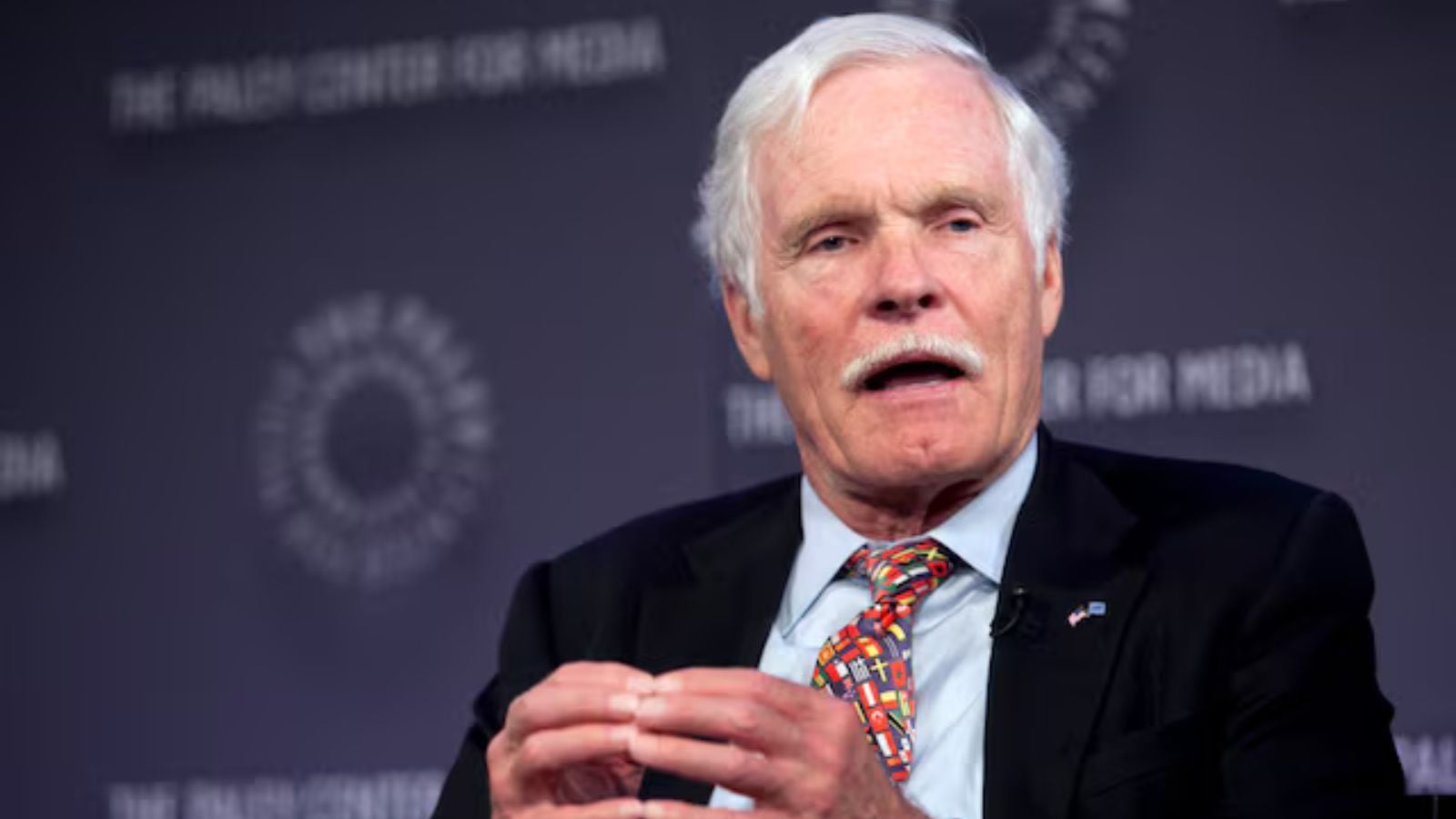
Ted Turner just died at 87. Most people will remember the "Mouth of the South" for the yachts, the buffalo ranches, or that brief, chaotic marriage to Jane Fonda. But if you grew up in India during the 1990s, Ted Turner wasn't just a billionaire in a suit. He was the guy who broke the boring, gray monopoly of state-run television and handed you a world of 24-hour news and high-speed cartoons.
Before Turner’s global expansion, Indian television was basically a lecture hall. You had Doordarshan. It was slow. It was predictable. It was patriotic in the way a math textbook is patriotic. Then came the Gulf War in 1991. Suddenly, CNN was beamed into five-star hotels and then, rapidly, into the living rooms of a burgeoning middle class. Turner didn't just give India a news channel; he gave the country its first real taste of the "Global Village" he talked about so much. You might also find this connected article insightful: Why The Tupac Murder Trial Opening Statements Are A Complete Distraction From The Real Institutional Failure.
He was a disruptor before the word became a cringe-worthy corporate buzzword. He bet the farm on ideas that everyone else thought were stupid. They called CNN "Chicken Noodle News" when it started. They thought 24-hour news was a waste of electricity. They were wrong. And while the West focused on his impact on American politics, his biggest victory might have been how he reshaped the cultural DNA of the world’s most populous nation.
How CNN Killed the Information Monopoly
In the early 90s, if something happened in Delhi, you waited for the evening news to see a scripted, sanitized version of it. Turner changed that. CNN’s coverage of the Gulf War was a shock to the system. Indians saw live missiles, real-time reporting, and a pace of information that felt electric. As reported in recent articles by Rolling Stone, the implications are significant.
It forced the Indian government’s hand. You can’t keep the door shut once people have seen what’s on the other side. Turner’s insistence on global satellite footprints meant that for the first time, an Indian viewer was getting the same information at the exact same second as someone in New York or London.
This wasn't just about news. It was about the end of the gatekeeper era. Turner’s model showed Indian entrepreneurs that there was a massive, hungry market for private broadcasting. Without CNN’s early success in the region, the explosion of local news channels like NDTV or Zee News would've taken decades longer to arrive. He provided the blueprint for the chaotic, loud, and incredibly fast-paced Indian news cycle we see today.
The Cartoon Network Revolution and the Childhood of a Billion People
While the adults were watching Peter Arnett on CNN, the kids were getting something even more transformative. In 1995, Turner launched Cartoon Network in India. If you weren't there, it’s hard to explain how big this was.
Before this, kids got maybe an hour of "cartoons" a week, usually some grainy, dubbed educational programming. Then, suddenly, there was Tom and Jerry. There were The Flintstones. There was Scooby-Doo. It was an all-you-can-eat buffet of Western animation.
Turner understood something about India that other moguls missed. He knew that the market wasn't just about the elites in Mumbai. He pushed for localization. By the early 2000s, Cartoon Network was dubbing shows into Hindi, Tamil, and Telugu. He realized that to win, he had to speak the language of the people, literally.
The Hanna-Barbera Treasure Trove
Turner’s 1991 purchase of the Hanna-Barbera library for $320 million was his smartest move. Critics thought he overpaid for "stale" old cartoons. Instead, he used those assets to build an empire. In India, these characters became icons. Dexters Laboratory and Johnny Bravo weren't just American imports; they were part of the childhood of an entire generation of Indian millennials.
He didn't stop at just playing old tapes. Turner International started investing in local Indian animation. They saw the potential in stories that resonated locally. This paved the way for the massive domestic animation industry India has today. It all started because a guy from Georgia decided that kids in Bangalore should have the same 24-hour entertainment options as kids in Atlanta.
The Turner Style of Risk Taking
Ted Turner wasn't a spreadsheet guy. He was a gut-feeling guy. When he launched CNN, he didn't do a three-year market feasibility study. He just did it. That's a lesson for anyone in media today. We're so obsessed with data and "engagement metrics" that we forget to have a vision.
He once said he wanted to be the "Man of the Century." Maybe he didn't quite hit that mark, but he came closer than most. He bought the Atlanta Braves and the Atlanta Hawks. He won the America's Cup. He donated a billion dollars to the UN when people thought the UN was a lost cause.
In India, his legacy isn't just a corporate logo. It's the fact that a kid in a rural village can now see the world in real-time. He shrunk the planet. He made it possible for a global conversation to happen, even if that conversation is often noisy and full of conflict.
What the Media Industry Gets Wrong About His Legacy
Most analysts look at Turner’s exit from the media stage—the disastrous AOL-Time Warner merger—as a failure. Honestly, that's a narrow way to look at it. Sure, he lost a lot of money on paper. But the infrastructure he built stayed.
The mistake most people make is thinking Turner was just a "TV guy." He was actually a connectivity guy. He saw that satellites would make borders irrelevant. He saw that news wasn't a product you sold twice a day, but a utility like water or electricity.
In India, this led to a massive democratization of information. It broke the back of state propaganda. When you have access to a global feed, you can't be told that everything is fine when it isn't. Turner’s CNN gave Indian citizens a yardstick to measure their own media against.
Lessons for Modern Broadcasters
If you're trying to build a media brand in 2026, you should look at Turner’s early days in Asia. He didn't wait for permission. He moved faster than the regulations could keep up with.
- Go where the monopoly is weak. In 1991, the Indian government monopoly on news was ripe for disruption.
- Content is an asset, not an expense. Buying Hanna-Barbera was the ultimate "long game" move.
- Localize or die. You can't just beam American culture into a foreign country and expect it to stick forever. You have to adapt.
The End of an Era
With Turner’s passing, the last of the "Great Disruptors" is gone. We live in an era of algorithmic feeds and AI-generated content. Everything feels polished, safe, and focus-grouped to death. Turner was the opposite. He was loud, he was wrong sometimes, and he was always interesting.
His impact on India is permanent. He changed what Indians eat (indirectly, through the advertising on his channels), how they speak, and how they see their place in the world. He turned a closed-off media ecosystem into a vibrant, if sometimes chaotic, marketplace of ideas.
Stop looking at his death as just a celebrity news item. Look at it as the closing chapter of the period when television actually mattered. If you want to honor his legacy, stop playing it safe. Take a massive risk on an idea that sounds crazy to everyone else. That's exactly what Ted would've done.
Go watch an old episode of The Flintstones or flip on a live news feed from halfway across the world. Take a second to realize that thirty years ago, that was considered impossible. Turner made it normal. That's his real victory. Now, go build something that makes the current "impossible" look like a joke.