The Theatre of the Macabre
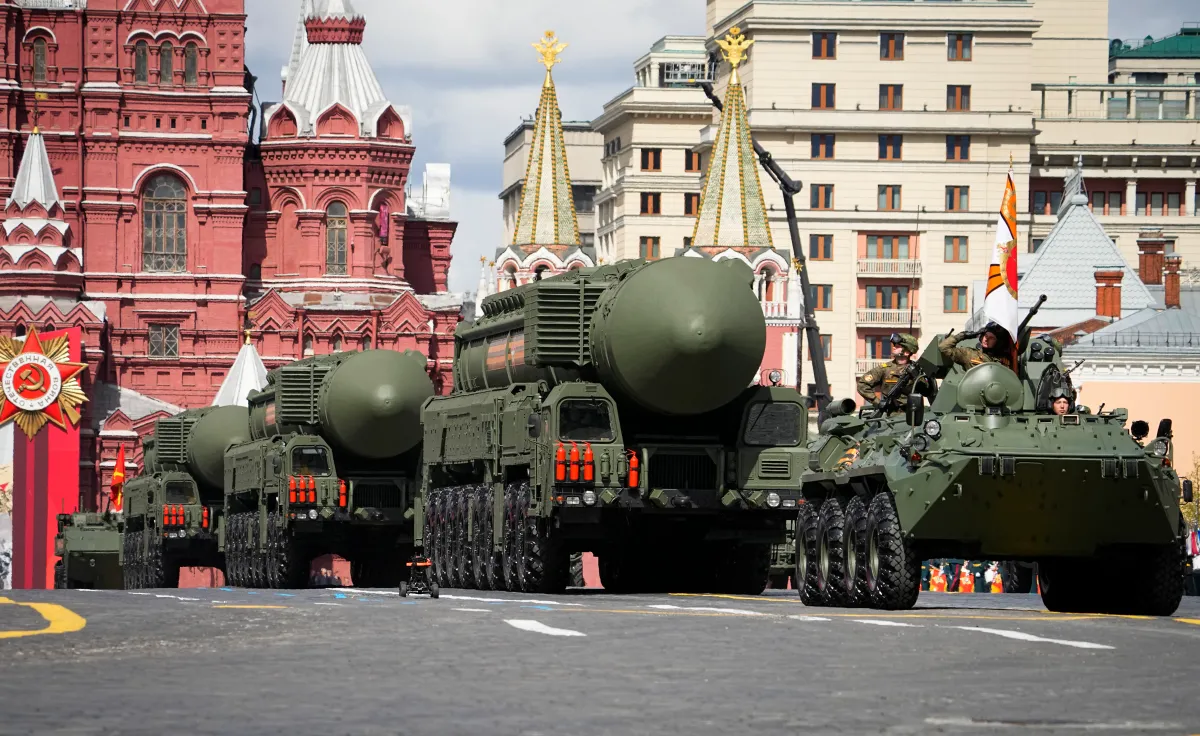
Mainstream media outlets love a good parade. They see a long, sleek ballistic missile rolling through the streets of Tehran and immediately pivot to the "rising tensions" script. They frame these displays as a show of force, a direct provocation to US-led ceasefire efforts, and a sign of a regime ready to ignite a regional powderkeg.
They are wrong. They are reading the playbook of 1985 in a 2026 world.
When Iran hauls its latest liquid-fueled or solid-propellant hardware through a public square, it isn't projecting strength. It is shouting about its limitations. These public displays are the geopolitical equivalent of a peacock's tail—expensive, cumbersome, and primarily designed to distract from the fact that the bird can barely fly. If you want to understand the reality of Middle Eastern brinkmanship, stop looking at the size of the nosecone and start looking at the logistics of the flatbed truck carrying it.
The Liquid-Fueled Lie
The "lazy consensus" suggests that Iran’s missile program is a monolithic juggernaut. It isn't. The backbone of their strategic reach still leans heavily on technology derived from the Soviet-era Scud-B. Even their more "advanced" variants, like the Shahab or the Khorramshahr, often rely on volatile liquid propellants.
In a real kinetic conflict, liquid-fueled missiles are a liability. They require hours of fueling on the launch pad, making them massive, glowing targets for modern satellite surveillance and pre-emptive strikes. You don't "show off" a weapon that requires a three-hour gas station stop before it can fire unless you are desperate for domestic validation.
By parading these systems during a US-mediated ceasefire, Tehran isn't threatening to break the peace. They are signaling to their own hardline factions and regional proxies that they still have "the big stick," precisely because they cannot afford to use it. The missile is a diplomatic bargaining chip, not a tactical solution.
The Accuracy Myth
Let’s talk about Circular Error Probable (CEP). This is the measure of a weapon's precision—the radius of a circle within which half of the missiles are expected to land. While Iranian state media claims their new toys have "pinpoint accuracy," the reality of long-range ballistic flight over 1,000 kilometers involves complex physics that their domestic guidance systems struggle to master.
- Vibration and Heat: Re-entry vehicles (RVs) face extreme thermal stress. Without high-end carbon-carbon composites, the RV burns up or veers off course.
- GPS Jamming: Relying on commercial-grade GNSS means their "smart" missiles become "dumb" rocks the moment electronic warfare (EW) suites are activated.
- The Math: If your missile has a CEP of 500 meters, you aren't hitting a military base; you're hitting a zip code.
Using a multi-million dollar missile to hit a patch of sand is not a military strategy. It is a very expensive fireworks display. The NDTVs of the world miss this nuance because they are too busy counting the wheels on the transport-erector-launcher (TEL).
Ceasefire as a Strategic Breath
The timing of these rallies—amidst US ceasefire talks—is framed as "defiance." This is a shallow interpretation.
In reality, Iran needs the ceasefire. Their economy is a hollow shell, gutted by sanctions and mismanagement. They use the parade to maintain their "Resistance" brand while their diplomats frantically look for a way to stop the bleeding. It’s a classic bait-and-switch. They show the missile so they don't have to show the empty treasury.
I have watched defense contractors and intelligence analysts obsess over the diameter of these tubes for years. They miss the forest for the trees. A missile on a truck in Tehran is a political statement. A missile in a hidden silo with a pre-fueled solid-propellant motor is a threat. Iran paraded the former because they are terrified of the latter being discovered and neutralized.
The Drone Disruption
While the world stares at the ballistic missiles, the real threat has already shifted. Small, cheap, loitering munitions—drones—have done more to disrupt regional security than any Shahab-3 ever could. Drones are the democratization of airpower. They are difficult to track, impossible to intercept cost-effectively, and require zero fanfare.
The fact that Iran is still parading massive ballistic missiles proves they are stuck in a legacy mindset. They are trying to scare the West with 20th-century symbols of power while the 21st-century war is being fought with $20,000 plastic wings.
The Cost of the Bluff
There is a downside to this contrarian view: the danger of underestimation. Just because a system is inefficient or outdated doesn't mean it isn't lethal. A "dumb" missile can still kill if it lands in a crowded city.
However, treating these parades as a sign of imminent regional dominance is a strategic error. It validates the regime's propaganda. It gives them the very leverage they are trying to fake.
Imagine a scenario where the international community ignored the parade entirely. No headlines. No "breaking news" banners. The regime’s primary tool for internal control—the image of the invincible defender—would evaporate. They feed on our fear. We provide the oxygen.
Stop Counting Cylinders
Stop asking how far the missile can fly. Ask how many they can actually launch before their command and control is decapitated. Ask why they are using a civilian rally to showcase a weapon that should be a state secret.
The Tehran rally isn't a show of force. It is a desperate plea for relevance in a world that is moving past them. The ceasefire isn't being threatened by these missiles; the missiles are being used to hide the fact that the regime has no other cards to play.
If you want to see where the real power lies, don't look at the missiles on the street. Look at the shadows where they aren't.