Geopolitical pressure points rarely detonate without warning. They simmer, hiss, and leak until a single operational decision threatens to spill the vessel entirely.
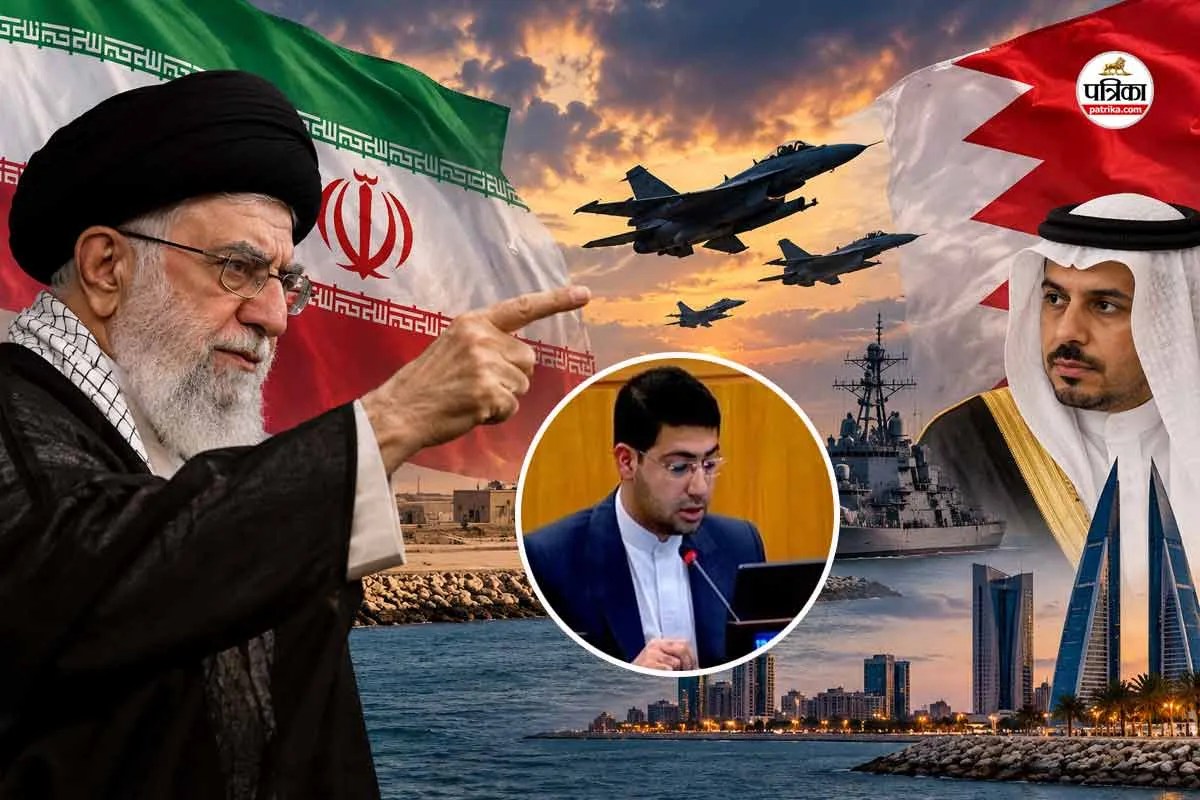
The recent direct warning from Tehran directed squarely at the government in Manama represents a stark escalation in the shadow war playing out across the Persian Gulf. Iran has laid down a severe diplomatic and military marker, explicitly cautioning Bahrain against permitting foreign or hostile airspaces to be utilized for staging operations against Iranian territory. This is not mere diplomatic posturing. It is a calculated threat rooted in immediate strategic survival, signaling that any neighboring state acting as a launchpad for third-party strikes will face immediate retaliation. For a closer look into similar topics, we suggest: this related article.
Bahrain finds itself in an exceptionally precarious geographical and political squeeze. As host to the United States Navy's Fifth Fleet and a critical node in regional defense architecture, the island nation is physically tethered to western military projections. Yet, its geography places it within direct striking distance of Iranian missile batteries and drone swarms. When Tehran issues an ultimatum regarding airspace utilization, it exposes the acute vulnerability of smaller Gulf states caught directly between western security umbrellas and the immediate wrath of a cornered regional adversary.
The Mechanics of Gulf Airspace Vulnerability
To understand why Tehran is drawing such a hard line in Manama, one must look closely at the operational geography of the Arabian Gulf. The waterway is narrow. Air corridors are compressed, leaving precious little margin for error or tactical ambiguity when military aircraft scramble. To get more background on this issue, detailed reporting can also be found at BBC News.
When regional tensions spike, the distinction between civilian air traffic corridors, reconnaissance tracks, and offensive strike packages blurs rapidly on military radar screens. Iran's defensive posture relies heavily on early warning systems and preemptive deterrence. By warning Bahrain directly, Tehran is attempting to close off potential staging vectors before kinetic operations can materialize.
The political calculus inside Manama is equally complex. The ruling authorities rely heavily on western security guarantees to maintain internal stability and deter external coercion. Rejecting western military access or placing sweeping restrictions on allied operations would signal a profound strategic pivot, effectively fracturing alliances that have stood for decades. Conversely, maintaining unmitigated alignment risks transforming Bahraini soil and airspace into a primary theater of war if hostilities escalate further.
Small states do not have the luxury of strategic indifference. Every tactical choice made in defense planning carries an immediate and disproportionate risk.
Historical Precedents in Asymmetric Deterrence
Iran's strategy of warning regional neighbors is not entirely novel, but the stakes have risen exponentially. Historically, Tehran has utilized a mixture of economic leverage, proxy networks, and direct diplomatic demarches to deter Gulf Cooperation Council members from providing logistical depth to hostile powers.
The calculation in Tehran is straightforward. If regional neighbors permit their airspace, intelligence infrastructure, or logistical hubs to facilitate attacks, they forfeit their status as neutral bystanders. They become active participants in the conflict matrix. This doctrine of shared culpability is designed to impose severe political and economic costs on local governments, forcing them to lobby Washington and other capitals to exercise restraint.
Diplomatic channels between Manama and Tehran have long been strained, characterized by periods of deep freeze punctuated by guarded, backchannel communications managed by third-party intermediaries. Public warnings of this magnitude bypass traditional diplomatic niceties, serving as a public deterrent intended to mobilize domestic and international pressure against any provocative military actions originating from Bahraini territory.
The Economic and Security Fallout
The immediate casualty of this escalating rhetoric is economic stability and investor confidence across the Gulf. Markets abhor unpredictability, and maritime trade, tourism, and infrastructure projects in Bahrain remain uniquely sensitive to regional tremors.
Insurance rates for shipping, commercial aviation risk assessments, and foreign direct investment all react violently to threats of kinetic exchange. When a regional power explicitly warns of targeting a neighbor's infrastructure over airspace usage, the risk profile of the entire banking and commercial hub shifts overnight. Businesses cannot plan for the medium term when the immediate horizon is dominated by the prospect of retaliatory missile strikes.
Furthermore, internal domestic dynamics within Bahrain cannot be ignored. The population watches these geopolitical maneuvers with acute anxiety, acutely aware that geography offers no shelter in modern missile and drone warfare. Security measures around critical installations have tightened significantly, reflecting an underlying tension that belies the calm exterior of the financial district.
The standoff between Tehran and Manama serves as a microcosm of a broader, systemic failure in regional security architecture. For decades, the Gulf has relied on a balance of power maintained through forward-deployed military might rather than inclusive, localized security frameworks. When those external guarantees clash directly with the raw survival imperatives of regional heavyweights, the smaller nations caught in the middle bear the brunt of the friction.
As threats harden into operational red lines, the margin for diplomatic error vanishes. The leadership in Manama must navigate a labyrinth of competing demands where every step forward carries the weight of potential conflict, and standing still offers no protection from the storm gathering across the water.