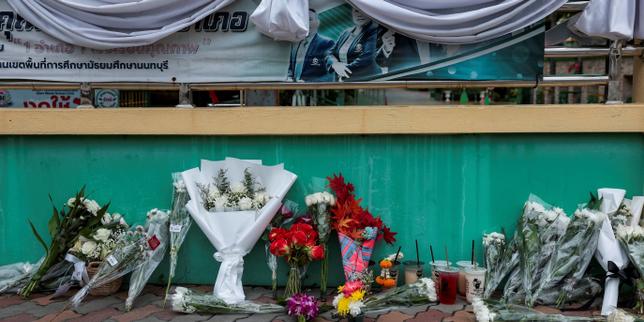
The hospital monitors kept ticking. Outside, the monsoon humidity clung to the asphalt like a physical weight. Another life slipped away inside a Thai trauma ward, pushing the death toll of a senseless rampage to eight, after a twelve-year-old child succumbed to injuries sustained in a hail of gunfire.
This was not an isolated aberration in a peaceful paradise. It was the predictable fracture of a system built on institutional complacency, unmonitored weapon proliferation, and a bureaucratic refusal to confront the underground arms trade.
When a gunman opens fire in broad daylight, the shockwaves ripple far beyond the immediate blast radius. Society gasps, politicians offer swift condolences, and the media focuses on the individual madness of the shooter. But focusing solely on the perpetrator ignores the structural vulnerabilities that allowed an ordinary citizen to arm themselves with military-grade efficiency.
The Anatomy of a Broken Gun Regime
Thailand maintains some of the strictest legal gun ownership laws in Southeast Asia on paper. Citizens must undergo background checks, secure psychological clearances, and provide a valid reason for owning a firearm, such as hunting or sport.
Reality paints a starkly different picture.
The kingdom possesses one of the highest rates of civilian gun ownership in the region. Millions of firearms circulate within its borders, a vast majority of them completely unregistered. How does a nation with rigid statutory frameworks become a hotbed for firearm casualties?
The answer lies in the shadows of porous borders, black-market supply chains, and state-sanctioned loopholes.
[Legal Market: Strict Checks] ---> [Bureaucratic Loopholes] ---> [Illicit Conversion Pipeline]
                                                                        |
[Illegal Imports: Smuggled Arms] -> [Black Market Dealers] ------------> v
                                    [High Civilian Circulation] ------> [Tragedy]
State security forces, including military and police personnel, have historically had access to subsidized weapon purchase schemes. Over decades, a secondary market emerged where service pistols and rifles leaked from official inventories into civilian hands. Add to this the proliferation of blank-firing pistols imported from Europe, which underground machinists easily convert into lethal, live-firing handguns with basic tools, and you have a recipe for perpetual crisis.
Law enforcement agencies frequently round up petty dealers, yet the systemic pipeline remains wide open.
The Myth of Individual Madness
Every time a mass shooting shatters public calm, official narratives rush to categorize the event as an unpredictable act of a deranged mind.
This diagnosis is convenient. It absolves the state of responsibility.
When veteran journalists investigate these incidents, a recurring pattern emerges. The shooters are rarely spontaneous anomalies. They are almost always products of systemic stressors: severe economic desperation, unaddressed trauma within hierarchical institutions, and unfettered access to the tools of destruction.
Take the horrific mass shooting in Nong Bua Lamphu a few years prior, or the Terminal 21 massacre in Korat. In both instances, warning signs flashed brightly across military and administrative radars long before the first trigger was pulled. Supervisors ignored erratic behavior. Institutional grievance went unmediated. The weapons remained within arm's reach.
By framing these tragedies as random acts of God or the isolated snaps of broken men, authorities avoid the uncomfortable work of reforming military culture, dismantling illegal trafficking networks, and instituting mandatory mental health interventions for those trusted with lethal force.
The Economics of Illicit Arms
Guns are commodities. Like any other commodity, their distribution follows the laws of supply and demand.
The underground market thrives because demand remains exceptionally high. Fear breeds demand. When citizens lose faith in the state's ability to maintain public safety, they seek protection outside the law. This creates a vicious cycle. More guns lead to more violence, which heightens societal insecurity, which drives further weapon acquisitions.
Societal Insecurity ---> Increased Demand for Protection ---> Growth of Black Market ---> Higher Violence Rates
^                                                                                          |
|------------------------------------------------------------------------------------------|
Smuggling routes cut through neighboring countries experiencing civil conflict, turning Thai border towns into clearinghouses for surplus weaponry. Law enforcement officials are often outgunned, underpaid, and occasionally compromised by the sheer profitability of the arms trade.
Combating this requires more than occasional weapon amnesties or theatrical police raids staged for evening television broadcasts. It demands a root-and-branch audit of state armories, severe penalties for corrupt officials who leak weapons to criminal syndicates, and aggressive international cooperation to choke off the supply of smuggled components and blank-firing replicas.
The Human Cost Behind the Statistics
Numbers lose their sharpness over time. Eight dead. A twelve-year-old child gone. Dozens of families forever altered by seconds of violence.
Behind each statistic is a shattered community left to navigate the bureaucratic maze of compensation, grief, and unanswered questions. The Thai public has grown weary of empty promises delivered from air-conditioned offices in Bangkok. They have watched cycle after cycle of outrage fade into quiet acceptance, only for the next shooting to reawaken the trauma.
True reform will not arrive via polite legislative debate. It will require sustained public pressure, transparent investigations into institutional negligence, and a fundamental shift in how the state views its monopoly on violence.
Until authorities summon the political will to dismantle the underground networks and secure official inventories, the monitors in the trauma wards will keep ticking, and children will continue paying the price for systemic failure.