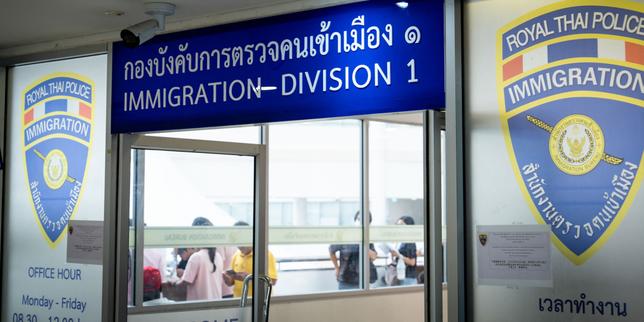
Chinese dissidents seeking sanctuary in Thailand face an immediate and terrifying reality of clandestine surveillance, arbitrary detention, and the imminent threat of forced repatriation to Beijing. Bangkok has long served as a precarious revolving door for political refugees fleeing Communist Party persecution, operating as a grey zone where Beijing’s long arm routinely bypasses international law through quiet bilateral cooperation and transnational repression.
For years, human rights organizations have documented the slow erosion of refugee protections across Southeast Asia. Thailand sits at the epicenter of this geopolitical crisis. The kingdom is not a signatory to the 1951 Refugee Convention or its 1967 Protocol, leaving asylum seekers entirely at the mercy of domestic immigration laws that treat undocumented refugees as illegal immigrants. This legal vacuum creates an open market for authoritarian coercion.
The Mechanics of Transnational Repression
Beijing does not need to formally invade foreign soil to silence its critics. It relies on a sophisticated web of informal policing agreements, economic leverage, and intelligence-sharing protocols that effectively extend China's domestic security apparatus across its borders.
When a prominent human rights defender, a religious minority member, or a democracy activist lands in Bangkok, their clock starts ticking. Local state security agents often work in tandem with embedded Ministry of Public Security operatives stationed throughout the region. Surveillance is pervasive. Dissidents report being followed through the crowded markets of Bangkok, receiving threatening phone calls from unknown numbers, and discovering that their local landlords have been pressured to evict them.
The process of silencing these individuals typically follows a predictable trajectory. First comes the intimidation phase. If that fails to deter the target, local authorities are quietly tipped off regarding minor visa infractions or immigration irregularities. A routine street check becomes a targeted arrest. From there, the individual is funneled into the Immigration Detention Center system—a notoriously overcrowded and punitive environment where detainees languish indefinitely while facing the constant threat of deportation.
Historical Precedents and Broken Promises
This dynamic is not entirely new, but the tempo and brazenness of these operations have escalated dramatically over the last decade. History offers grim reminders of what happens when Bangkok caves to pressure from Beijing.
Consider the notorious case of Jiang Yefei and Dong Guangping, two prominent Chinese dissidents who were forcibly repatriated from Thailand in 2015 despite holding official refugee status granted by the United Nations High Commissioner for Refugees. Both men were subsequently subjected to harsh interrogations and lengthy prison sentences in China. That high-profile incident laid bare the impotence of international protection mechanisms when confronted with bilateral deals negotiated behind closed doors.
Subsequent years have seen numerous similar disappearances and secret deportations. Activists who believed they were safe under the theoretical umbrella of UNHCR mandates quickly discovered that a blue refugee card carries very little weight against the diplomatic and economic gravity of the People's Republic of China.
The Blind Spot of International Diplomacy
Western governments frequently issue sternly worded diplomatic statements condemning transnational repression, but concrete action remains sparse. Economic dependencies complicate matters immensely. Thailand remains a vital strategic and economic partner for multiple global powers, creating a diplomatic hesitance to push too hard on human rights issues that Bangkok dismisses as internal domestic immigration matters.
The UNHCR, despite its best efforts, operates with severely constrained resources and limited leverage. When Thai authorities decide to bypass international norms, international monitors are often left issuing protests that go unheeded by local decision-makers.
This diplomatic inertia leaves independent civil society organizations and underground networks to pick up the slack. Safe houses are established, encrypted communications channels are maintained, and dangerous underground escape routes to third countries are mapped out in total secrecy. Yet every time a safe house is compromised or a network is infiltrated, the margin for error shrinks.
Inside the Detention System
For those captured, the descent into the Thai immigration detention apparatus is swift and brutal. Cells are severely overcrowded, sanitation is minimal, and access to legal counsel or medical care is restricted.
Detainees face a cruel psychological dilemma. They can choose to sign "voluntary" repatriation forms—often under extreme duress, exhaustion, and fear—or they can remain locked in concrete cages for years, waiting for a third-country resettlement that may never materialize. Beijing's agents frequently visit these facilities or maintain close communication with local guards to monitor high-value targets, ensuring that the pressure never lets up.
The psychological toll on these communities is immense. Living in constant fear breeds paranoia and fractures solidarity networks. Activists who once organized massive pro-democracy rallies find themselves whispering in locked rooms, paranoid that their own neighbors or messaging apps have been compromised.
The Broader Geopolitical Fallout
The crisis in Thailand is a glaring symptom of a much larger global malaise. As authoritarian regimes become increasingly bold in reaching across international borders to punish dissent, the traditional architecture of political asylum is fracturing.
If sovereign states can outsource their repression to compliant neighbors with impunity, the very concept of sanctuary ceases to exist. The dissidents stranded in Bangkok are not merely fighting for their own individual survival; they are standing on the front lines of a global conflict over whether international law and human rights protections still hold any meaning in the twenty-first century.
The system is broken, the stakes are absolute, and the silence from the international community remains deafening.



