Every watt of electricity consumed by an artificial intelligence cluster converts directly into thermal energy. While public discourse fixates on the megawatt-hour appetite of large language model training runs, the physical bottleneck of modern compute is not power delivery—it is heat rejection. Capturing and repurposing this thermal exhaust is routinely pitched as a dual-purpose solution to grid strain and industrial decarbonization. In practice, capturing data centre heat fails at scale because of a fundamental mismatch between the thermodynamic quality of server exhaust and the operational requirements of industrial and municipal heat sinks.
To evaluate whether waste heat recovery is a viable infrastructure play or a public relations distraction, operators must strip away high-level sustainability rhetoric and apply the laws of thermodynamics, capital expenditure modeling, and spatial economics.
The Exergy Deficit and the Low-Grade Thermal Trap
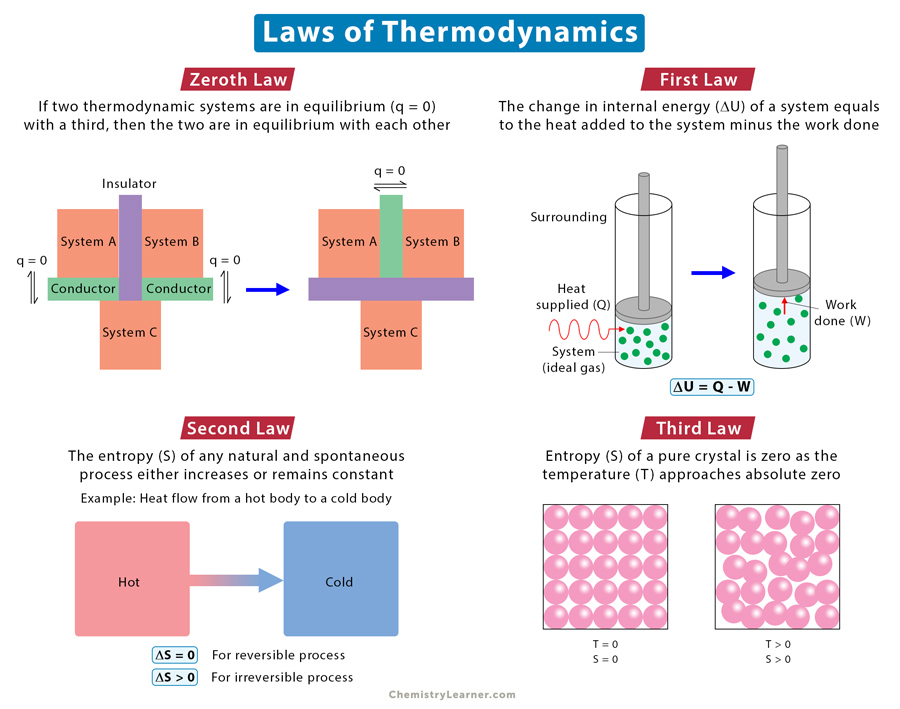
The primary failure mode in data centre heat recovery is the confusion between energy (measured in megawatts) and exergy (the maximum useful work possible during a process that brings the system into equilibrium with a heat reservoir). A hyperscale facility consuming 100 megawatts produces 100 megawatts of thermal energy. However, the temperature at which that heat is rejected dictates its economic value.
Traditional air-cooled facilities exhaust air at temperatures ranging from 30°C to 45°C. In thermodynamic terms, this is ultra-low-grade heat. Transferring thermal energy requires a temperature gradient; heat flows from a hotter body to a colder one. Because 40°C air carries low exergy, it cannot be directly injected into standard municipal district heating loops, which typically operate between 70°C and 90°C to prevent Legionella bacteria proliferation and overcome distribution pipe losses, nor can it drive industrial steam processes requiring temperatures upwards of 150°C.
To bridge this temperature gap, operators must deploy industrial heat pumps. This introduces a severe efficiency penalty measured by the Coefficient of Performance (COP).
- The Lift Penalty: The COP of a heat pump degrades exponentially as the temperature "lift" (the difference between the source temperature and the target output temperature) increases.
- Parasitic Load: Raising 35°C server exhaust to 85°C district heating water requires a 50-degree lift, typically dropping the COP to between 2.5 and 3.0. This means for every 2.5 units of heat delivered, the facility must consume 1 additional unit of high-grade electrical power to run the heat pump compressors.
- Capital Intensity: Industrial-scale heat pumps capable of multi-megawatt lifts require massive capital outlays, specialized refrigerants, and dedicated mechanical plant footprints that compete directly with revenue-generating white space.
Liquid cooling—specifically direct-to-chip (D2C) cold plates and single-phase immersion—fundamentally alters this equation. Because water has a volumetric heat capacity roughly 3,500 times greater than air, liquid loops capture heat much closer to the silicon junction temperature. Modern D2C systems can reliably output return water at 50°C to 65°C without throttling GPU clock speeds. This higher outlet temperature compresses the required heat pump lift, pushing COP values above 4.0 and dramatically improving the thermodynamic viability of recovery. Yet, even with liquid cooling, thermodynamic feasibility does not guarantee commercial execution.
The Four Structural Frictions of Thermal Offtake
When a data centre operator attempts to monetize waste heat, they cease to be a pure-play compute provider and become an unregulated thermal utility. This transition exposes the project to four structural frictions that routinely kill recovery projects during front-end engineering design (FEED).
1. Spatial Decoupling
Compute infrastructure and thermal demand follow opposing real estate logic. Hyperscale AI training clusters require vast tracts of cheap land, immediate access to high-voltage transmission substations, and proximity to long-haul dark fiber routes. These conditions push facilities into rural or exurban zones. Conversely, district heating networks and industrial process heat consumers (such as chemical plants, food processors, and paper mills) are concentrated in dense urban cores or established heavy industrial corridors. Thermal energy cannot be transmitted efficiently over long distances; insulated underground piping loses heat per kilometer and costs millions per mile to trench. If the thermal sink is not within a two-to-five-kilometer radius of the server hall, the capital cost of the distribution network destroys the project's internal rate of return.
2. Temporal Asynchrony
Data centres operate as flat, baseload thermal generators. An AI training cluster running a multi-month foundational model run generates a near-constant thermal profile 24 hours a day, 365 days a year. Municipal heating demand, by contrast, is aggressively seasonal. A city requires maximum thermal output during winter peak events and near-zero space heating during summer months. If a data centre relies on a municipal district heating loop as its primary heat sink, the operator must still build, maintain, and power 100% redundant cooling infrastructure (such as adiabatic chillers or dry coolers) to reject that heat during the summer. Consequently, waste heat recovery rarely eliminates the capital expenditure of traditional cooling plants; it merely layers additional piping, heat exchangers, and pumping stations on top of existing designs.
3. Counterparty Risk and Contract Duration
A data centre asset is typically amortized over 10 to 15 years, though the internal IT refresh cycle occurs every 3 to 5 years. District heating networks and industrial manufacturing plants operate on 30-to-50-year infrastructure horizons. Negotiating an offtake agreement between these two entities creates an intractable counterparty risk profile. If an industrial offtaker goes bankrupt, relocates, or retools its manufacturing process, the data centre loses its heat sink. Conversely, if a data centre operator upgrades to a next-generation chip architecture with different thermal tolerances or consolidates workloads elsewhere, the municipal grid faces a sudden supply deficit. Structuring take-or-pay contracts that satisfy both hyperscale balance sheets and municipal bondholders adds months or years to permitting timelines—a fatal delay in an AI market where time-to-power dictates market share.
4. Operational Liability and Uptime Primacy
The core mandate of any mission-critical facility is uninterrupted uptime. Cooling is not an ancillary utility; it is a primary life-support system for silicon. Integrating an external thermal offtaker introduces external failure modes into the facility's closed-loop cooling architecture. If an external district heating pump fails, a pipe ruptures, or downstream demand drops unexpectedly, the data centre's heat rejection capacity is immediately compromised. Isolating the facility from these downstream shocks requires complex hydraulic decoupling, automated bypass valves, and secondary rejection loops. Engineering teams operating under strict Service Level Agreements (SLAs) instinctively resist coupling their critical thermal management systems to third-party infrastructure over which they hold zero operational control.
The Hierarchy of Thermal Offtake Viability
Not all heat sinks are created equal. Evaluating where waste heat recovery actually clears hurdle rates requires categorizing applications by their required temperature lift, seasonal stability, and proximity tolerance.
Tier 1: Co-Located Controlled Environment Agriculture (CEA) and Aquaculture
Greenhouses and land-based fish farms represent the highest-probability matches for data centre thermal exhaust. They operate comfortably with low-grade heat (25°C to 40°C), eliminating the need for expensive heat pump upgrades. They can be purpose-built directly adjacent to rural hyperscale campuses, solving spatial decoupling. While greenhouses still exhibit seasonal demand curves, the low capital threshold required to pipe warm air or water into an adjacent agricultural structure allows projects to pencil out even at low capacity factors.
Tier 2: District Heating Integration (Liquid-Cooled Facilities)
In regions with established, high-density district heating infrastructure—specifically the Nordics, Germany, and parts of Eastern Europe—connecting liquid-cooled data centres to municipal grids is viable. High regulatory carbon taxes and elevated natural gas prices provide the economic subsidy necessary to justify the heat pump capital expenditure. However, this remains a localized phenomenon driven by policy mandates and legacy pipe networks rather than universal unit economics.
Tier 3: Industrial Process Heat (Desalination, Drying, Low-Pressure Steam)
Integrating with industrial facilities offers the advantage of flat, year-round baseload demand, matching the operational profile of AI clusters. Applications like low-temperature thermal desalination, timber drying, or agricultural crop dehydration can utilize 60°C to 80°C water directly from liquid-cooled loops. The limiting factor here is strictly spatial: finding an industrial facility with matching thermal demand adjacent to a site with sufficient electrical substation capacity for an AI cluster.
Tier 4: Organic Rankine Cycle (ORC) Power Generation
Converting waste heat back into electricity via Organic Rankine Cycle turbines is thermodynamically possible using low-boiling-point working fluids. In practice, it is economically ruinous at data centre temperatures. Carnot efficiency limits dictate that converting 60°C thermal energy into electricity yields net thermal-to-electric efficiencies below 5% to 8%. The capital cost per kilowatt of recovered electricity vastly exceeds grid power prices, making ORC turbines a non-starter for commercial operators.
The Capital Allocation Reality
The financial calculus of AI infrastructure dictates that every dollar of capital expenditure and every megawatt of grid interconnection capacity be directed toward compute density. When a hyperscaler or colocation developer evaluates a 100-megawatt AI campus, the primary financial driver is the speed at which they can deploy GPU clusters and monetize compute capacity.
Waste heat recovery introduces capital drag. Designing, permitting, and constructing thermal export infrastructure adds upfront CapEx and complicates environmental permitting. In return, the financial upside is marginal. Low-grade heat is a deeply discounted commodity; even when sold to a municipal utility, the revenue generated per megawatt-hour of thermal energy is a fraction of the revenue generated by the underlying compute. For an operator generating thousands of dollars per hour per rack in AI compute revenue, selling waste heat for pennies per kilowatt-hour does not move the needle on asset valuation.
Consequently, waste heat recovery rarely happens through pure market incentives. It occurs almost exclusively under three conditions:
- Regulatory Coercion: Jurisdictions such as Germany (via the Energy Efficiency Act) mandate that new data centres reuse a rising percentage of their waste heat, forcing developers to treat heat export as a non-negotiable cost of market entry.
- Grid Interconnection Leverage: In power-constrained markets like Amsterdam, Dublin, or Frankfurt, committing to supply heat to a municipal network acts as a political wedge to secure scarce electrical grid permits and zoning approvals.
- Direct Subsidies: Public-private partnerships where municipal utilities or sovereign green funds absorb the capital cost of the heat pumps and distribution piping, insulating the data centre operator from the infrastructure risk.
Strategic Execution Protocol for Infrastructure Developers
Developers and infrastructure funds building next-generation AI capacity cannot ignore thermal reuse, as regulatory mandates and permitting bottlenecks increasingly tie electrical access to circular energy commitments. Rather than bolting on recovery systems as an afterthought, capital allocators must execute a disciplined, sequence-driven engineering and commercial strategy.
- Default to High-Temperature Liquid Cooling Architectures: Design all new AI facilities around direct-to-chip liquid cooling capable of operating at coolant return temperatures of 55°C or higher. This single architectural decision eliminates the worst of the thermodynamic exergy penalty, cutting future heat pump capital requirements by up to 40% and future-proofing the asset against tightening thermal reuse mandates.
- Integrate Thermal Offtake into Site Selection Criteria: Stop treating heat recovery as a post-site-selection engineering problem. Screen potential land parcels simultaneously for high-voltage substation capacity and proximity (under 3 kilometers) to anchor thermal consumers—specifically industrial parks, existing district heating mains, or land zoned for commercial agriculture.
- Isolate Hydraulic Boundaries and Maintain 100% Redundant Rejection: Never compromise facility uptime for thermal export. Engineer strict hydraulic separation via plate-and-frame heat exchangers at the property line. Retain 100% independent, closed-loop heat rejection capacity (dry coolers or cooling towers) on-site so the data centre can instantly shed thermal load if the external offtaker goes offline.
- Structure Offtake Agreements as Zero-CapEx Energy Services: Refuse to fund off-site distribution piping or municipal heat pump stations from the data centre balance sheet. Structure commercial agreements where the data centre provides warm water at the facility boundary—either for free or at a nominal indexed rate—while an energy service company (ESCO) or municipal utility finances, owns, and operates the upgrade and distribution infrastructure. Monetize the arrangement indirectly through accelerated permitting, tax abatements, and secured grid power allocations rather than chasing marginal thermal utility revenues.