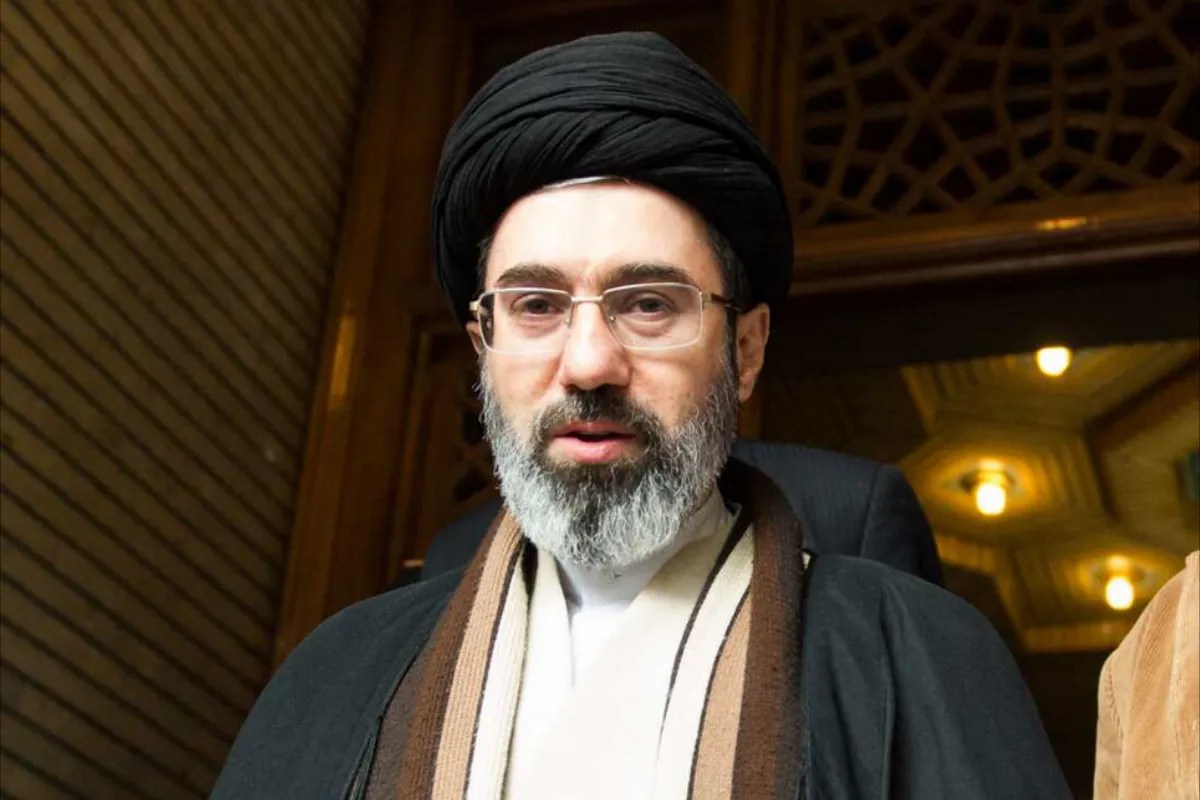
The lazy media narrative treats Tehran like a predictable board game where pieces simply move up a generational ladder. Headlines breathlessly announce that Mojtaba Khamenei has taken the reins of Iran's leadership, framing his rise as a straightforward clerical inheritance.
It is a comfortable analysis for lazy foreign desk pundits. It reduces a massive geopolitical structural shift to a simple family business transaction. If you found value in this piece, you might want to read: this related article.
They are looking at the wrong variable.
Focusing on whether Mojtaba's ascension mimics a hereditary monarchy misses the brutal mechanics of how power actually operates inside the Islamic Revolutionary Guard Corps infrastructure. The transition from Ali Khamenei to his son is not a continuation of old clerical rule. It is a hostile corporate takeover of the state by its own security apparatus. For another angle on this story, see the recent update from The New York Times.
The Myth of the Clerical Heir
For decades, political scientists categorized Iran through the lens of theology and turbaned clerics negotiating with bazaar merchants and populist presidents. That model died in the roar of recent conflict.
When analysts treat Mojtaba as a traditional religious scholar stepping into his father's shoes, they ignore his actual operating history. He has spent the better part of two decades bypassing formal government channels to consolidate direct operational control over the Basij and intelligence protection networks.
He is not a man whose power derives from religious jurisprudence or popular consensus within the Assembly of Experts. His authority is anchored in hardware, surveillance architecture, and cash flow. By ignoring this structural reality, mainstream commentary completely misreads the trajectory of Iranian statecraft.
Imagine a scenario where a corporate board is bypassed entirely while the Chief Security Officer installs the founder's son not because of his vision, but because the security apparatus needs a recognizable figurehead to rubber-stamp military survivalism. That is what is happening in Tehran.
Dismantling the Dynastic Backlash
Western and regional critics love to point out the blatant contradiction: a republic born from a 1979 revolution against hereditary monarchy sliding quietly into a father-to-son handoff. Social media lights up with protests and mockery every time a state broadcast mentions his name.
Analysts take this public discontent as a sign of immediate regime fragility. That is a dangerous miscalculation.
Public resentment does not equal revolutionary overthrow when the state has perfected the art of compartmentalized survival. Mojtaba's relative invisibility—his prolonged absence from public view amid conflicting reports of injuries—is often read as weakness. In reality, bunkerization is a deliberate strategy of insulation. By refusing to engage in traditional populist theater, the new leadership eliminates public touchpoints that can be targeted by foreign intelligence or domestic unrest.
The security state does not need popularity. It needs an uninterrupted chain of command. And the IRGC has ensured that chain runs directly through the shadows.
The Strategy of Perpetual Limbo
Look at how the new administration handles international pressure. The conventional take assumes that a new leader must either launch an all-out offensive or sue for peace to stabilize a battered economy.
Instead, Tehran has chosen weaponized stagnation.
By demanding an end to the state of "no war, no peace" on rigid terms, the leadership forces adversaries into a game of diminishing returns. Every month that passes without a total collapse normalizes the new security baseline. Economic pain is absorbed and deflected onto the population, while the core military infrastructure recalibrates its targeting capabilities.
The mistake foreign policymakers make is believing that Iran wants to integrate back into a rules-based global trade order. The people pulling the strings behind Mojtaba thrive precisely when the borders are locked, sanctions are old news, and the economy is entirely dependent on parallel financial networks and regional proxies.
The Uncomfortable Truth About the New Guard
Admitting this reality requires dismantling our own wishful thinking. For years, diplomatic corps clung to the hope that moderate factions within the system would eventually reform it from within. That hope was a fantasy.
Mojtaba Khamenei represents the complete militarization of the supreme office. The clerics have taken a backseat; the commanders have taken the wheel. The transition was never about preserving an Islamic democracy. It was about ensuring that when the dust settled from regional strikes and economic blockades, the guns stayed in the same hands.
Stop analyzing Tehran through the outdated lens of clerical politics. Watch the command nodes, watch the financial routing through digital assets, and watch the military appointments.
The crown was never handed down. It was seized.