The screen glowed with a pale, rhythmic light in the darkened living room. Omar sat on the edge of his sofa, the blue light reflecting in his eyes as he scrolled through a chaotic feed of flickering shadows and low-resolution sirens. It was 11:30 PM in Dubai. Outside, the city was a quiet hum of luxury and ambition, but inside the five-inch glass rectangle in his palm, the world was ending.
A video appeared. It was grainy, shot from a balcony somewhere in the Levant, showing streaks of light arcing across a charcoal sky. The caption, written in aggressive, capitalized Arabic, claimed that a major escalation had just leveled a civilian neighborhood. It urged everyone to share immediately to "reveal the truth the media is hiding."
Omar felt a surge of cold adrenaline. He wasn’t a political activist or a professional provocateur. He was a marketing manager who cared about his cousins abroad. His thumb hovered over the "Forward" button. It took exactly twelve seconds for him to decide that being fast was more important than being right. On the thirteenth second, he hit send, broadcasting the clip to three WhatsApp groups and his public X feed.
He didn't know the video was three years old. He didn't know it was filmed in a different country. And he certainly didn't know that this three-second physical movement—the twitch of a thumb—had just invited the legal machinery of the state into his bank account.
The Anatomy of a Digital Wildfire
Misinformation in a vacuum is a nuisance. Misinformation during a regional conflict is a weapon. When the air is thick with tension between global powers and regional players, a single "repost" acts as a match dropped into a warehouse of dry tinder. The UAE authorities recognize that in the modern age, the border isn't just a line in the sand; it’s the integrity of the information space.
The law in the Emirates is crystalline in its severity because the stakes are existential. Under the Federal Decree-Law on Combating Rumors and Cybercrimes, the act of spreading fake news that provokes public opinion or disturbs public peace isn't viewed as a "mistake." It is categorized as a threat to national security.
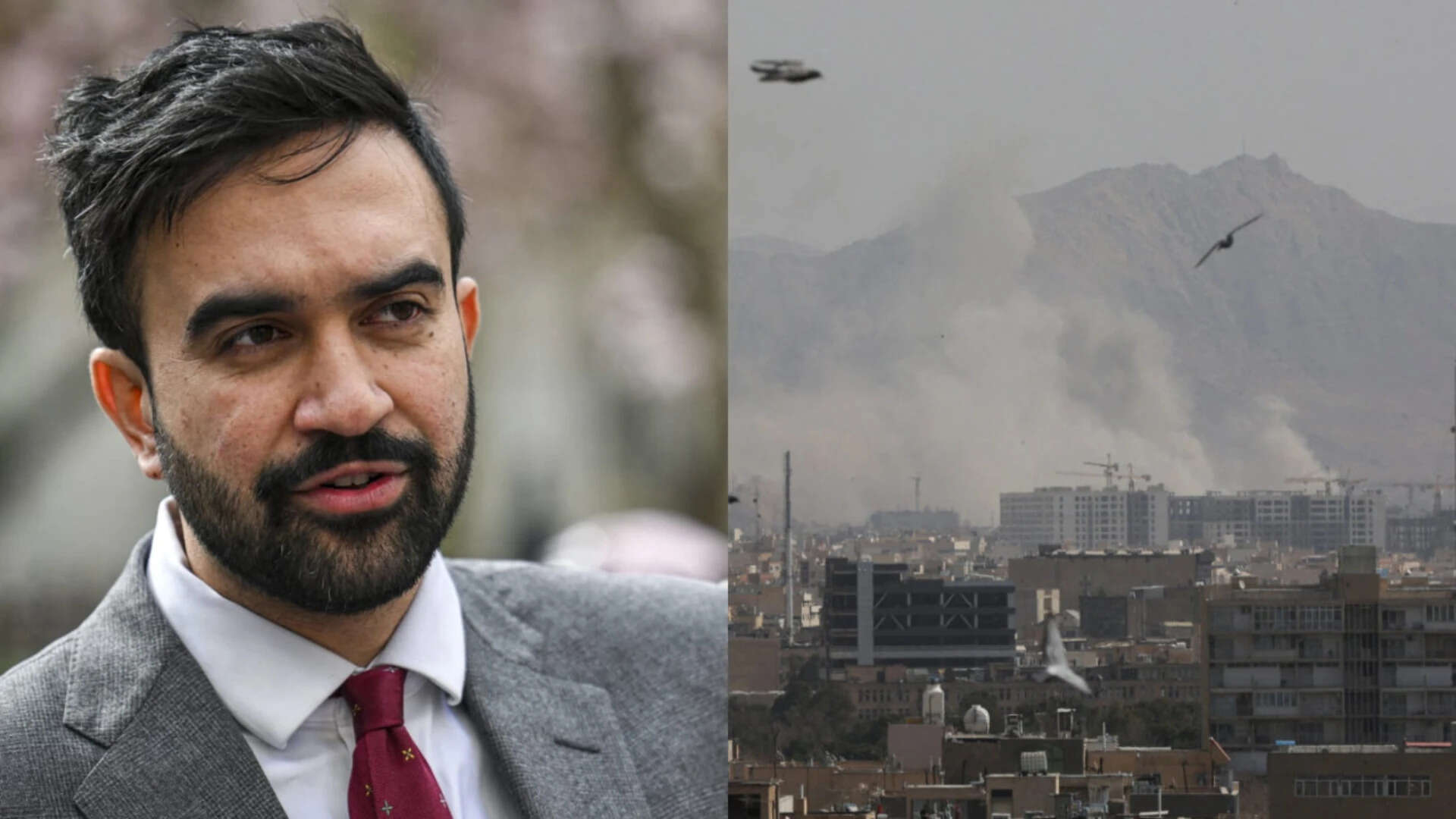
For Omar, the reality set in forty-eight hours later. It started with a formal notification. The "news" he shared had been flagged by the monitoring systems designed to keep the peace during the Iran-Israel-US tensions. The fine for such an impulse starts at Dh100,000. If the rumor is deemed to have been spread during a time of crisis or emergency—which a regional military escalation certainly is—that figure doubles to Dh200,000.
Consider the weight of that number. For most residents, Dh200,000 is not just a "fine." It is a down payment on a home. It is four years of university tuition. It is the entirety of a hard-earned life savings, vanished because of a twelve-second lapse in judgment.
The Psychology of the Share
Why do we do it? Why do intelligent, rational people become conduits for lies?
Psychologists call it "high-arousal emotion." When we feel fear, anger, or a desperate need to protect our tribe, the prefrontal cortex—the part of the brain that asks, Is this source verified?—shuts down. We transition into a primal state. Sharing becomes a survival mechanism. We think we are sounding the alarm for the village. In reality, we are just screaming "fire" in a crowded theater because we saw a reflection of a red light.
The architecture of social media is designed to exploit this. Algorithms don't prioritize truth; they prioritize "engagement." A lie travels around the world before the truth has even finished its morning coffee, mainly because the lie is usually much more exciting than the boring, nuanced reality.
In the context of the current geopolitical climate, the "truth" is often slow. It requires official statements, satellite verification, and diplomatic channels. A "rumor," however, is instant. It’s a "leaked" audio clip. It’s a "deleted" photo. It feels like an insider secret, and we all want to be the one who knew first.
The Invisible Net
The UAE’s digital landscape is one of the most sophisticated in the world. This is a country that built a Ministry of Artificial Intelligence before most nations knew how to spell it. When you post something online here, you aren't shouting into a void; you are entering a regulated public square.
The authorities aren't just looking for professional trolls or foreign agents. They are looking for the "accidental spreaders." The logic is simple: if the penalty for spreading a rumor is high enough, the friction of sharing will finally outweigh the impulse. They want you to pause. They want you to doubt.
Imagine a hypothetical woman named Sarah. She sees a post claiming that certain food supplies are being diverted due to the regional "clashes." She’s worried about her children. She sends the post to her "Moms' Group." Within an hour, three grocery stores have lines out the door. People are panicking. This is how a digital rumor creates a physical crisis. Sarah didn't mean to cause a riot, but the law doesn't measure intent as much as it measures impact.
The impact of a rumor during a period of regional instability is measurable in the price of oil, the stability of the currency, and the physical safety of millions of residents from over 200 nationalities.
The Cost of Being "First"
The Dh200,000 fine is a deterrent, but the secondary costs are often more devastating. A criminal record for "disturbing public peace" can lead to the cancellation of residency visas. It can mean deportation. It can mean a permanent ban from a region that has become a global hub for business and safety.
We often talk about "Freedom of Speech" as if it exists in a vacuum, but every right carries a corresponding duty. In a region where the margin for error is razor-thin, the duty is to verify.
But how? How does a regular person navigate the fog of war?
It starts with a simple audit of the source. Is the account "verified" by a reputable news organization, or is it an anonymous handle with a string of numbers for a name? Does the video actually match the location? If you search for the headline on a major news wire like WAM (Emirates News Agency), does it appear? If the answer is no, the "Forward" button is a trap.
The real danger isn't the sophisticated deepfake. It’s the "cheap-fake." It’s the old video with a new caption. It’s the out-of-context quote. It’s the "friend of a friend who works at the airport" story. These are the narratives that bypass our filters because they feel personal.
The Silence of the Wise
There is a certain dignity in silence during a crisis. There is a specific kind of power in refusing to be a megaphone for chaos.
When the world feels like it’s tilting on its axis, and the headlines are screaming about missiles and maneuvers, the most patriotic and self-preserving thing a resident can do is put the phone down. The authorities have repeatedly urged the public to rely solely on official sources. This isn't just about control; it's about clarity.
Omar’s story doesn't have a happy ending. There was no "undo" button for his thirteen-second mistake. The legal process in the UAE is efficient, and the electronic footprint he left was indelible. He had to explain to his family why their life savings was now a debt to the state. He had to explain why a blurry video of a sky he didn't recognize was worth his daughter's future.
We live in an age where our thumbs are more powerful than our voices. We can build empires or burn them down from the comfort of our beds. But that power comes with a price tag, and in the UAE, that price is exactly Dh200,000.
Next time you see a post that makes your heart race, next time you feel that itch to be the first to tell your group chat that the "war has started," remember Omar. Remember that the thirteenth second is where your life as you know it can end.
The most expensive thing you will ever own is a rumor you didn't fact-check.