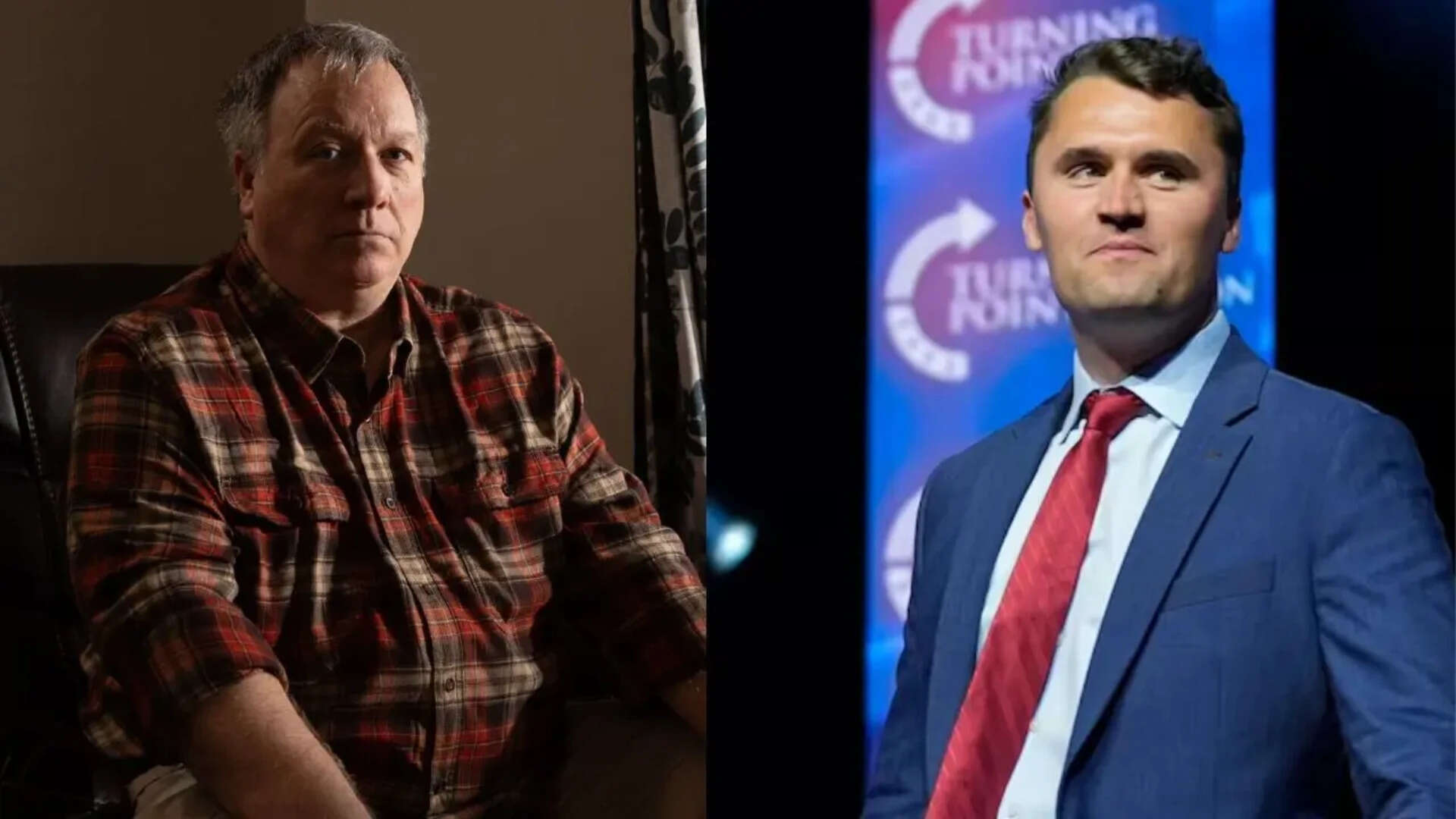
The steel door doesn't shut with a click. It slams with a heavy, metallic thud that echoes in your teeth. For Joshua Garton, that sound became the metronome of his life for over a month.
He wasn’t a cartel boss. He wasn’t a violent offender caught in the act. He was a guy in Tennessee who posted a photo on the internet. A digital collage. A meme.
We live in an era where we treat our smartphones like extensions of our thoughts. We tap, swipe, and share without a second glance. We assume our screens are private windows to a public square protected by the highest laws of the land. But what happens when a piece of digital satire crosses the wrong desk, and the machinery of the state decides to crush the person who hit upload?
The price tag for that mistake was recently settled at $835,000. But the math of a settlement rarely captures the geometry of the trauma.
The Photo That Broke a System
It started with an image of political commentator Charlie Kirk. Someone had edited the photo to make it look like Kirk was holding a sign that read, "Please blue lives matter guys don't look at my wife's boyfriend." It was crude. It was internet humor at its most irreverent. Garton saw it, found it funny, and posted it to his Facebook page.
Within days, the real world violently collided with the digital one.
The Tennessee Bureau of Investigation got involved. Local law enforcement took the meme not as a tasteless joke, but as a direct threat. They charged Garton with harassment, claiming the post caused emotional distress.
Consider the sheer scale of that reaction. The state mobilized detectives, forensic investigators, and jailers over a piece of internet culture. When the handcuffs clicked around Garton's wrists, the abstract concept of the First Amendment evaporated. It was replaced by a concrete cell, a thin mattress, and thirty-seven days of absolute uncertainty.
Imagine sitting in a cell for over five weeks, watching the sun rise and set through a barred window, wondering how a picture on a phone screen transformed into a prison sentence.
The Law is Not a Tool for Hurt Feelings
The legal system is built on precedent, logic, and constitutional bedrock. Or at least, it is supposed to be.
To understand why this arrest was so catastrophic, we have to look at the legal definition of harassment. True harassment requires a pattern of behavior, a direct threat, or an intent to intimidate. A meme posted to a public profile about a public figure falls squarely under the umbrella of protected speech. It doesn’t matter if the speech is offensive, vulgar, or deeply embarrassing to the subject.
Satire has always been a messy business. Historically, political cartoonists used ink and paper to mock kings, presidents, and public figures. Today, citizens use Photoshop and smartphones. The medium changed, but the constitutional protection remained the same.
The prosecutors in Garton’s case treated the internet like a local neighborhood where they could police manners. They forgot that the Constitution protects the right to be rude.
When the case finally reached a judge, it fell apart almost instantly. The charges were dismissed. The judge recognized what the police had ignored: you cannot jail someone simply because you dislike their taste in humor. But the dismissal didn't erase the thirty-seven days Garton spent behind bars. It didn't give him back his time, his peace of mind, or his sense of safety.
The True Cost of Free Speech
A settlement of $835,000 sounds like a victory. It makes for a triumphant headline. It feels like justice.
But money is a poor substitute for freedom. The check is paid by the taxpayers of Dickson County and the state of Tennessee, not by the individual officers who decided to misuse their authority. The systemic flaw remains largely uncorrected.
The real danger here is the chilling effect.
When an ordinary citizen sees a neighbor get dragged off to jail for a Facebook post, a quiet panic sets in. People start deleting their comments. They hesitate before sharing an opinion. They censor themselves. The public square grows quieter, more timid, and less free.
The internet has democratized speech, but it has also democratized the risk. We carry devices in our pockets capable of reaching millions of people instantly. That power is exhilarating, but as Joshua Garton learned, it is also incredibly fragile. The institutions designed to protect us can easily be turned against us if the people running them don't understand the rules of the digital playground.
The settlement is finalized now. The lawyers have moved on to other cases. The headlines have shifted to the next breaking news cycle.
But somewhere in Tennessee, a man is trying to rebuild a life that was paused for over a month because of a JPEG. The next time you go to share a controversial joke or an edgy political meme, your finger might hover over the screen just a millisecond longer. You might remember the thud of that steel door. And that hesitation is exactly what the overreaching hand of the law wanted all along.