The coffee in Vienna always tastes slightly burnt if you drink it after midnight, a bitter, metallic reminder that diplomats rarely sleep when maps are being redrawn.
I remember sitting in a cramped press room near the Hofburg Palace years ago, watching gray-suited aides sprint down marble corridors clutching manila folders like life preservers. Outside, tourists ate pastries. Inside, men who had never met a single resident of a small border town were deciding which currency those residents would use to buy bread by Tuesday. You feel the weight of those rooms in your teeth. You realize, with a cold jolt in your stomach, that geopolitics is not an abstract chessboard played by giants in velvet chairs; it is the invisible hand that quietly adjusts the interest rate on your mortgage, the price of the semiconductor inside your phone, and the odds that your nephew gets deployed to an ocean he cannot spell.
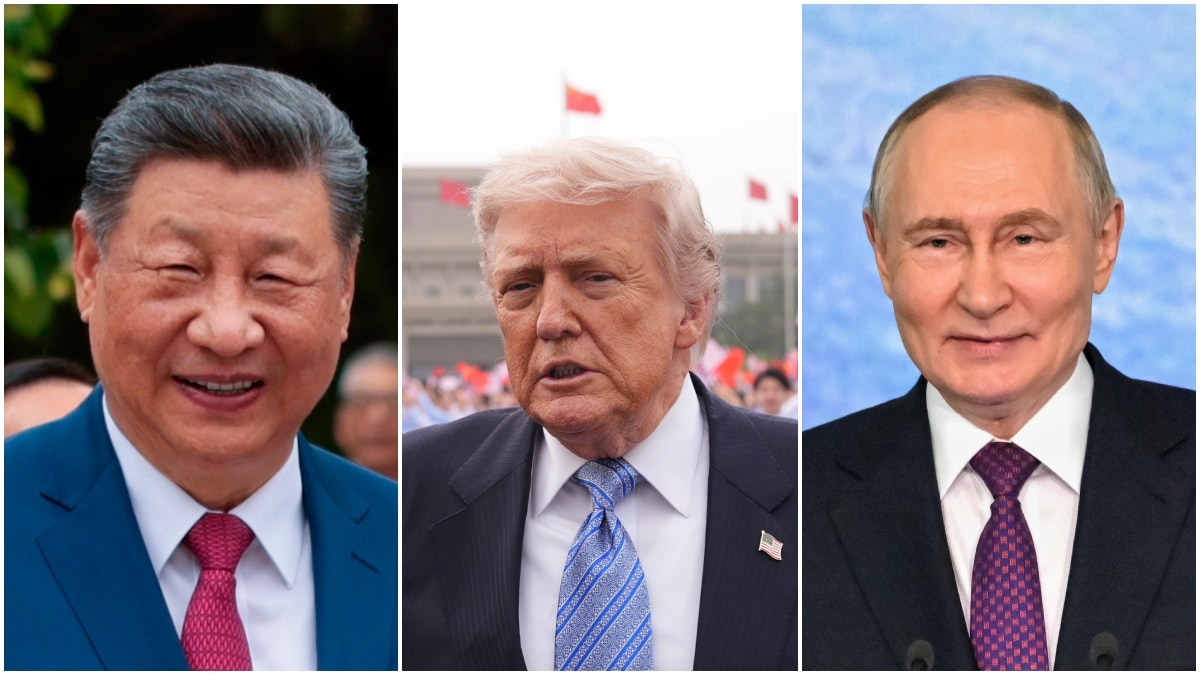
Now, picture a single table. Around it sit Donald Trump, Xi Jinping, and Vladimir Putin.
No intermediaries. No careful buffers of junior ministers spending six months softening every verb before the principals arrive. Just the leaders of the United States, China, and Russia in their first-ever trilateral summit, staring across polished wood at one another while the rest of the planet holds its breath.
To understand what happens behind those closed doors, you have to strip away the cable-news theater. Forget the handshakes analyzed frame by frame for dominance. Forget the body-language experts. According to foreign policy analysts at institutions like the Council on Foreign Relations and the Carnegie Endowment for International Peace, a three-way meeting between Washington, Beijing, and Moscow is not a photo opportunity—it is a high-stakes triage session for a global order that has been fracturing since the end of the Cold War.
The Ghost of Yalta
History never repeats itself cleanly, though it loves to hum the same unsettling melodies.
In February 1945, Franklin D. Roosevelt, Winston Churchill, and Joseph Stalin met at Yalta, a resort town on the Crimean coast. They were exhausted men dividing a ruined world into spheres of influence, trading millions of lives and dozens of sovereign borders like chips at a late-night poker game. Ask anyone whose grandparents lived in Warsaw or Prague what Yalta felt like. It felt like being sold while you were asleep.
That historical shadow hangs directly over any room where Trump, Xi, and Putin sit together.
When European leaders in Brussels, Tokyo, and Seoul hear whispers of a trilateral summit, their blood runs cold for one specific reason: the fear of a "grand bargain." In diplomatic shorthand, a grand bargain means the three largest military and economic powers decide to stop bleeding each other dry—and instead carve the world into three neat backyards.
Let us invent a character to make this real, because abstractions numb the brain. Meet Elena, a hypothetical logistics manager running a mid-sized shipping firm in Rotterdam. Elena does not care about realist international relations theory. She cares about whether container ships leaving Shanghai can safely pass through the Strait of Malacca without paying triple insurance premiums, and whether natural gas pipelines feeding European factories will stay open through January.
If Trump, Xi, and Putin strike an understanding, Elena’s life changes overnight. Not because they mention Rotterdam, but because every single topic on their agenda directly governs the arteries of global trade and security.
The Nuclear Clock Has No Snooze Button
Start with the subject nobody wants to discuss over dinner, yet the one that sits at the absolute center of the table: nuclear weapons.
For half a century, the world relied on a quiet, boring architecture of arms control treaties between Washington and Moscow. Inspectors counted warheads. Satellites watched silos. Hotlines stayed plugged in so a flock of geese on a radar screen would not accidentally vaporize Chicago and St. Petersburg.
Almost all of that architecture is gone.
The New START treaty, the final remaining bilateral limit on U.S. and Russian strategic nuclear arsenals, expired in February 2026. For the first time since the early 1970s, the world's two largest nuclear powers are operating without legally binding caps, on-site inspections, or mandatory data exchanges. Meanwhile, according to Pentagon assessments and reports from the Stockholm International Peace Research Institute, China has been rapidly expanding its own nuclear stockpile, moving toward parity faster than Western intelligence predicted a decade ago.
Why does a trilateral meeting matter here? Because bilateral math no longer works.
Washington has long argued that any new arms control framework is useless if it binds American and Russian warheads while leaving Beijing free to build hundreds more without restriction. Beijing has countered that its arsenal remains a fraction of the size of the U.S. and Russian stockpiles, refusing to enter negotiations until Washington and Moscow cut their own numbers drastically. Moscow, for its part, insists that British and French nuclear forces must also be counted if China is dragged into the room.
It is a three-body problem in orbital mechanics, where every gravitational pull destabilizes the other two.
In a direct meeting, Trump, Xi, and Putin have to confront a terrifying reality: an unconstrained three-way nuclear arms race will bankrupt their treasuries and shrink decision times during a crisis to minutes. Expect them to test the waters on basic guardrails—not a sweeping, thousand-page treaty, which takes years to draft, but immediate executive understandings. Things like banning artificial intelligence from automated nuclear launch chains, establishing a three-way crisis communication hotline, and freezing the deployment of tactical nuclear weapons in space.
Wars That Bleed Empires Dry
Look next at the fires already burning.
Great powers rarely collapse from a single blow; they bleed out through endless, expensive proxy wars that drain their munitions, fracture their alliances, and exhaust their voters.
Consider Eastern Europe. By late 2026, the war in Ukraine has ground through years of brutal attrition, reshaping European security and testing the industrial capacity of both NATO and Russia. Trump has repeatedly framed the conflict through a transactional lens—demanding an end to the financial drain on American taxpayers while holding leverage over military aid to Kyiv and sanctions relief for Moscow.
Putin enters the room holding occupied territory and a war economy that has proven more resilient to Western sanctions than predicted in 2022, yet he faces staggering demographic losses, crippling interest rates, and growing economic dependence on Beijing.
And Xi? Xi sits in the catbird seat, watching his two primary rivals burn through weapons stockpiles and political capital while China plays the role of indispensable economic lifeline to Russia and indispensable trading partner to the West.
In this hypothetical negotiation, the unspoken trade is brutally clear. Trump wants a frozen conflict—a ceasefire line in Ukraine that allows him to claim he ended a war no one else could stop, freeing American bandwidth to focus on domestic priorities and Pacific competition. Putin wants formal recognition of territorial gains, ironclad guarantees that Ukraine will never join NATO, and the lifting of financial sanctions that have locked Russian banks out of Western capital markets.
Where does Xi fit into a European peace deal? China holds the reconstruction checkbook and the diplomatic leverage over Moscow to make a ceasefire stick. Without Beijing's backing, Putin cannot sustain a long-term standoff; with Beijing's pressure, Moscow has a face-saving off-ramp.
The Silicon Curtain and the Price of Everything
Now follow the money, because tariffs and microchips are where geopolitics kicks down your front door.
If you bought a laptop, a car, or a washing machine recently, you paid an invisible tax levied by the technological cold war between Washington and Beijing. Analysts at the Peterson Institute for International Economics and major Wall Street research desks have documented how sweeping tariffs, export controls on advanced semiconductors, and retaliatory bans on critical minerals have split the global economy into competing blocs.
Picture two separate electrical grids being built side by side across the planet, using incompatible plugs. That is what decoupling looks like in practice.
Around the trilateral table, economic statecraft becomes a weapon of leverage. Trump wields access to the American consumer market and the dominance of the U.S. dollar like a sledgehammer, threatening triple-digit tariffs on Chinese imports and secondary sanctions on any bank facilitating Russian trade.
Xi holds cards that are quieter, yet just as lethal to Western supply chains. China refines the vast majority of the world's rare earth elements—the gallium, germanium, and lithium required to build everything from F-35 fighter jets to electric vehicle batteries and wind turbines. By tightening export licenses on these minerals, Beijing can choke Western manufacturing without firing a single shot.
Meanwhile, Putin sits atop the world's largest reservoir of cheap energy, fertilizers, and raw commodities, offering Beijing an overland supply route that the U.S. Navy cannot blockade in the event of a maritime crisis.
When these three men discuss trade, they are not debating free-market philosophy. They are negotiating a truce in an economic siege. Trump wants massive purchasing commitments for American agricultural and energy exports, alongside strict curbs on Chinese industrial overcapacity flooding global markets. Xi wants an end to American chip embargoes that are strangling China's domestic tech champions, as well as tariff relief to revive an economy weighed down by a sluggish property sector and weak domestic consumption. Putin wants his oil tankers unshackled from Western insurance bans and his central bank reserves unfrozen.
The Strait of Taiwan and the Fragile Peace
There is one subject on the agenda that makes every naval commander in the Pacific lose sleep: Taiwan.
To understand the stakes in the Taiwan Strait, forget political speeches and look at a map of undersea cables and shipping lanes. Roughly half of the world's container fleet passes through those waters every year, and Taiwan manufactures the overwhelming majority of the planet's most advanced logic chips. A blockade or invasion would not cause a recession; it would trigger an immediate global depression, wiping trillions off retirement accounts and halting assembly lines from Detroit to Stuttgart within weeks.
Xi Jinping has repeatedly stated that the absorption of Taiwan is a historic inevitability for the rejuvenation of the Chinese nation. Yet Beijing also knows that an amphibious invasion across a hundred miles of treacherous water is the most complex military operation in human history, carrying the existential risk of failure and total economic isolation.
In a trilateral room, Xi will press Trump to go beyond the traditional American policy of "strategic ambiguity"—to explicitly declare that Washington opposes Taiwanese independence and will scale back arms sales and military deployments in the region.
Trump, deeply skeptical of open-ended American defense commitments abroad yet fiercely protective of his reputation for strength, faces a razor-thin tightrope. Give away too much on Taiwan, and American alliances with Japan, South Korea, and the Philippines evaporate overnight, forcing Tokyo and Seoul to consider building their own nuclear weapons. Give away nothing, and Beijing has zero incentive to help Washington rein in Moscow or stabilize global trade.
And Putin? Moscow watches Taiwan with quiet calculation. Every American aircraft carrier, Patriot battery, and intelligence satellite tied down in the Western Pacific is one less asset available to deter Russia in Europe or the Arctic.
The Arctic and the Middle East
Beyond the headline crises lie two secondary theaters where the interests of Washington, Beijing, and Moscow collide in surprising ways.
First, the Middle East. Stability in the Persian Gulf determines the price of gas at every suburban station in America and the survival of China's energy-hungry factories. Both Trump and Xi share a visceral aversion to a regional war that spikes oil above $120 a barrel, yet Russia has deepened its military and diplomatic ties with Iran to secure drones and missiles for its war effort. In a three-way discussion, Washington and Beijing have a rare, overlapping interest in pressuring Moscow to curb its military transfers to Tehran before a regional spark ignites a global energy shock.
Second, the top of the world. As Arctic sea ice retreats, new shipping lanes are opening that cut transit times between Asia and Europe by nearly two weeks. Russia controls half the Arctic coastline and possesses the world's largest fleet of nuclear-powered icebreakers. China has declared itself a "near-Arctic state," pouring billions into polar research and infrastructure along what it calls the Polar Silk Road. The United States, with its vast Alaskan coastline and growing focus on Greenland and North American defense, views this Sino-Russian partnership in the high north as an emerging strategic flank.
What Happens When the Doors Open
I think back to that press room in Vienna, watching the exhaustion etched into the faces of translators who had spent fourteen hours listening to three different languages dance around the same brutal truths.
We like to believe that world leaders are master architects following intricate, twenty-year blueprints. Spend enough time watching how summits actually unfold, and you learn a humbling truth: most high-level diplomacy is improvised crisis management conducted by tired men trying to avoid catastrophic miscalculation while protecting their domestic survival.
There is no guarantee that a trilateral meeting between Trump, Xi, and Putin produces lasting peace. Personal chemistry between strongmen is a volatile currency—warm one afternoon, poisoned the next by a leaked memo, a stray drone strike, or a domestic political scandal back home. A deal struck in the absence of institutional trust can unravel before the motorcades even reach the airport.
Yet the alternative—three nuclear-armed superpowers refusing to sit at the same table while treaties expire, proxy wars rage, and supply chains fracture—carries a cost that none of us can afford to pay.
Somewhere in Rotterdam, Elena is checking the morning shipping manifest on her monitor, watching tiny icons of cargo vessels crawl across a digital sea, waiting to see if the men in the room decided to keep the ocean open.