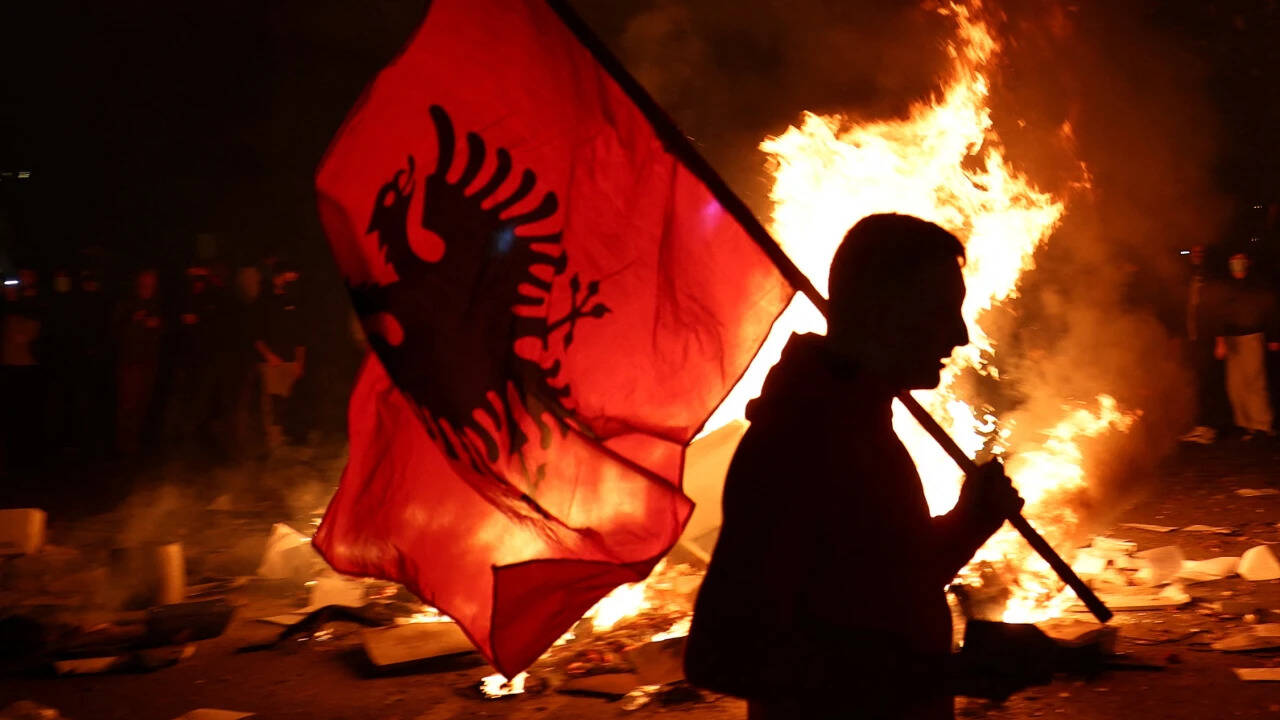
Albanian Prime Minister Edi Rama declared that protesters crossed a democratic "red line" in mid-October 2026 after demonstrations in Tirana escalated into arson at a police station and attacks on state buildings. Wire dispatches treated the statement as a straightforward law-and-order warning amid clashes that injured roughly 300 people, more than half of them police officers. When a government that has held power for thirteen years draws a moral boundary over a burning police station, the rhetoric sounds firm on paper. On the ground in Tirana, however, drawing a line only works if enough citizens still recognize the authority behind the marker.
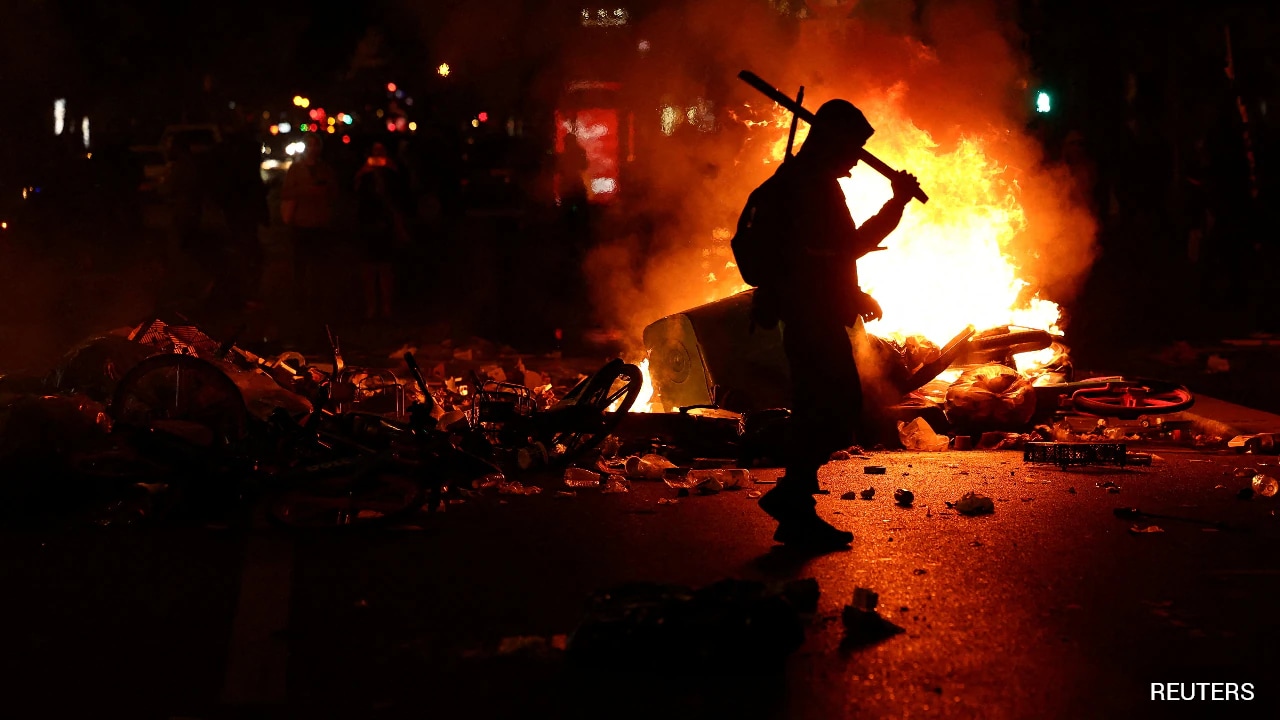
Wire reports give you the sequence of events. Petrol bombs hit a police station and the interior ministry entrance over the weekend of October 18, followed by fresh clashes on Monday involving Molotov cocktails, tear gas, water cannons, and rubber bullets. Rama posted on Facebook that protests are a right while violence is a crime, refusing dialogue with violent actors or opposition parties that fail to condemn them. That is the surface story. Anyone who has covered Balkan politics for two decades knows the surface story is rarely where the real leverage sits.
Why Coastal Land Deals Triggered Street Fire
A fire at a precinct house does not start from a single spark. The unrest that swept Tirana in October 2026 pulled together grievances that had been building for months, starting with anger over a controversial coastal resort development tied to U.S. President Donald Trump's family. In small economies with fragile institutional trust, major real estate deals rarely look like neutral foreign investment. Locals see prime coastline or protected land carved out through opaque political agreements while ordinary families absorb rising costs and shrinking public services.
Students added their own combustible fuel to the street mobilization. Demonstrations that erupted in mid-October drew university students frustrated by poor campus conditions, steep tuition fees, and entrenched corruption. When young people who already feel locked out of fair advancement watch high-value state or coastal assets move through top-down deals, a protest over tuition or zoning quickly turns into a broader rejection of the political order.
Look closely at that dynamic. The resort controversy gave opponents a high-profile symbol of insider access. Student grievances gave the marches endurance and moral urgency. Once those two currents merged in central Tirana, stones, fireworks, and petrol bombs replaced speeches.
The Foreign Hand Defense and Its Blind Spots
Whenever street fury reaches government ministries in the Balkans, officials reach for a familiar explanation. Rama's camp pointed to external interference, echoing a broader narrative of foreign influence and "foreign hands" stirring instability. Foreign meddling is a real hazard in Southeastern Europe, and intelligence services across the region routinely worry about outside actors exploiting domestic divisions.
Calling every riot a foreign plot is convenient. It is also lazy.
External actors can amplify anger or fund agitators at the margins, yet they cannot manufacture thousands of frustrated students or turn a zoning dispute into weeks of recurring street battles on their own. When leaders blame outside forces first, they avoid answering uncomfortable questions about domestic governance, procurement fairness, and why young citizens feel they have no peaceful lever left that works.
Consider a hypothetical example from municipal politics anywhere in the region. Suppose a city council fast-tracks a luxury waterfront project while school roofs leak and transit fares climb. Even if an outside political rival or foreign media network stokes outrage online, the underlying resentment is homegrown. Blaming the megaphone ignores why the crowd was listening.
Buying Loyalty While Drawing Lines
Rhetoric alone does not keep a police cordon holding through a long night of fireworks and petrol bombs. Alongside his "red line" warning, Rama met with officers and pledged a 2,500-euro payment to frontline police plus a significant salary hike starting January 1. That combination—sharp moral boundaries paired with immediate cash incentives—shows how seasoned executives manage a security crisis.
| Policy Lever | Immediate Effect | Core Risk |
|---|---|---|
| Moral red line warning | Signals state resolve and isolates violent actors | Sounds hollow if citizens view institutions as biased |
| Frontline cash bonuses and pay raises | Rewards exhausted officers and bolsters morale | Strains public budgets and deepens "state vs. society" split |
| Blaming foreign interference | Shifts blame away from domestic policy missteps | Alienates genuine protesters with real economic grievances |
Paying frontline security forces is practical crisis management, especially when hundreds of people—more than half of them police—have been injured in the clashes. Yet rewarding force without addressing the root complaints carries a steep political price. If ordinary citizens see the state opening the wallet for riot squads while stonewalling demands on corruption, campus conditions, and controversial land deals, the red line starts looking like a defense of incumbency rather than a defense of democracy.
There is a real gray area here that outside commentators often miss. Violent arson against a police station or ministry is a serious criminal act, and no democratic system functions if crowds burn public buildings whenever they lose a political argument. At the same time, treating every protester as a threat to democracy—or refusing to separate peaceful demonstrators from masked firebombers—inflames the very confrontation the government claims it wants to contain.
Thirteen Years of Power Meets a Street Test
Rama is no newcomer to hardball politics. After more than a decade in power, he has survived countless political storms, opposition boycotts, and diplomatic balancing acts. Street unrest on this scale tests a different muscle altogether: credibility.
A prime minister can rule out resignation, deploy water cannons and tear gas, and promise pay raises to keep order. What he cannot easily decree is trust. When students chant for his resignation while insisting they are not criminals, the conflict is no longer just about one burning building or one contested project. It is a test of whether Albania's institutions can absorb hard criticism and reform from within before street anger hardens into a permanent crisis.
Watch what happens next around university campuses, coastal development files, and judicial accountability—because the next red line will be tested wherever citizens feel the rules bend for everyone except them.