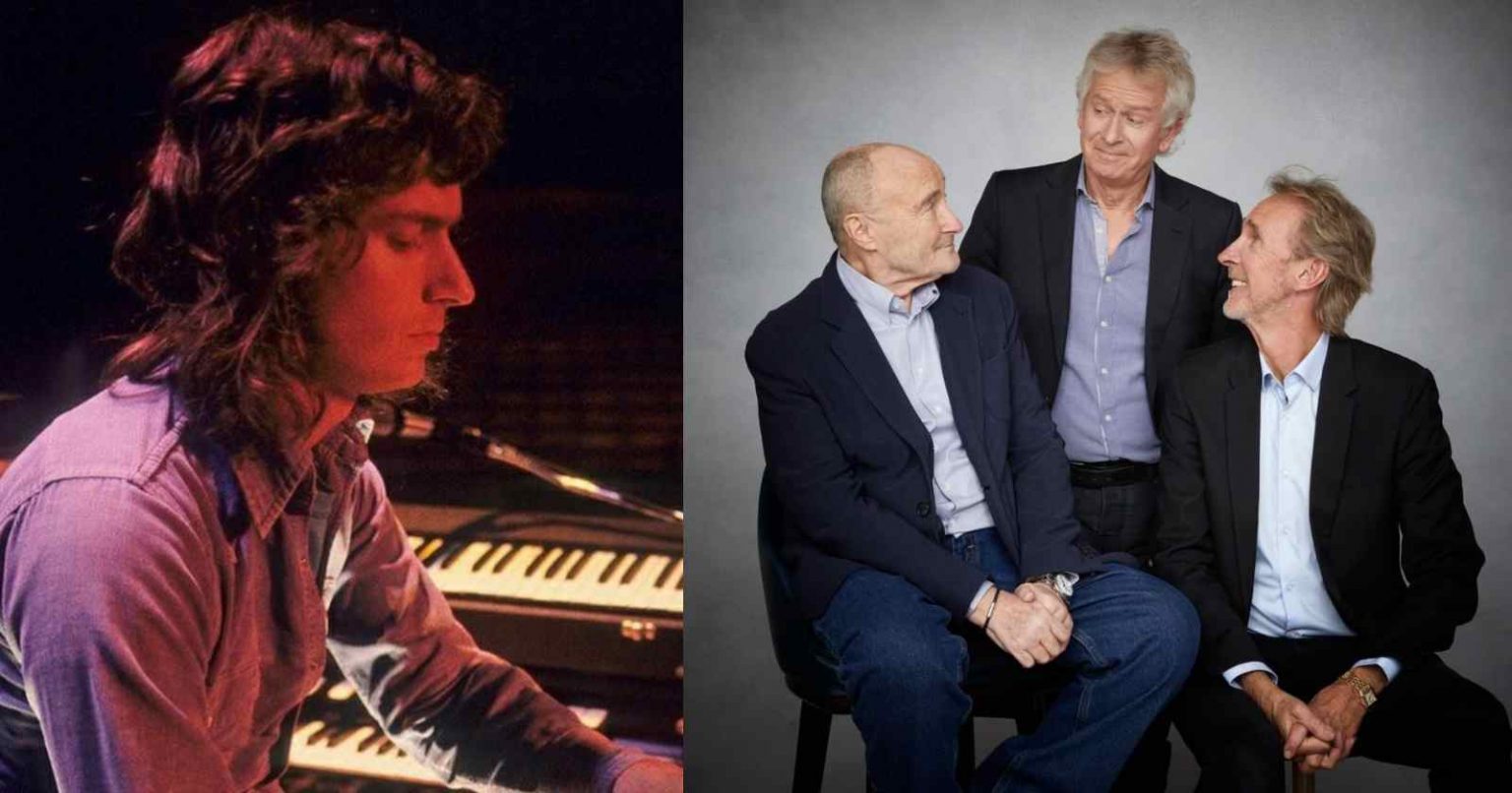
The music industry loves a tragic narrative. When a titan like Tony Banks—the harmonic backbone of Genesis—suggests at 75 that the well might be dry, the press treats it like a funeral. They call it "hesitation." They call it "creative block." They frame it as a quiet genius losing his spark to the fog of age.
They are dead wrong.
What the "lazy consensus" misses is that Banks isn't struggling to find something to say. He is exercising the rarest skill in modern music: the ability to shut up. In an era where every legacy act is desperately squeezing the sponge for one more "return to form" or a bloated, AI-assisted remaster, Banks’s refusal to participate in the content treadmill is his most radical composition yet.
The assumption that an artist must create until they drop is a toxic byproduct of the attention economy. We’ve been conditioned to view silence as failure. It isn’t. For a man who spent five decades defining the complex architecture of progressive rock and later conquered the symphonic world, silence is a deliberate choice. It is a masterclass in protecting a brand from the rot of "good enough."
The Compulsion Trap
Most aging rock stars don't record new music because they have a burning message. They do it because they are terrified of being forgotten. They are trapped in a feedback loop where relevance is tied to output.
I have seen legendary producers spend eighteen months in a studio with a 70-year-old icon, trying to "recapture the magic." You know what they get? A beige imitation of a masterpiece. They spend $2 million to produce a record that sells to the same 50,000 die-hards, gets a 3-star review in Mojo, and is forgotten by the time the tour starts.
Banks knows this. He is a mathematician of melody. He understands the law of diminishing returns better than the critics lamenting his "hesitation." If the harmonic progression doesn't challenge him, why should it occupy your ears?
The False Narrative of the "Quiet Genius"
The media loves the "Quiet Genius" trope because it makes Banks seem passive. It suggests he’s sitting by a window in Surrey, waiting for a muse that won't call back. This misreads his entire personality.
Tony Banks was never the "quiet" one in the room during the Genesis years; he was the iron-willed architect. He fought for the 7/8 time signatures. He insisted on the complex chord inversions that separated Genesis from the blues-rock pack. To suggest he is now "hesitant" implies a lack of confidence.
The reality? He has a high bar. He’s not hesitant; he’s bored.
The modern musical landscape—sorry, the modern musical environment—is built on loops and four-chord safety nets. For a man who wrote the keyboard solo on "Cinema Show," there is no thrill in the current sonic vocabulary. Pushing out a mediocre piano album just to "stay active" would be a betrayal of the very rigor that made him great.
Why "Legacy" is a Trap
We need to stop asking our icons for "one more song."
- Dilution: Every average album subtracts from the weight of the masterpieces.
- Technological Crutches: We are months away from "Genesis-style" AI generators. Banks’s refusal to play into this ensures his work remains human-made and finite.
- The Symphonic Pivot: Banks already moved into orchestral music. He mastered it. He isn't looking back because he’s already solved those puzzles.
The Myth of Perpetual Inspiration
There is a biological and psychological reality that critics hate to admit: the "Big Idea" phase of a human life is usually a twenty-year window.
In physics, it’s the early thirties. In rock music, it’s often the mid-twenties to late forties. To expect a 75-year-old to find a new harmonic language that rivals The Lamb Lies Down on Broadway is not just optimistic; it’s disrespectful. It ignores the sheer cognitive load required to build those worlds.
Banks isn't "running out of time." He’s finished the work.
Imagine a scenario where a master architect builds a city, a cathedral, and a skyscraper. At 75, he decides he doesn't want to design a suburban strip mall. Would we call that "hesitation"? No. We would call it an elite standard.
The Brutal Truth About New Music
Let’s be honest about what people actually want when they ask for new music from a legacy artist. They don't want something new. They want to feel the way they felt in 1976.
No artist can give you that.
If Banks released a new album tomorrow, the "fans" would listen to it twice, complain that Phil Collins isn't singing, and then go back to playing "Firth of Fifth." By staying silent, Banks maintains the integrity of the existing catalog. He refuses to provide the background noise for your nostalgia trip.
The Power of the Exit
There is a profound dignity in knowing when the story is over.
The industry is littered with the corpses of bands who didn't know when to stop. We’ve seen the hologram tours. We’ve seen the "final" tours that last fifteen years. We’ve seen the albums where the vocals are so pitch-corrected they sound like a microwave hum.
Banks is standing apart from that circus.
His "hesitation" is actually a veto. It is a veto against the commodification of his old age. It is a veto against the demand for constant productivity. It is a veto against the idea that an artist owes the public anything after they’ve already given them a lifetime of brilliance.
Stop looking for the next Genesis record. It doesn't need to exist. The sixteen albums we have are a closed loop of perfection. Banks is 75. He has earned the right to sit in his garden and never touch a Moog synthesizer again.
The most "progressive" thing an artist can do in 2026 is disappear.
Stop mourning the silence. Start respecting the standard that created it.
The music isn't missing; it's finished.