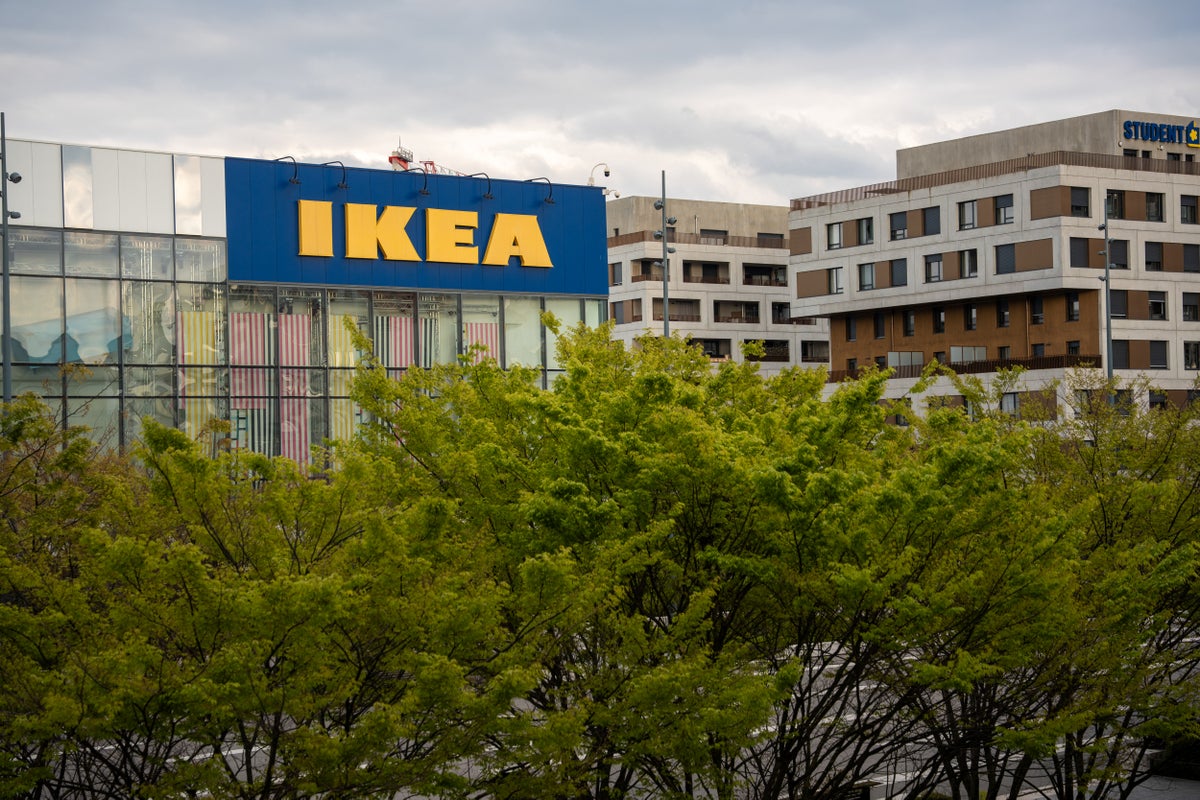
The corporate legal complex just popped champagne over IKEA winning a trademark brawl against a Belgian far-right fringe group. The headlines screamed about protecting brand integrity, intellectual property rights, and corporate defense against political weaponization. Everyone breathed a sigh of relief that a multinational furniture giant managed to keep its blue-and-yellow logo unpolluted by anti-immigrant rhetoric.
It is a completely short-sighted misread of modern brand survival. Expanding on this idea, you can find more in: Asset Liquidation and Geographic Arbitrage The Financial Mechanics of Elite Real Estate Offloading.
I have watched companies burn millions on legal retainers trying to police every pixel of their public perception. They act like a registered trademark is a titanium shield against cultural friction. It is not. It is an administrative anchor dragging them into pointless street fights that distract from the core product. When you spend decades and small fortunes litigating who gets to print your name on a political pamphlet, you have already lost the plot. The marketplace does not care about your registered trademark. The marketplace cares about relevance, price point, and whether your flat-pack particle board collapses under the weight of an oversized television.
Trademarks were designed for commerce, not for ideological purity policing. By dragging themselves into court over political party merchandise, corporations are making a fatal pivot from economic actors to cultural censors. And that trade-off destroys long-term value faster than any copyright infringement ever could. Experts at Bloomberg have shared their thoughts on this trend.
The Illusion of Brand Purity
Corporate legal teams operate under a dangerous delusion. They genuinely believe that if an unsavory group uses your brand identity, consumers will somehow assume a commercial partnership exists. Imagine a scenario where a fringe political faction prints a scathing critique of immigration policy on a yellow-and-blue flyer styled like a product assembly manual. Does anyone with an IQ above room temperature assume the Swedish flat-pack empire endorses border closures? Of course not.
Consumers are not gullible children wandering through a showroom floor. They possess a high baseline ability to separate corporate entities from independent political actors. Yet, brand managers panic at the first sign of association, throwing tantrums in front of magistrates because someone dared to borrow their color scheme.
This panic stems from an outdated mid-century mental model of branding. In the era of mass media oligopolies, control was everything. If you owned the airwaves, you owned the narrative. If someone hijacked your mascot, you crushed them immediately to prevent dilution. But in a decentralized, hyper-connected digital economy, brand control is a ghost story. Your brand no longer belongs to your marketing department. It belongs to the public, the meme creators, the critics, and yes, even the political trolls.
When IKEA went to court in Belgium, they did not protect their brand value. They amplified the controversy. They took a localized, low-reach political stunt and gave it global media oxygen. Every time a corporate giant sues to stop a political group from using their aesthetic, they trade quiet irrelevance for screaming headlines. That is a terrible trade.
The Litigious Trap of Modern Corporations
Let us look at the actual economics of these trademark skirmishes. Legal fees for cross-border European intellectual property litigation do not come cheap. We are talking about hundreds of thousands of euros flushed down the drain to settle a dispute that had zero impact on the bottom line of Billy bookcase sales in Antwerp.
Companies justify this waste under the banner of dilution. The legal fiction goes that if you let one fringe group misuse your trademark, your distinctiveness fades, and eventually, your entire corporate identity collapses into generic territory. This is lawyer-speak designed to justify billable hours.
Think about the sheer scale of the operation. IKEA operates hundreds of stores globally, moving billions of units of inventory. A political pamphlet in Belgium featuring a tweaked version of their typography does not reduce the structural integrity of their supply chain by a single millimeter. It does not lower consumer intent to purchase an affordable kitchen island. The fear of dilution is a phobia manufactured by corporate counsel who measure their worth in injunctions rather than EBITDA.
When you engage in these legal wars, you signal insecurity. Confident brands ignore the noise. They focus on dropping prices, improving logistics, and building better products. Insecure brands run to the courthouse crying that someone used their font without permission.
The Superior Strategy of Radical Indifference
The correct response to political brand hijacking is dead silence combined with absolute market dominance.
If a political party tries to weaponize your aesthetic, do not validate them with a lawsuit. Do not give their press release any credibility by responding with righteous indignation. Starve them of the conflict they desperately crave. Political fringe groups survive on friction; they need an enemy to punch to prove their own relevance. When a multinational corporation steps into the ring and punches back with a legal team, the fringe group wins the PR war because they look like the plucky underdog fighting the faceless capitalist machine.
Instead, double down on what made you dominant in the first place. Make your products so ubiquitous, so cheap, and so functional that political co-optation looks pathetic rather than powerful.
I have advised executive teams through public relations nightmares where activist groups tried to tie corporate identities to controversial social movements. The ones who survived intact ignored the noise and kept shipping. The ones who panicked, issued grand moral statements, and filed emergency injunctions became targets for ongoing harassment. The market rewards execution, not legal sensitivity.
Why the Courts Are the Wrong Arena
Belgian courts ruled in favor of the furniture giant, establishing that political parody or unauthorized association does not automatically supersede intellectual property protections when it crosses into damaging territory. Legal scholars will write papers on the nuance of trademark boundaries versus freedom of expression in the European Union.
None of it matters.
Winning a legal battle against a political party is a Pyrrhic victory. You spent corporate capital to secure a piece of paper that says a fringe group cannot use your colors. Meanwhile, the underlying social tensions that gave rise to that fringe group remain completely untouched. You solved a symptom while ignoring the systemic reality that your brand operates in a deeply fractured, hostile public square.
Corporations need to get out of the cultural policing business. You are not a guardian of democratic norms. You are a retailer of affordable home goods. Stay in your lane. Build better couches, optimize your supply chain, and stop pretending that a trademark is a moral compass. The moment you start fighting culture wars in a courtroom, you have stopped doing business, and you have started playing a game you cannot win.