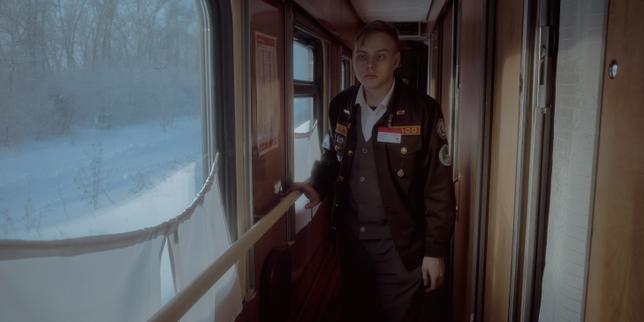
Stop reading travelogues about the Trans-Siberian Railway that promise a "soul-baring" look at the Russian collapse. They are selling you a cinematic lie.
The trope is exhausted. A weary journalist boards a train in Moscow, lugs a suitcase through fifteen time zones, shares lukewarm tea with a soldier, and returns with a "revelation" about the terminal exhaustion of the Russian spirit. They see a nation on the brink because they bought a ticket specifically to find the edge of the cliff. For another perspective, read: this related article.
It is the ultimate Western projection. We want the Trans-Siberian to be a rolling funeral for an empire because that fits the narrative of a geopolitical morality play. But if you actually understand the logistics of Russian infrastructure and the brutal pragmatism of the Eurasian land bridge, you realize the "exhaustion" isn't a sign of death. It is the steady-state operating temperature of the region.
The Fetishization of the Drunken Soldier
Every "insider" report leans heavily on the encounter with the drifting soldier. The archetype is always the same: haunted eyes, a bottle of cheap vodka, and a cryptic warning about the futility of the front. Similar insight regarding this has been provided by AFAR.
Let’s dismantle this. Russia has a population of over 140 million and a military-industrial complex that has pivoted to a permanent war footing. Finding a disillusioned soldier on a 9,000-kilometer rail line isn’t investigative journalism; it’s statistical inevitability.
The mistake is treating these anecdotes as macro-economic indicators. For every soldier "at a derive," there are ten others moving silently through the logistics hub of Yekaterinburg, part of a system that has proven remarkably resilient against the most aggressive sanctions regime in modern history. The West keeps waiting for the Russian rail system to buckle under the weight of its own misery. It won’t. The rails are made of the same cynical endurance that built them under the Tsars and kept them running under Stalin.
To mistake Russian stoicism—or even Russian nihilism—for "exhaustion" is a fundamental category error. This isn't a marathon runner hitting the wall. This is a mountain that doesn't care if you're tired of looking at it.
The 9,000-Kilometer Distraction
The obsession with the sheer length of the journey is a parlor trick. Journalists use the distance to create a sense of mounting dread, as if the further east you go, the closer you get to the "truth."
In reality, the Trans-Siberian is less a window into the Russian soul and more a high-capacity freight corridor. If you want to see the "real" Russia, don't look at the passenger cars. Look at the coal tenders and the oil tankers moving toward the Pacific. While the Western press mourns the "exhausted" people in the third-class berths (Platskart), the Russian state is busy re-orienting its entire trade gravity toward China.
The "death" the competitor article claims to have seen in the face is actually a metamorphosis. Russia is decoupling from the Atlantic world in real-time. The train isn't a relic; it's the umbilical cord to the East.
The Logistics of Enduring Misery
Let’s talk about the Platskart experience. Reporters love to describe the smell of socks, the intimacy of strangers, and the shared grief of the journey. They frame it as a uniquely Russian tragedy.
It’s actually a masterpiece of low-cost social engineering.
The Trans-Siberian is one of the few things in Russia that actually works with terrifying efficiency. It moves millions of people across an inhospitable wasteland for the price of a few days' wages. The discomfort isn't a bug; it's a feature. It’s a filtration system. Those who can’t handle the "exhaustion" don't live in the provinces.
I have watched companies try to map "sentiment analysis" onto regions like Buryatia or Chita based on these types of travel reports. They fail because they assume that a grumpy passenger equals a revolutionary spark. In Russia, the gap between "this is terrible" and "I will stop the status quo" is a chasm wider than the Steppe.
Why the "Dead" Russia Keeps Winning the War of Attrition
The competitor piece suggests a country "at its limit." This is a dangerous misunderstanding of Russian history and material reality.
If you look at the actual data—not the vibes of a passenger car—you see a different story:
- GDP Resilience: Despite the "exhaustion," the IMF recently upgraded Russian growth forecasts, outperforming several G7 nations.
- Supply Chain Adaptability: The "soldiers at a derive" are being fed by a supply chain that has successfully bypassed Western tech bans through "parallel imports" and "grey market" logistics.
- Labor Mobilization: The very provinces the Western press describes as "hollowed out" are seeing their first real wage growth in decades due to military production demands.
The melancholy is real, but it is not a weakness. It is a lubricant. It allows the population to absorb shocks that would cause a Western democracy to implode in forty-eight hours.
The Fallacy of the "Contact" Report
The core problem with "I looked death in the face" style reporting is the observer effect.
When a Westerner sits down in a train car, the locals perform. They know what you want to hear. They know the script of the "Sad Russian." They give you the gloom because it’s the easiest currency to trade for a cigarette or a conversation. You aren't getting the truth; you're getting the performance of the truth.
I’ve spent years navigating these corridors. I’ve seen the same people who wept about the war to a French journalist turn around and brag about Russia's "inevitable victory" the moment the notebook was closed. The Russian identity is built on a foundation of double-speak (dvoemyslie). If you take a conversation at face value on the Moscow-Vladivostok line, you aren't an insider. You're a mark.
Stop Looking for the End of the Road
The Trans-Siberian isn't a journey toward an ending. It is a circle.
The Western obsession with "the end of Russia" or "the collapse of the regime" via the lens of a train window is a form of cope. We want to believe that the misery we see is unsustainable. We want to believe that the "drifting" soldiers will eventually drift home and start a riot.
They won't. They will get off at their station, walk into a grey apartment block, and continue to exist in a state of high-functioning despair that the West has no vocabulary for.
The "death" the competitor saw wasn't the death of Russia. It was the death of their own ability to understand a culture that thrives on the very exhaustion they find so alarming.
Russia isn't a country; it's an endurance test. And the people on that train are much better at passing it than the people writing about them.
If you’re waiting for the Trans-Siberian to stop because the passengers are too tired to keep going, you’re going to be standing on the platform for a very long time.
Pack your bags and look at the freight manifest. That’s where the pulse is. Everything else is just theatre for the tourists.