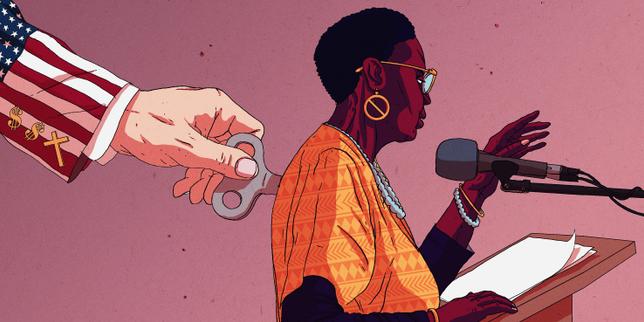
Transnational religious lobbying in Sub-Saharan Africa operates as a calculated geopolitical arbitrage strategy where American conservative organizations deploy capital, legal templates, and media infrastructure to secure legislative victories unattainable in Western jurisdictions. By analyzing the mechanics of this ideological export—specifically the convergence of American evangelical advocacy groups, local political elites, and legislative drafting—observers can map how external actors reshape domestic legal frameworks across the continent. Rather than an organic cultural shift, the proliferation of restrictive family, reproductive, and anti-LGBTQ+ statutes across East and West Africa represents a structured supply-side intervention in emerging political markets.
The Structural Arbitrage of Culture Wars
In mature Western democracies, socio-religious lobbies face diminishing marginal returns on political capital. Judicial precedents, institutional checks, and shifting public demographics create high barriers to overturning established civil rights or reproductive protections. When domestic return on investment (ROI) plateaus, rational advocacy organizations seek alternative markets with lower entry costs and higher legislative yield.
Sub-Saharan Africa presents an asymmetric opportunity for ideological expansion due to three structural factors:
- Demographic Growth: Africa possesses the world’s youngest and fastest-growing population, representing the future demographic center of global Christianity. Securing institutional alignment here guarantees long-term global influence within international bodies like the United Nations.
- Institutional Asymmetry: Many African parliaments lack well-funded, independent legislative research bodies. External organizations that provide pre-drafted, turnkey statutory language significantly reduce the transaction costs for local lawmakers seeking to pass popular legislation.
- Post-Colonial Sovereignty Framing: External advocates successfully rebrand Western conservative legal models as defenses of "traditional African values" against "Western neo-colonialism." This rhetorical inversion neutralizes opposition by framing human rights critiques as foreign interference, even when the restrictive legislation itself relies on colonial-era penal codes and contemporary American legal templates.
The Three-Tiered Operational Architecture
The export of cultural conflict relies on a repeatable, three-tiered operational model that bridges transnational funding with local political execution.
1. Financial Capital and Tax-Exempt Vehicles
American 501(c)(3) and 501(c)(4) organizations utilize dark money networks and donor-advised funds to channel capital into African jurisdictions without triggering stringent foreign-agent disclosure requirements. Because many target countries lack transparent campaign finance or lobbying registries, funds transferred under the guise of humanitarian aid, leadership training, or religious fellowship directly subsidize political operations.
This capital rarely funds overt political advertising. Instead, it underwrites high-level networking events—such as national prayer breakfasts—that grant foreign operatives direct, unvetted access to heads of state, cabinet ministers, and judiciary members.
2. Legal Engineering and Turnkey Legislation
Organizations such as the American Center for Law and Justice (ACLJ) and Family Watch International establish local affiliates or train domestic attorneys to execute strategic litigation and statutory drafting. When a parliament considers a bill regarding reproductive health or sexual orientation, these legal teams supply model legislation, constitutional defenses, and talking points.
The mechanism here is legislative efficiency. A local MP gains domestic political capital by championing a populist moral bill without bearing the intellectual or financial cost of drafting complex legal text. In exchange, the transnational lobby secures a concrete statutory precedent that can be replicated in neighboring jurisdictions—a legislative contagion effect observable across Uganda, Ghana, and Kenya.
3. Media Ecosystems and Narrative Framing
To ensure public demand matches legislative supply, external actors invest heavily in local media infrastructure, including terrestrial radio networks, digital content farms, and pastor-training seminaries. In markets where traditional journalism suffers from chronic underfunding, subsidized content fills the information vacuum.
These narratives rely on specific framing techniques:
- Moral Panic Induction: Linking minority rights or comprehensive sexuality education directly to existential threats against the nuclear family and national sovereignty.
- Scientific Redefinition: Utilizing discredited or fringe studies produced by allied Western think tanks to provide a veneer of empirical legitimacy to ideological positions.
- Sovereignty Weaponization: Positioning international donor conditions (such as World Bank or bilateral aid requirements tied to human rights) as coercive imperialism, thereby rallying nationalist sentiment behind restrictive laws.
The Geopolitical Cost Function for African States
While local politicians realize immediate domestic popularity from aligning with transnational religious lobbies, the macroeconomic and diplomatic cost functions are severe and often externalized onto the broader population.
Bilateral Aid and Trade Friction
Legislative alignment with hardline cultural agendas triggers automatic compliance reviews from Western bilateral donors and multilateral institutions. When Uganda enacted its Anti-Homosexuality Act, the World Bank suspended new public financing, citing incompatibility with its environmental and social framework. Similarly, eligibility for trade frameworks like the African Growth and Opportunity Act (AGOA) faces direct jeopardy when human rights benchmarks are breached. Local elites capture the political benefits of cultural populism, while the national treasury absorbs the liquidity crunch from frozen concessional loans.
Public Health System Degradation
The criminalization of specific demographics and the restriction of reproductive healthcare services create measurable epidemiological bottlenecks. Fear of legal prosecution drives vulnerable populations away from state-run clinics, undermining decades of externally funded HIV/AIDS prevention and maternal health infrastructure. Public health metrics deteriorate as underground networks replace regulated medical oversight, increasing long-term healthcare expenditure for states already operating under severe fiscal constraints.
Brain Drain and Capital Flight
Multinational corporations operating under strict Environmental, Social, and Governance (ESG) mandates face reputational and compliance risks when operating in jurisdictions with aggressive discriminatory statutes. Foreign direct investment (FDI) in non-extractive sectors—such as technology, finance, and regional headquarters—migrates toward jurisdictions with predictable, rights-compliant legal environments. Skilled domestic professionals simultaneously exit these markets, compounding human capital deficits.
Analytical Limitations and Counter-Variables
Attributing African legislative shifts solely to American evangelical interference commits the error of denying African agency. External lobbies do not create cultural conservatism ex nihilo; they act as force multipliers on pre-existing religious, social, and political fault lines.
Three internal variables dictate whether an external lobbying campaign succeeds or stalls:
- Electoral Vulnerability: Ruling parties facing economic stagnation, inflation, or corruption scandals actively seek cultural wedge issues to distract the electorate and fracture opposition coalitions. Where economic performance is strong, political elites exhibit less appetite for costly culture wars.
- Judicial Independence: In jurisdictions with robust constitutional courts—such as South Africa or Botswana—externally backed restrictive statutes frequently fail judicial review. Transnational lobbies achieve maximum traction only where the executive branch exercises de facto control over the judiciary.
- Religious Market Competition: The rapid expansion of Pentecostal and charismatic movements across Sub-Saharan Africa creates intense competition among local clergy for congregants and state patronage. Adopting hardline stances on social issues serves as a low-cost signaling mechanism for religious leaders to demonstrate doctrinal purity and secure political favor.
Strategic Imperatives for Institutional Counter-Balancing
Civil society organizations, diplomatic missions, and multilateral lenders attempting to counter transnational ideological lobbying frequently fail because they rely on normative moral arguments rather than institutional and economic leverage. Lectures on universal human rights reinforce the exact "neo-colonial" framing that religious lobbies exploit.
To neutralize external ideological capture, institutional actors must shift to structural interventions:
- Enforce Lobbying and Beneficial Ownership Transparency: Multilateral governance programs must prioritize the creation of mandatory foreign-agent registries and beneficial ownership disclosures for non-governmental organizations. Exposing the financial pipelines between foreign tax-exempt entities and domestic political actors strips away the illusion of grassroots authenticity.
- Decouple Sovereignty from Exclusion: Counter-narratives must reframe foreign-funded cultural legislation as the true infringement on national sovereignty. Demonstrating that domestic laws are copy-pasted from American legal templates undermines the nationalist appeal of the legislation.
- Price the Macroeconomic Risk: Economic ministries and private sector associations—rather than foreign diplomats—must be equipped with data modeling the exact cost of restrictive legislation on sovereign credit ratings, tourism revenue, and FDI inflows. When domestic business elites recognize that cultural wedge issues threaten currency stability and capital access, internal lobbying pressure shifts decisively against legislative extremism.