The air in Karachi’s Orangi Town doesn't just smell of dust and diesel anymore. Lately, it carries a sharp, metallic tang—the scent of survival mixed with a terrifying degree of desperation.
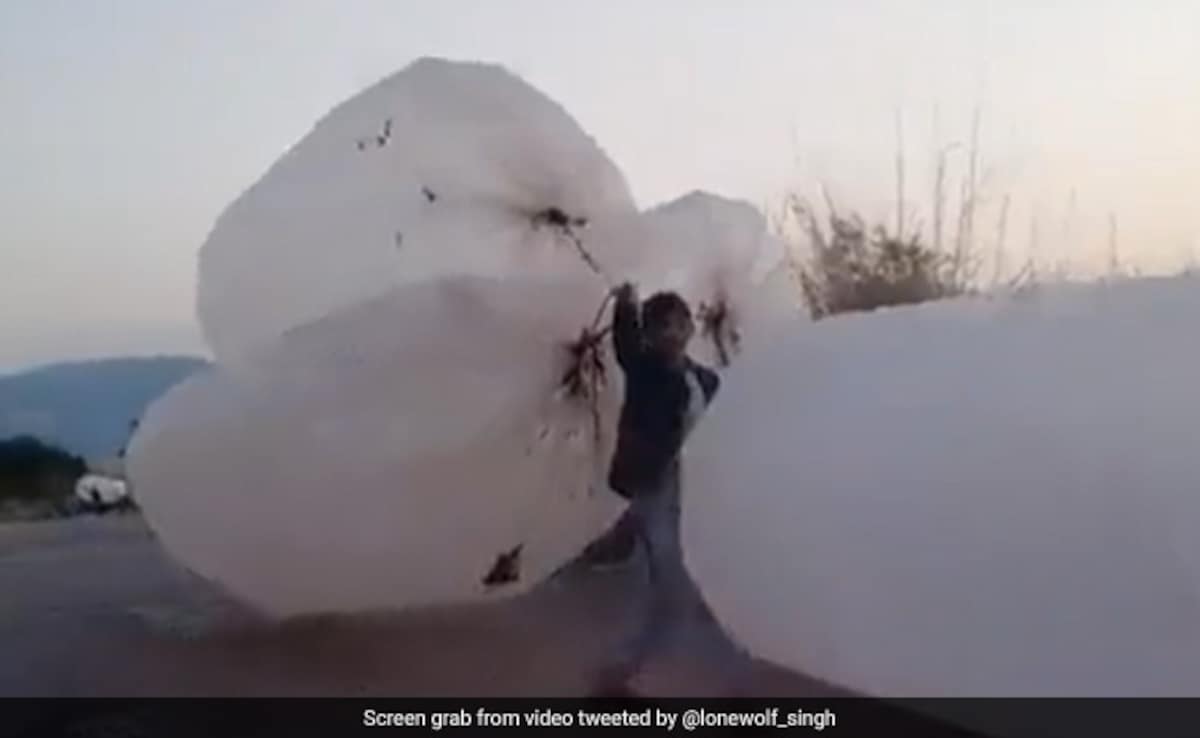
Farzana doesn't own a steel cylinder. In the current economy, those heavy green tanks are relics of a middle-class life she can no longer touch. Instead, she walks to a local shop with a folded piece of plastic tucked under her arm. When she returns, she is carrying what looks like a giant, shimmering ghost. It is a massive plastic bag, roughly the size of a beanbag chair, bloated with compressed natural gas.
She walks slowly. She has to. If the plastic snags on a stray nail or a sharp corner of a corrugated metal fence, her neighborhood becomes a crater. This is not a metaphor. It is the physics of a fuel crisis that has turned the simple act of boiling water into a game of Russian roulette.
The Anatomy of a Plastic Pipe Dream
The headlines will tell you that Pakistan is facing a natural gas shortage. They will cite dwindling reserves in the Sui gas fields and the soaring costs of Liquefied Natural Gas (LNG) on the global market. They might even show a chart illustrating the gap between supply and demand.
But a chart cannot capture the sound of a plastic bag stretching under pressure.
To understand why a mother would bring a literal bomb into her kitchen, you have to look at the math of poverty. A standard gas cylinder can cost upwards of 10,000 Pakistani Rupees. For a family earning 20,000 a month, that is an impossibility. The "gas bags," however, are filled for a fraction of that price.
Local vendors use small electric compressors—often the same ones used to inflate car tires—to suck gas from the main lines and force it into industrial-grade plastic sheets. The bags are then sealed with a rudimentary nozzle and a rubber band.
It is an engineering nightmare. Natural gas is naturally odorless; the "gas smell" we recognize is an additive called mercaptan. In these makeshift bags, the concentration of the gas is unpredictable, and the integrity of the container is non-existent. There are no pressure valves. There are no safety seals. There is only the thin, transparent wall between a hot meal and a house fire.
The Invisible Stakes of the Dinner Table
Consider what happens when Farzana reaches her kitchen. She connects a small hose to the nozzle on the bag, weighting the plastic down with a heavy book or a brick to force the gas out toward her stove.
The flame it produces is a flickering, sickly orange. It’s inefficient. It’s dangerous. But it is the only way her children eat.
The real tragedy isn't just the risk of explosion; it’s the erosion of the "standard" life. When the infrastructure of a city fails, the citizens don't just sit in the dark and starve. They innovate. But when innovation is born of pure desperation, it bypasses every safety protocol known to man.
We often speak of "energy security" in the context of national borders and pipelines. We talk about it as a macroeconomic lever. We rarely talk about it as the ability to fry an egg without wondering if your walls will collapse. In Karachi, energy security is measured in microns—the thickness of a plastic bag.
A Failure of Flow
The crisis didn't happen overnight. It is the result of decades of aging infrastructure and a failure to transition to sustainable alternatives while the ground was still fertile for change. The pipes beneath the streets of Karachi are leaking more than just gas; they are leaking the public's trust.
When the state-run gas companies began "load shedding"—cutting off the supply for hours or even days at a time—they created a vacuum. In the world of commerce, a vacuum is always filled. If the government cannot provide a pipe, a black-market vendor will provide a bag.
This is the hidden cost of a failing utility. It creates an entire shadow economy built on risk. The vendors who fill these bags are often located in dense residential blocks. One spark from a faulty compressor, one cigarette lit at the wrong moment, and the entire block is leveled.
Why don't the authorities stop it? They try. There are raids. There are confiscations. But how do you arrest a million people for wanting to cook? How do you police a plastic bag when the alternative is a hungry child?
The Weight of the Book
The book Farzana uses to weigh down her gas bag is an old school text. It provides just enough pressure to keep the gas flowing to the burner. It is a haunting image: the weight of education being used to extract fuel from a DIY bomb.
There is a specific kind of silence that falls over a room when someone is using a gas bag. You find yourself listening for the hiss. You find yourself watching the way the plastic sags as the volume decreases. You become an expert in a science you never wanted to learn.
The world watches the price of Brent Crude and the shifts in the LNG spot market. Analysts in London and New York move numbers on screens, and those numbers eventually trickle down to the streets of Karachi. But they don't see the shimmer of the plastic. They don't see the rubber bands holding back the pressure.
We are told that the future of energy is green, that we are moving toward a world of renewables and high-tech grids. But for a significant portion of the global population, the "future" is a regression. It is a move backward from steel to plastic, from regulated safety to "hope this works."
As the sun sets over the Arabian Sea, the flickering orange flames begin to appear in windows across the city. Each one is a small victory over the cold, and each one is a potential catastrophe. The bags sit on kitchen floors like translucent, breathing beasts, waiting for a single mistake to turn the air into fire.
The tragedy is that Farzana knows the danger. She isn't ignorant. She is simply out of options. In the hierarchy of needs, the immediate warmth of a stovetop will always outweigh the statistical probability of an explosion. Until the pipes start flowing again, or until the price of a steel cylinder drops below the price of a life, the shimmering ghosts will continue to haunt the kitchens of the city.
The weight of the book holds the flame steady for now, but the plastic is always thinning.