In June 2026, the United States Treasury will begin circulating new one-hundred-dollar bills carrying the signature of a sitting president. This is a historical rupture. Never before in the history of American paper currency has a living, serving president had his name printed onto circulating bills. For over a century and a half, the greenback has remained insulated from immediate political personality cults, acting as a neutral instrument of sovereign credit rather than a billboard for the executive branch. That insulation is now gone.
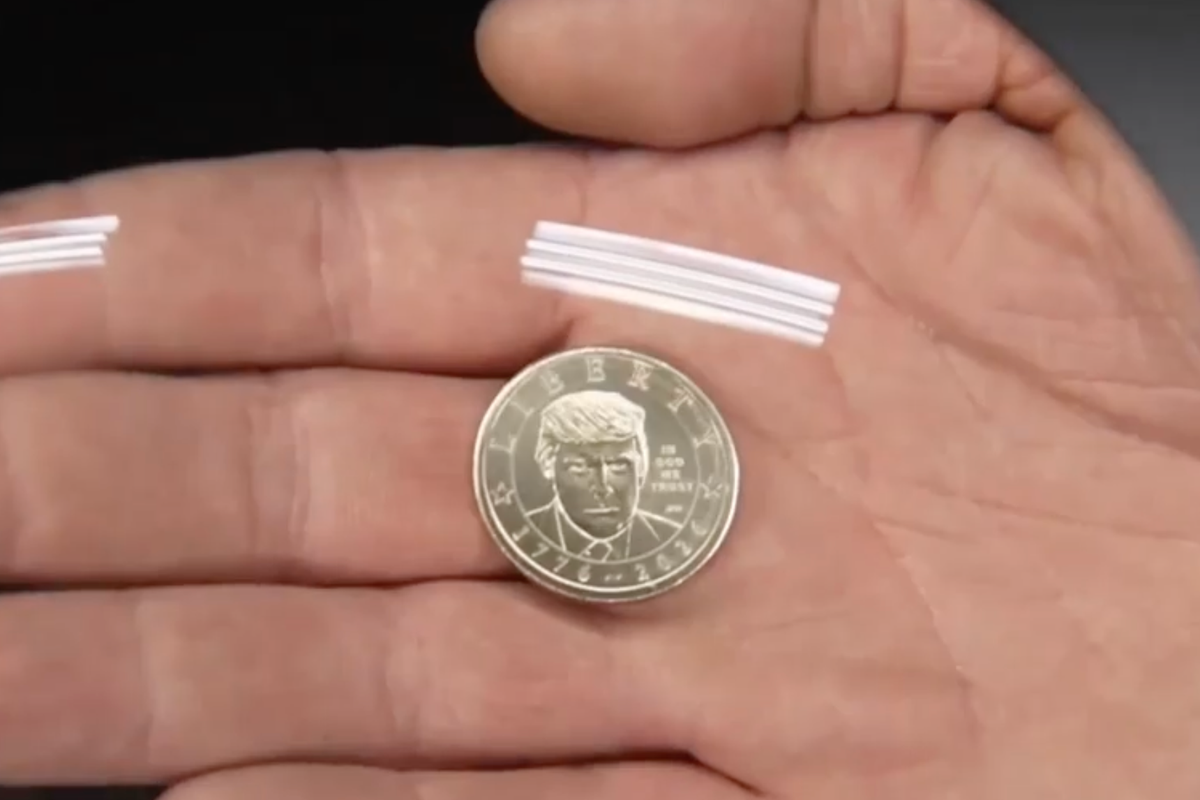
The Treasury Department announced that the signature of Donald J. Trump will debut on the hundred-dollar note to coincide with the nation’s 250th anniversary on July 4, 2026. This decision has triggered a complex legal and bureaucratic conflict. While the administration frames the move as a deserved honor celebrating American strength, critics and legal historians view it as a direct assault on a foundational republican principle. The effort to alter the dollar bill is only half the battle. The administration is also actively pushing to put Trump’s likeness onto a circulating one-dollar coin. This effort has hit a formidable legal barrier in the form of a Civil War era statute designed precisely to prevent American money from looking like the coinage of European monarchs.
The conflict is not merely about aesthetics. It is about the power to define the physical symbol of the state.
A First in American History
Historically, the signatures on American paper money belonged to bureaucratic caretakers. The Treasurer of the United States and the Secretary of the Treasury have signed our paper bills since the mid-nineteenth century. This design kept the focus on the institutional continuity of the government rather than the individual politician occupying the Oval Office. By inserting a sitting president's signature onto the currency, the Treasury has broken this historical precedent.
Treasury Secretary Scott Bessent defended the move by linking the currency redesign to the upcoming Semiquincentennial. He argued that printing the president’s signature on the nation's legal tender is the most powerful way to recognize the administration's economic policies. This logic turns the dollar bill into a political scorecard. It suggests that currency is no longer just a medium of exchange, but a canvas for certifying executive achievement.
The technical execution of this change reveals how deeply the administration is willing to reshape institutional norms. Typically, currency requires the signatures of both the Treasury Secretary and the U.S. Treasurer. Under the new design, the Treasurer's signature is being eliminated entirely. The new bills will feature only the signature of Scott Bessent alongside the large, bold signature of Donald J. Trump.
The Erasure of the Treasurer
To make room for the president, the Treasury had to displace an office that has signed American money since the Lincoln administration. The signature of the Treasurer of the United States has been a constant feature on legal tender since 1861. Removing it is a quiet but profound bureaucratic demotion.
U.S. Treasurer Brandon Beach issued a statement supporting the decision, calling the president's mark on American currency well deserved. This presents a strange institutional irony. The custodian of the national Treasury is celebrating the erasure of his own office's traditional authority to make way for his boss. By stepping aside, Beach helped dismantle a custom that survived the Civil War, two World Wars, and the Great Depression.
Critics argue this change weakens the perceived independence of the financial system. When international markets look at the U.S. dollar, they have historically seen a currency backed by stable, neutral institutions. Placing a sitting president's signature on the bill shifts that perception. It signals that the central currency is subject to the immediate political whims of whoever holds executive power. The long-term consequences of this shift on global confidence in the greenback remain to be seen, but the short-term political victory is clear.
The 1866 Law Blockade
While the administration successfully maneuvered to put Trump's signature on paper currency, the push to mint a one-dollar coin bearing his physical likeness has run into a major legal wall. The U.S. Mint is bound by a strict federal statute enacted on April 12, 1866. That law states that no portrait of a living person may appear on any security, bond, note, or coin of the United States.
The origin of this statute is a bizarre piece of American history. During the Civil War, Spencer Clark, the superintendent of the National Currency Bureau, was tasked with printing new fractional paper currency. The law specified that the five-cent note should feature a portrait of William Clark, the famous explorer of the Lewis and Clark expedition. Instead, Spencer Clark took advantage of a bureaucratic loophole and printed his own face on the five-cent bill.
Congress was furious. To prevent such self-aggrandizement from ever happening again, lawmakers passed a bill declaring that the United States would never feature a living person on its currency. The law was designed to preserve a distinct republican identity. Founders like George Washington had strongly rejected the British tradition of stamping the king's head on coins, believing it smacked of monarchy. For 160 years, that standard held.
Now, the Treasury Department is trying to find a way around this historic barrier.
The Loophole Hustle
The administration’s legal team is looking for gaps in the statutory armor. They are focusing on the Circulating Collectible Coin Redesign Act of 2020. This bipartisan bill, signed during Trump’s first term, authorized the Secretary of the Treasury to redesign circulating coins to mark the 250th anniversary of the United States.
The Treasury argues that the 2020 Act gives them the ultimate authority to select designs emblematic of the country's Semiquincentennial. They assert that the serving president is the ultimate living symbol of the nation during this milestone. However, the text of the 2020 Act itself contains a clear restriction. It explicitly dictates that no portrait of a living person may be used on the designs.
To bypass this, the administration's allies have tried different angles. One approach was pushing through a commemorative 24-carat gold coin featuring Trump’s likeness. Because commemorative, non-circulating coins are subject to slightly different regulatory frameworks and are sold directly to collectors, a Trump-appointed federal arts commission successfully approved the design. But the administration is not satisfied with high-end collector items. They want a circulating one-dollar coin that everyday Americans will use in daily commerce.
To achieve this, the Treasury’s legal team is preparing to challenge the traditional interpretation of the 1866 law. They are arguing that executive authority over currency design, when paired with the specific mandate of the 2020 commemorative act, supersedes the blanket nineteenth-century prohibition. It is a bold, highly controversial legal theory that is bound to face immediate challenges in federal court.
A Broken Tradition of Posthumous Honor
The push to place Trump on the money is part of a broader campaign to stamp his identity onto the physical infrastructure of the American state. Over the past year, the administration has renamed the Kennedy Center to the Trump-Kennedy Center and added his name to the U.S. Institute of Peace building. Placing his name and face on the currency is the crown jewel of this effort.
Opponents in Congress are scrambling to mount a defense. Several Democratic lawmakers have introduced bills designed to explicitly strip the Treasury Secretary of the authority to alter currency signatures or bypass the 1866 law. But these legislative efforts face almost impossible odds. Any such bill would need to pass a divided Congress and then be signed by Trump himself—an obvious impossibility. Overriding a presidential veto would require a two-thirds majority in both chambers, a margin that the current congressional makeup cannot provide.
The real battleground will be the courts. If a legal challenge is filed against the production of the one-dollar coin, federal judges will have to decide whether a 160-year-old law meant to curb bureaucratic vanity can withstand the pressure of modern executive ambition.
For decades, the dollar bill was a symbol of institutional continuity that stood above the partisan fray. By turning the currency into a ledger of executive branding, the administration has permanently altered that relationship. When the first hundred-dollar bills bearing Trump's signature slide out of automated teller machines this summer, the transition from a republican currency to a personalized political instrument will be complete.