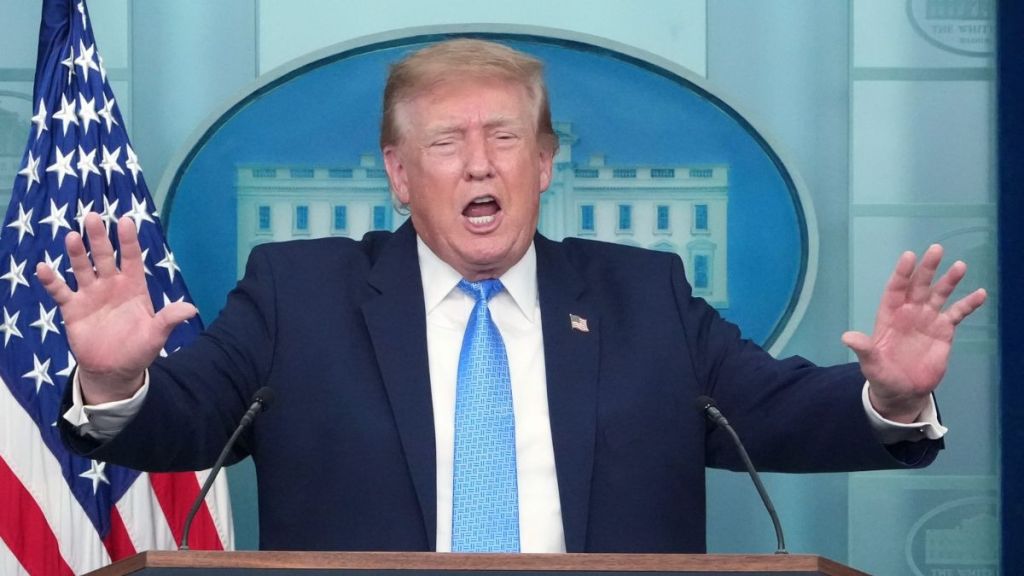
Mainstream foreign policy pundits just tripped over their own shoelaces trying to decode Donald Trump’s latest remarks on Brazil.
The headline consensus is painfully predictable. Reporters see a contradiction when Trump claims he will not "take sides" in Brazil’s political turmoil while simultaneously branding the country's electoral process a "disgrace." To the legacy media, this is erratic nonsense. A diplomatic gaffe. Proof of a leader who cannot stay on message for five consecutive minutes.
They are completely wrong.
Viewing these two statements as a contradiction requires a fundamental misunderstanding of how asymmetric diplomatic pressure actually works. In reality, decoupling an institutional critique from a candidate endorsement is one of the sharpest, lowest-cost power plays in modern statecraft. While analysts waste ink debating whether Trump is endorsing Jair Bolsonaro’s movement or snubbing Luiz Inácio Lula da Silva, they are missing the actual mechanics of the board.
The Lazy Consensus on Diplomatic Neutrality
Conventional Washington wisdom operates on a binary switch. Either you back the incumbent administration to preserve bilateral stability, or you publicly champion the opposition to force regime change. Anything in between gets labeled as amateurish incoherence.
I have watched multinational energy firms and institutional investors burn tens of millions of dollars in Latin America because their risk consultants bought into this exact binary trap. They assume that if a U.S. leader criticizes a foreign court or electoral commission, sanctions and trade wars must immediately follow. Conversely, if that leader refuses to endorse an opposition candidate, they assume it is safe to double down on state-backed infrastructure contracts.
Both assumptions get wiped out the moment realpolitik hits the pavement.
Why Refusing to Pick a Horse Is Lethal
When a U.S. political titan refuses to endorse a specific Brazilian candidate, it is not an act of pacifism. It is a refusal to accept liability.
Backing a specific politician in Brasília comes with massive baggage. Brazilian coalitions are notoriously fluid, transactional, and prone to sudden corruption scandals that can vaporize political capital overnight. By explicitly stating he will not take sides, Trump avoids tying American strategic interests—or his own political brand—to the personal fortunes of any single figure in the Planalto Palace.
At the exact same time, calling the election apparatus a "disgrace" achieves maximum disruption without committing a single dollar of aid, a single tariff threat, or a single diplomatic envoy. It injects pure volatility into the legitimacy of the sitting government while keeping the exit door wide open for bilateral trade negotiations tomorrow morning.
Decoding the Institutional Strike
To understand why this works, you have to stop looking at Brazilian politics through an American lens. The central friction in Brazil is no longer a simple left-versus-right ideological battle between Lula’s Workers’ Party and the Bolsonaro right. It is an institutional war between the executive, the legislature, and an aggressively interventionist judiciary—specifically the Supreme Federal Court (STF) and the Superior Electoral Court (TSE).
Attacking the Referee, Not the Players
In sports, if you want to rattle a championship team without getting ejected from the stadium, you do not throw punches at their star striker. You spend ninety minutes questioning the integrity of the referee.
- The Candidate Endorsement Trap: If Trump endorses Candidate X, the Brazilian Supreme Court and the incumbent administration immediately frame the election as a battle for national sovereignty against foreign interference. Nationalism spikes. The incumbent wins sympathy votes.
- The Institutional Delegitimization Strike: If Trump says he does not care who wins, but the referee is rigged, the nationalist defense collapses. You cannot rally the public around the flag to defend a bureaucratic court system that millions of citizens already distrust.
Political scientists like Steven Levitsky and Daniel Ziblatt have spent years documenting how modern democratic backsliding and institutional warfare rarely happen through military coups. They happen through the weaponization of courts, electoral tribunals, and regulatory agencies. When Trump attacks the process rather than the person, he strikes directly at the nerve center of Brazilian institutional power—specifically figures like Justice Alexandre de Moraes—without giving Brasília a clean diplomatic pretext to retaliate against Washington.
What Everyone Gets Wrong About U.S.-Brazil Relations
If you look at search trends and cable news panels following Trump’s remarks, the public is asking the exact wrong questions. They are obsessed with domestic U.S. political theater instead of hard geopolitical mechanics.
Is Trump Trying to Help Bolsonaro Return to Power?
No. That premise assumes Trump operates out of ideological charity.
Bolsonaro is currently barred from running for office by the TSE until 2030. While his movement remains the dominant conservative force in Brazil, Trump’s primary currency is leverage, not nostalgia. If Bolsonaro’s bloc regains the presidency, Trump already holds their ideological loyalty by default. He does not need to spend political capital to secure it. By withholding a formal endorsement while validating their core grievance—that the electoral system is compromised—Trump gets maximum enthusiasm from the Brazilian right for zero binding commitment.
Will This Trigger a Trade War Between Washington and Brasília?
Unlikely, and here is why. Brazil is an agricultural and commodity superpower that feeds China, Europe, and increasingly supplies critical inputs to the Western Hemisphere. Meanwhile, the United States remains the premier destination for Brazilian high-value manufactured goods, aircraft (Embraer), and foreign direct investment.
Imagine a scenario where the White House slaps punitive tariffs on Brazilian steel or agribusiness purely over electoral rhetoric. Within forty-eight hours, Brasília accelerates yuan-denominated trade settlements with Beijing and hands deep-water port concessions to state-owned Chinese conglomerates. Trump knows this. Strategic ambiguity allows him to rattle Brasília’s cage for domestic and hemispheric audiences while keeping the economic pipelines wide open for American corporations.
Does Rhetorical Delegitimization Actually Change Foreign Policy?
Yes, because capital is cowardly.
Foreign institutional investors do not wait for formal sanctions before repricing sovereign risk. When the most influential political figure in the Western Hemisphere calls a G20 nation’s electoral system a disgrace, compliance officers in New York, London, and Zurich immediately widen their risk spreads. The Brazilian Real feels the tremor. Borrowing costs for state-affiliated enterprises edge upward. Brasília is forced to spend precious diplomatic bandwidth reassuring Wall Street that its rule of law is intact—bandwidth it cannot spend advancing anti-dollar BRICS initiatives.
The Hidden Cost of Strategic Ambiguity
Any honest analysis has to admit where this playbook breaks down. Strategic ambiguity is a razor blade; if you hold it carelessly, you slice your own hand.
- Erosion of Diplomatic Predictability: Traditional statecraft relies on credible commitments. If Washington signals that it views Brazil’s electoral courts as illegitimate, it weakens the United States' ability to act as an honest broker in regional disputes, such as the territorial standoff between Venezuela and Guyana, where Brazil serves as the indispensable regional stabilizer.
- Driving Brasília Deeper Into Beijing’s Orbit: While economic decoupling is rare, diplomatic alienation has cumulative effects. Every time an American leader humiliates Brazilian institutions in public, the diplomatic corps at Itamaraty—Brazil’s famously proud foreign ministry—quietly shifts another degree closer to Beijing and Moscow under the banner of "multipolar non-alignment."
- Domestic Blowback on U.S. Democratic Norms: Using foreign elections as a mirror to validate domestic grievances about voting integrity creates a feedback loop. It lowers the bar for institutional trust at home and abroad, making future electoral disputes infinitely harder to contain peacefully.
How Smart Operators Actually Read This Signal
If you are managing capital, supply chains, or political risk in South America, stop reading the breathless commentary from pundits who have never negotiated a cross-border contract in São Paulo.
Treat Trump’s rhetoric for what it actually is: an asymmetric pricing mechanism.
- Ignore the partisan noise. Do not build your 2026–2028 Latin American strategy around assumptions of ideological alignment or personal feuds between Washington and Brasília. Personalities rotate; structural trade dependencies do not.
- Price in judicial volatility. The real risk in Brazil is not who sits in the presidential chair. The real risk is the ongoing collision between an assertive Supreme Court, a conservative Congress, and an executive branch caught in the middle. Regulatory reversals, sudden platform bans, and tax decree overrides will continue regardless of who wins the next ballot.
- Watch the BRICS currency rhetoric. The moment Brasília pushes aggressively to bypass the U.S. dollar in regional trade, expect Washington’s rhetorical attacks on Brazilian institutions to sharpen into targeted regulatory friction. Until that line is crossed, the bark will remain vastly louder than the bite.
Legacy media outlets need you to believe that refusing to take sides while calling an election a disgrace is an accident of sloppy speechwriting. They thrive on outrage and confusion because nuance does not sell banner ads.
In reality, it is cold, calculated asymmetric warfare. Trump just demonstrated how to destabilize a rival’s institutional credibility, rally a hemispheric base, and extract sovereign leverage without firing a single diplomatic shot or risking a single dollar of American trade. Stop waiting for him to pick a candidate—he already won the only round he cared about playing.