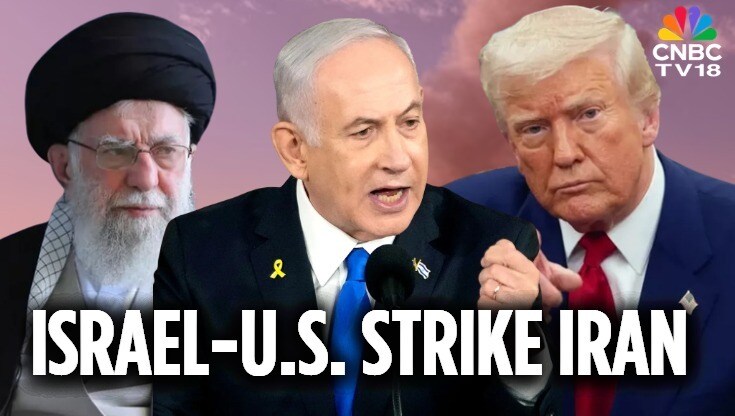
Donald Trump isn't a fan of the current state of Iran nuclear negotiations. He’s said it plainly. He's "not happy" with how things are moving. Yet, in a move that catches some hawks off guard, he’s signaled he’s willing to give the process more time. This isn't just about a delay. It’s a calculated atmospheric shift in how the U.S. handles Tehran, moving away from the immediate "maximum pressure" explosions of the past toward a grinding, frustrating diplomatic chess match.
If you’ve followed Trump’s approach to international deals, this pattern feels familiar. He vents. He criticizes the pace. Then, he leaves the door cracked open just enough to keep the other side at the table. It’s a high-stakes staring contest where the first one to blink loses everything. Right now, Trump is betting that time is actually on his side, even if his patience is wearing thin.
The friction behind the scenes in the Iran talks
The core of the "unhappiness" stems from a perceived lack of movement on key U.S. demands. The administration wants more than just a pause on enrichment. They want a total overhaul of how Iran behaves in the Middle East. We're talking about ballistic missile programs and regional proxy influences that weren't fully addressed in previous iterations of these talks.
Trump’s irritation is a signal to both his domestic base and the Iranian leadership. To the base, he’s the tough negotiator who won’t get rolled. To Tehran, he’s the unpredictable wildcard who might walk away if the "perfect deal" doesn't materialize. It's classic leverage. By publicly stating his dissatisfaction, he lowers the baseline of what Iran can expect to get away with.
The reality on the ground is messy. Economic sanctions have bit hard, but they haven't forced a total collapse or a white-flag surrender. This creates a stalemate. Trump knows that rushing into a bad deal is worse than having no deal at all, especially with an election cycle always looming on the horizon.
Why more time is the current strategy
Giving the talks more time sounds like a softening of the stance. It isn't. It’s actually a way to keep the pressure mounting without triggering an immediate kinetic conflict that nobody really wants. If the U.S. walks away today, the path leads toward limited options—mostly military ones. By extending the clock, the administration keeps the global coalition (however shaky it may be) somewhat aligned against Iranian nuclear ambitions.
There’s also the internal Iranian dynamic to consider. The leadership in Tehran is dealing with its own domestic unrest and an economy that’s gasping for air. Trump’s team likely believes that the longer they wait, the more desperate the Iranian negotiators become. It’s a war of attrition. You don't win a war of attrition by ending the game early.
The role of regional allies in this delay
Israel and Saudi Arabia aren't exactly cheering for a quick return to the status quo. Their influence on the Trump administration’s thinking is massive. These allies want a deal that effectively neuters Iran’s regional reach. Trump’s willingness to "wait and see" aligns with their desire to see Iran further weakened by sanctions before any pens hit paper.
If the U.S. signed a deal tomorrow that only addressed nuclear enrichment, it would be seen as a betrayal by Riyadh and Jerusalem. Trump’s "unhappy" stance validates their concerns. It says, "I hear you, and I’m pushing for more."
Breaking down the maximum pressure 2.0 approach
Maximum pressure isn't a single event. It’s a sustained environment. The strategy now involves a more surgical application of sanctions and diplomatic isolation.
- Targeted Sanctions: Moving beyond broad strokes to hit the specific entities funding the Revolutionary Guard.
- Diplomatic Isolation: Forcing European partners to choose between the U.S. financial system and Iranian oil.
- Cyber Operations: A shadow war that happens in the background while the diplomats argue over table shapes.
This approach requires time to work. You can’t dismantle decades of institutional resistance in a few months of meetings in Vienna or Geneva. Trump’s "patience" is the fuel for this slow-burn strategy.
What happens if the clock runs out
There is a limit. Trump has shown he’s willing to tear up agreements he thinks are "disastrous." If the Iranians don't offer a significant concession on the missile program or their regional activities, the "more time" phase will end abruptly.
We’ve seen this before with North Korea. High-profile summits followed by a cooling-off period, then a return to tough rhetoric. The difference here is the complexity of the Iranian clerical establishment. They aren't a single-leader autocracy in the same way. They have competing factions, some of whom want a deal at any cost, and others who see any deal as a death sentence for the revolution.
The disconnect between rhetoric and reality
Critics argue that Trump’s public dissatisfaction is just noise. They say it lacks a coherent "Plan B." If the talks fail, what’s left?
Actually, the "Plan B" is the current state of affairs: permanent economic strangulation. The administration seems comfortable with a world where Iran is a pariah state, kept in a box by sanctions, even if a formal treaty is never signed. This is the part people get wrong. They think the goal is always a signed piece of paper. For Trump, the goal is often just a better position of power.
If he can keep Iran's economy at 20% capacity indefinitely while they argue about centrifuges, he considers that a win. He doesn't need a ceremony in a rose garden to feel like he’s succeeding.
Moving beyond the headlines
Don't get distracted by the "not happy" soundbite. Focus on the fact that he hasn't walked away. That's the real story. In the world of high-stakes diplomacy, "not happy" is a status report, not a final decision. It’s a way to tell the other side that their current offer is insulting without actually ending the conversation.
Expect more of this. Expect more tweets, more "off-the-record" grumbling from the State Department, and more extensions of deadlines. The U.S. is waiting for a crack in the Iranian facade. Until that crack appears, the clock will keep ticking, and Trump will keep saying he’s unhappy.
Keep a close eye on the secondary sanctions list. That’s where the real movement happens. When you see the U.S. start hitting shipping companies and insurance firms in third-party countries, you’ll know the "more time" phase is nearing its end. Until then, it’s all just positioning.
Watch the oil markets too. Iran’s ability to move crude through "ghost fleets" is their only real lifeline. If the U.S. starts successfully choking those routes, the "unhappy" rhetoric will likely turn into a demand for an immediate summit. It’s all about the leverage.