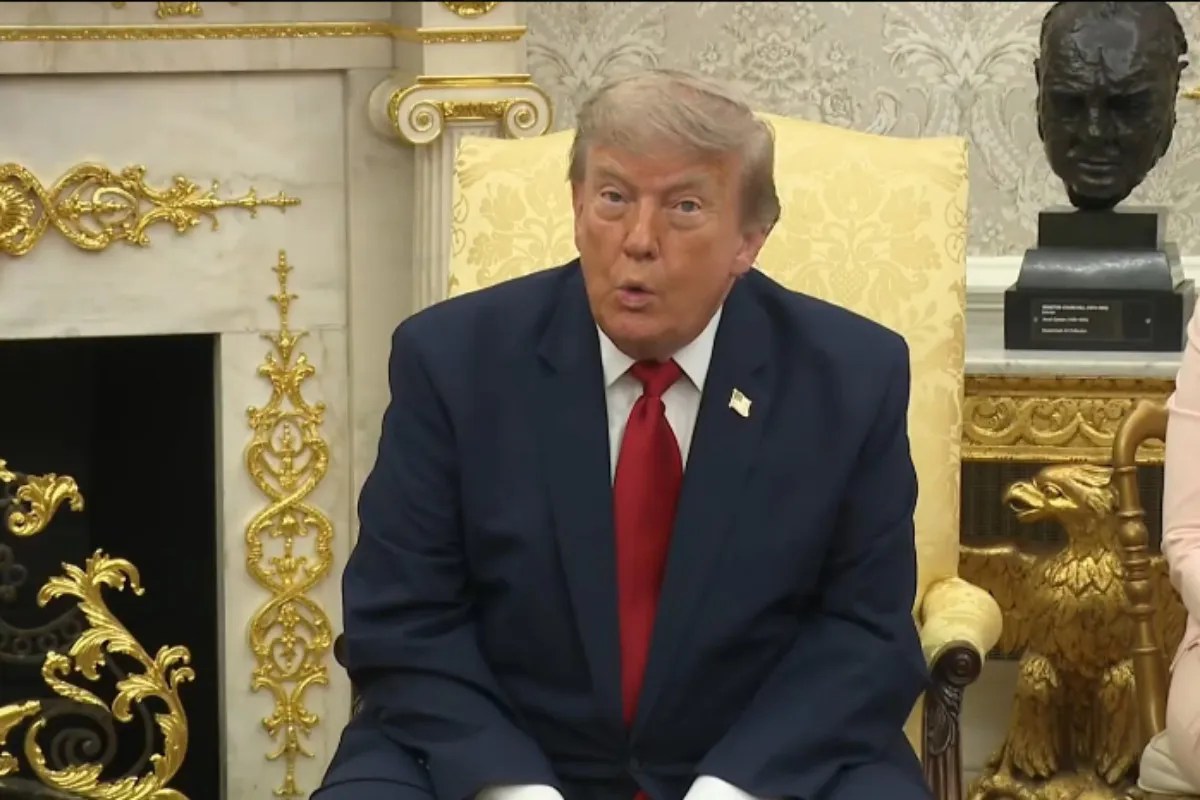
You don't need a degree in geopolitics to realize that charging a 20% tax on ships navigating a natural, international waterway is a logistics nightmare. Yet, Donald Trump almost pushed the global shipping industry off a cliff before pulling off one of his classic, whiplash-inducing policy reversals.
On Monday, Trump declared the U.S. the official "Guardian of the Hormuz Strait". To fund this self-appointed role, he announced a massive 20% toll on all cargo transiting through the choke point.
Just 24 hours later, the plan was dead.
Trump took to Truth Social to announce he was scrapping the "United States Reimbursement Fee". Instead, Middle Eastern allies agreed to pump "billions and billions of dollars" into U.S. trade and investment deals. It was a classic Trumpian theater of threats, panic, and a sudden "deal" that let everyone save face. But behind the dramatic U-turn lies a reality check about global trade, maritime law, and how far America can actually push its allies.
The Chaos Behind the 20% Toll Threat
The Strait of Hormuz is the world's most critical oil transit artery, carrying roughly a fifth of global oil trade. When Trump threatened a 20% levy on cargo value to cover the cost of a renewed U.S. naval blockade against Iran, the global energy market went into immediate cardiac arrest.
Oil prices jumped instantly, shooting past $80 a barrel.
For shipping companies, the math was terrifying. A standard supertanker carrying two million barrels of crude would have faced a staggering $30 million toll bill per single voyage. For perspective, Iran had previously tried to extort ad hoc transit fees of around $2 million—which the industry already considered highway robbery. A $30 million fee wasn't just expensive; it was completely unsustainable.
The shipping industry's reaction was swift and brutal. Trade bodies like Bimco and shipping giants like Hapag-Lloyd publicly slammed the proposal. They called it "fundamentally wrong" and pointed out the obvious: you cannot legally charge tolls for passing through international waters.
Why Trump's Idea Broke Every Rule in the Book
Unlike man-made canals like the Suez or Panama, which are sovereign infrastructures built and maintained by specific countries, the Strait of Hormuz is a natural waterway. Under international maritime law, vessels enjoy the right of transit passage without being taxed by coastal states.
If the U.S. started charging a toll, it would set a highly dangerous precedent.
Think about it. If Washington could charge a protection fee in Hormuz, what would stop Iran from charging its own rival toll? What would stop China from demanding a 20% cut for ships transiting the South China Sea or the Taiwan Strait?
Even Iran's Foreign Minister, Abbas Araghchi, couldn't resist trolling the U.S. president on social media. Araghchi mockingly agreed that whoever secures the strait deserves compensation, but joked that "20% is of course too much". When your geopolitical adversary is using your own logic to mock you, you know your policy has some serious holes.
The Real Goal was Always Leverage
If the toll was illegal and practically impossible to collect, why did Trump propose it in the first place?
Because it wasn't actually about the money. It was a high-stakes pressure tactic.
Trump is visibly frustrated that America's allies—especially the wealthy Gulf monarchies and European nations who rely far more on Middle Eastern oil than the U.S. does—are letting the U.S. Navy do all the heavy lifting to keep the strait safe. By threatening a massive financial penalty, Trump forced these nations to the negotiating table immediately.
It worked. After a flurry of urgent phone calls from Middle Eastern leaders, Gulf states like Saudi Arabia and the UAE reportedly offered massive investment deals into the U.S. economy to make the toll go away. Trump got his headline-grabbing economic "win," the Gulf states protected their shipping corridors, and the global oil market breathed a collective sigh of relief as Brent crude settled back down.
What Happens Now?
While the toll is off the table, the underlying tension in the region hasn't gone away. The U.S. military is still enforcing its strict naval blockade on Iranian ports, and the threat of retaliatory strikes remains incredibly high.
If you are a business owner, investor, or logistics operator, you need to prepare for ongoing volatility. Here are the immediate steps to take:
- Factor in persistent maritime risk: Even without a 20% toll, expect war risk insurance premiums for transit through the Persian Gulf to remain highly elevated.
- Diversify supply routes where possible: Explore alternative pipelines or transport methods that bypass the Strait of Hormuz entirely.
- Watch bilateral trade announcements: Keep a close eye on upcoming investment announcements from Gulf states into the U.S., as these will signal which domestic sectors stand to benefit from Trump's latest dealmaking.
Trump's quick shift shows that while his rhetoric is unpredictable, he remains highly sensitive to immediate economic feedback. The 20% toll was a wild bluff, but it served its purpose as a brutal reminder of who holds the keys to global trade.