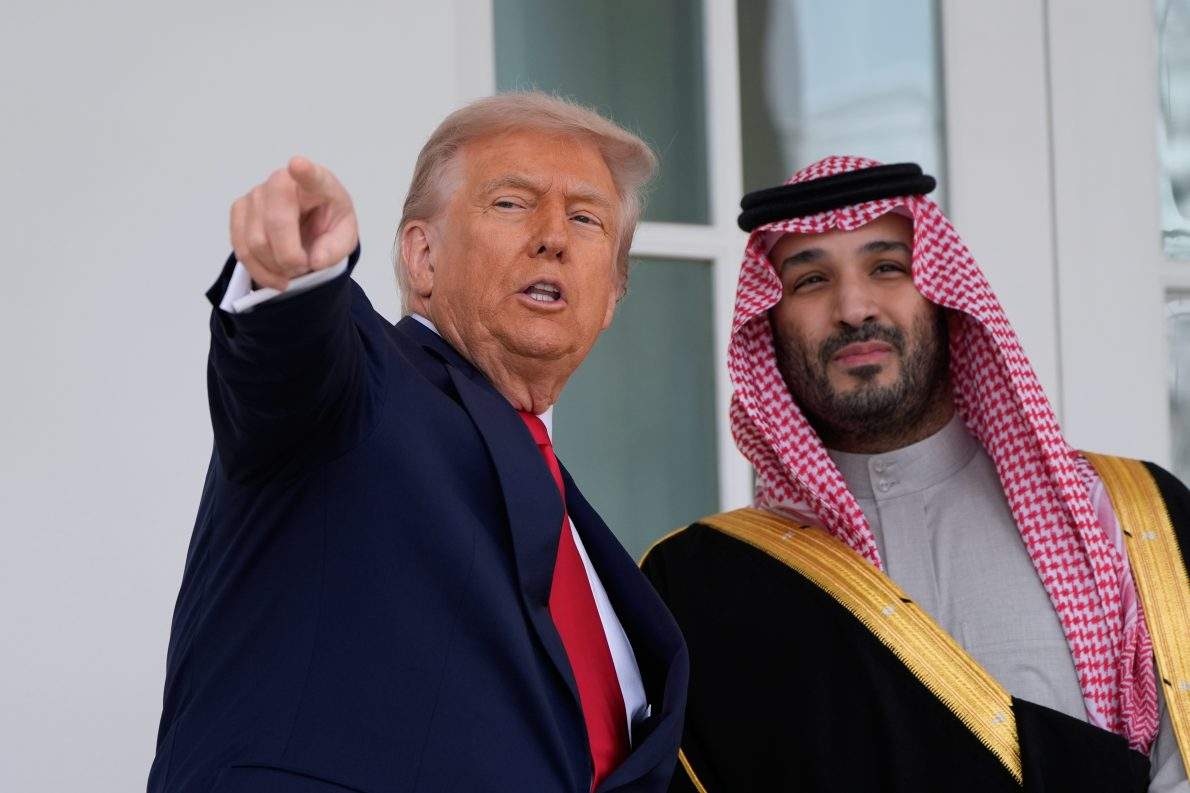
Donald Trump just threw a massive wrench into his own administration's diplomatic machinery. Less than 24 hours after U.S. Energy Secretary Chris Wright and Saudi Energy Minister Prince Abdulaziz bin Salman signed a historic civil nuclear cooperation agreement, the president announced a dramatic plot twist. If Saudi Arabia wants access to American nuclear technology, it must first recognize Israel and join the Abraham Accords.
If they don't? "The deal is off," White House Press Secretary Karoline Leavitt bluntly warned reporters.
That single condition flipped Washington and Middle Eastern capitals upside down. The original framework signed on Wednesday made zero mention of diplomatic ties with Israel. Energy officials framed it as a standard agreement under Section 123 of the U.S. Atomic Energy Act. But Trump's sudden social media post on Thursday afternoon changed the rules mid-game, catching lawmakers, foreign diplomats, and nuclear experts completely off guard.
Why Trump Retconned the U.S. Saudi Arabia Nuclear Deal
Politics moves fast. Foreign policy moves faster.
The original announcement of a 30-year U.S.-Saudi nuclear deal sparked immediate pushback from Capitol Hill and Israeli leadership. Critics in Washington slammed the agreement for lacking strict safeguards, specifically the International Atomic Energy Agency's (IAEA) "Additional Protocol," which allows for surprise inspections. Lawmakers feared that handing nuclear technology to Riyadh—even for peaceful electricity generation—could spark a dangerous regional arms race with Iran.
In Jerusalem, officials were deeply unnerved. Prime Minister Benjamin Netanyahu's team voiced immediate concern over any agreement that might eventually let Saudi Arabia enrich uranium.
Trump reacted quickly to the blowback. By insisting on Truth Social that the deal is "totally subject to Saudi Arabia joining the very respected and successful Abraham Accords," he accomplished two things at once:
- He quieted pro-Israel critics. Linking nuclear energy to recognizing Israel gives Tel Aviv a massive geopolitical victory before a single reactor gets built.
- He claimed firm control over uranium enrichment. Trump asserted that the deal pertains only to non-military, non-enriched civilian nuclear facilities, contrasting it with weaponization risks.
Basically, Trump tried to calm his domestic base and Israeli allies while forcing Crown Prince Mohammed bin Salman into a hard corner.
The Catch Riyadh Cannot Easily Accept
Here is the real problem. Saudi Arabia isn't going to jump into the Abraham Accords overnight just because Washington added a clause.
Riyadh has maintained a firm line for years. Crown Prince Mohammed bin Salman has stated repeatedly that Saudi Arabia will not establish formal diplomatic relations with Israel without a clear, credible pathway toward an independent Palestinian state.
That requirement presents a major hurdle right now.
- Gaza changed public opinion. Arab public sentiment toward Israel has hardened significantly since October 2023. Saudi leaders know that normalizing ties without securing major Palestinian concessions would trigger immense backlash across the Muslim world.
- Netanyahu's government says no. Israeli Prime Minister Benjamin Netanyahu has explicitly rejected Palestinian statehood, calling the concept a direct threat to Israeli national security.
- The stalemate is real. Washington is asking Saudi Arabia to accept a condition that Israeli leadership currently refuses to facilitate.
The Saudis want American civil nuclear assistance to diversify their oil-dependent economy and power Vision 2030. They want American supply chains, tech transfer, and safety oversight. But doing so at the cost of abandoning their stance on Palestine is a price Riyadh has consistently refused to pay.
The Proliferation Concern Congress Cannot Ignore
Diplomacy aside, the technical specifics of this nuclear agreement are causing massive friction in Washington.
Under the U.S. Atomic Energy Act, any "123 Agreement" must go before Congress for a 90-day review period. Trump has signaled he will submit the pact soon. While a president can veto Congressional attempts to block an international agreement, bipartisan anxiety is running high.
Nonproliferation experts point out several glaring gaps in the signed paperwork:
- No IAEA Additional Protocol. The agreement lacks the gold-standard protocol that gives international inspectors unannounced access to facilities.
- The enrichment question mark. Trump claims there will be "no enrichment of material." Yet sources familiar with the original deal indicated the U.S. and Saudi Arabia had agreed to a two-year study evaluating whether building a U.S.-controlled enrichment plant on Saudi soil was feasible.
- The Marco Rubio shift. U.S. Secretary of State Marco Rubio defended the deal in Manila, arguing that if Washington doesn't build Saudi reactors, Riyadh will simply turn to China or Russia. But back in 2018, as a senator, Rubio co-sponsored legislation requiring explicit Congressional approval for any Saudi nuclear deal lacking non-proliferation guarantees.
"We're not the only show in town, but we're the best show in town," Rubio told reporters. "We want to make sure that it's our companies they're picking."
That argument reflects pragmatic economic competition. If American nuclear giants build Saudi reactors, U.S. inspectors keep eyes on the ground. If Russian or Chinese state-owned firms do it, Washington gets zero visibility.
What Happens Right Now
This nuclear deal is far from finished. The sudden mandate for Saudi-Israel normalization has turned what looked like a straightforward commercial agreement into an all-or-nothing diplomatic gamble.
If you are tracking this story, watch these three clear indicators over the coming weeks:
- Congressional review debates. Watch whether lawmakers attempt to pass a formal resolution of disapproval when the 90-day clock begins. Pay attention to whether Republicans break ranks over nuclear safeguards.
- Official Saudi response. Riyadh's Foreign Ministry and Energy Ministry have remained tight-lipped since Trump's social media post. Watch for subtle shifts in Saudi press statements regarding Palestinian statehood requirements.
- The alternative nuclear bids. Keep an eye on whether Saudi Arabia reopens formal talks with French, South Korean, or Chinese nuclear vendors as a hedge against U.S. political volatility.
Trump set a high bar. By forcing Saudi Arabia to choose between an American nuclear infrastructure and its historical position on Israel, Washington has set up a massive test of regional leverage. Whether Riyadh bites or walks away will shape Middle Eastern geopolitics for decades.
/IndonesianWoman-5ab91881ba61770037463fbd.jpg)