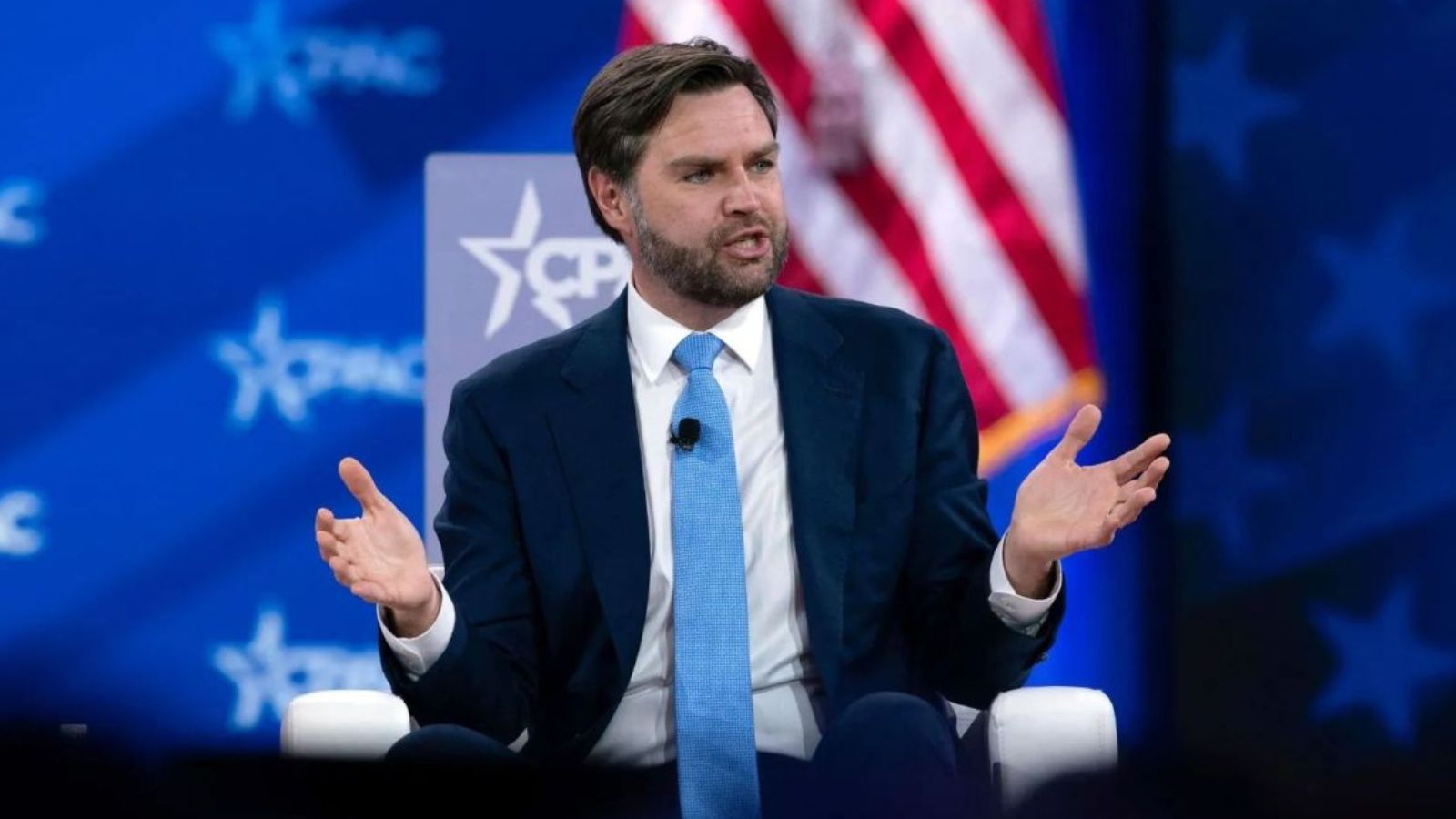
"Golden age" versus "we're working on it."
That is the lazy framing everyone is parroting. A neat little political parlor game. Trump sells the triumph. Vance sells the patience. One man is supposedly living in a gilded bubble; the other is supposedly the gritty populist holding up a mirror to reality.
It makes for a snappy headline. It is also completely backward.
Conventional coverage treats this divide as a simple clash of temperaments or a sloppy messaging misfire inside the White House. Trump boasts of a golden age and calls affordability complaints a hoax. Vance tells town-hall voters that people are hurting, admits the administration needs to do better, and argues that fixing decades of underinvestment takes more than eighteen months. Reporters then trot out a few voters—one who calls Vance "more real," another who trusts Trump's business instincts despite high prices—and call it a day.
That is surface-level stenography. It misses the real mechanic driving both pitches.
The Lazy Consensus Everyone Swallows
The standard story goes like this: Trump is detached from household pain, while Vance is the grounded pragmatist leveling with working families.
Watch what happens when you apply basic economic accounting to both halves of that story.
Neither pitch is a candid diagnosis of the household balance sheet. Both are survival strategies built around the exact same shock: the 2026 conflict with Iran, disruption around the Strait of Hormuz, and the resulting jump in energy and freight costs. When Brent crude pushes past $100 a barrel—up from roughly $70 in 2025—and national gas averages climb well above $4 a gallon with diesel north of $6, you do not have a "messaging problem." You have a real-income squeeze.
Over the years, I have watched corporate boards and political campaigns alike blow millions trying to talk down a visible price shock. Tell a customer at the pump or the grocery aisle that prices are a "hoax" or that things are "better than ever," and you lose credibility with the very people paying the bill. Yet telling people "we're working on it" while energy costs stay elevated is not a silver bullet either. Empathy without a near-term price off-ramp still leaves a hole in a family's monthly budget.
You Are Asking the Wrong Question
Most political commentary asks who has the better sales pitch: Trump's grandiosity or Vance's candor.
Wrong question.
The real question is which time horizon each man is pricing in—and whether supply-side promises can outrun a geopolitical energy tax.
In economics, you have to separate nominal and real shocks from long-run supply shifts. A spike in crude oil and shipping risk acts like a regressive tax on transport, agriculture, and manufacturing. Even when the United States is a massive oil producer, global benchmark crude sets domestic pump and freight dynamics fast, while factory builds, permitting reforms, and domestic investment take years to move unit costs.
A golden-age speech and a "turning the ship" speech are two halves of one high-wire act: one tries to hold confidence through shock, the other tries to buy time while supply adjusts.
Consider a thought experiment to see why both men sound half-right and half-evasive at the same time.
Imagine a scenario where a midsize freight carrier in the Midwest has steady customer demand and low local unemployment, yet diesel sits above $6 a gallon. A new domestic factory or tax provision might help three years from now, and a geopolitical gamble might eventually reopen shipping lanes. This week, though, fuel bills hit cash flow immediately. Telling that operator it is a golden age feels tone-deaf. Telling them it takes more than eighteen months feels endless when margins are thin today.
What "People Also Ask" Gets Wrong
Is Vance actually breaking with Trump on the economy?
No. Look closely at what Vance says when pressed on the contrast. He frames Trump around incoming investment and long-term structural shifts while acknowledging near-term pain and arguing that resolving Hormuz and shipping threats is tied to bringing energy prices down. Calling that a civil war over economic reality overstates the split. It is division of labor, not a mutiny.
Why do gas and grocery prices hurt even when headline jobs look decent?
Because voters do not live in headline aggregates. Unemployment can stay relatively low while inflation lingers above the Federal Reserve's 2% target and energy costs jump by more than a dollar a gallon year over year. Diesel feeds straight into trucking and food distribution; when fuel and freight climb, households feel the squeeze every single week even if their paycheck still clears.
Can tax breaks and investment pledges fix affordability right now?
Not overnight. Tax legislation and capital expenditure announcements change incentives over quarters and years, not at the checkout counter this afternoon. Anyone who claims a multi-year structural pivot cures an acute energy shock in real time is selling magic beans.
The Heavy Hitters Were Right About Trade-Offs
Classic political economy has warned about this exact trap for generations. As Milton Friedman emphasized in his work on inflation and monetary dynamics, households judge policy by purchasing power in daily transactions, not by official optimism. And as Dani Rodrik has argued in his writing on globalization and domestic adjustment, structural promises on industry and workers only hold political weight when the transition costs do not crush ordinary families along the way.
Notice what happens when both principles collide. You can have real long-term ambition—on energy, manufacturing, or strategic leverage—and still pay a steep short-term price at the pump. Pretending the short-term price does not exist invites voter pushback. Admitting the price without locking in faster relief leaves voters waiting on a promise.
Where My Contrarian Read Can Go Wrong
Honesty requires putting my own thesis on the scale.
If the conflict around Iran and the Strait of Hormuz resolves cleanly and energy markets cool faster than skeptics expect, Trump's high-confidence bet will look far more prescient than cautious analysts gave him credit for. Conversely, if structural investments and productivity gains compound steadily over the next several years while inflation cools, Vance's "long turnaround" framing will age better than critics predicted. Treating today's friction as permanent would be its own mistake.
What Actually Works When Prices Pinch
If you run a business, manage household cash flow, or advise decision-makers in a noisy macro environment, stop trading slogans and do three things instead:
- Stress-test margins against a $100 oil and $6 diesel world. Do not budget around the price you wish energy were; price contracts and inventories assuming geopolitical spikes last longer than politicians promise.
- Separate 90-day cash survival from 3-year capital bets. Cut waste and protect liquidity in the near term while keeping long-term expansion tied to real unit economics, not press-release optimism.
- Measure real purchasing power, not cheerleading. Track your own fuel, freight, input, and borrowing costs line by line—because your bank account never reads a speech.
Stop watching the spin. Watch the barrel and the receipt.