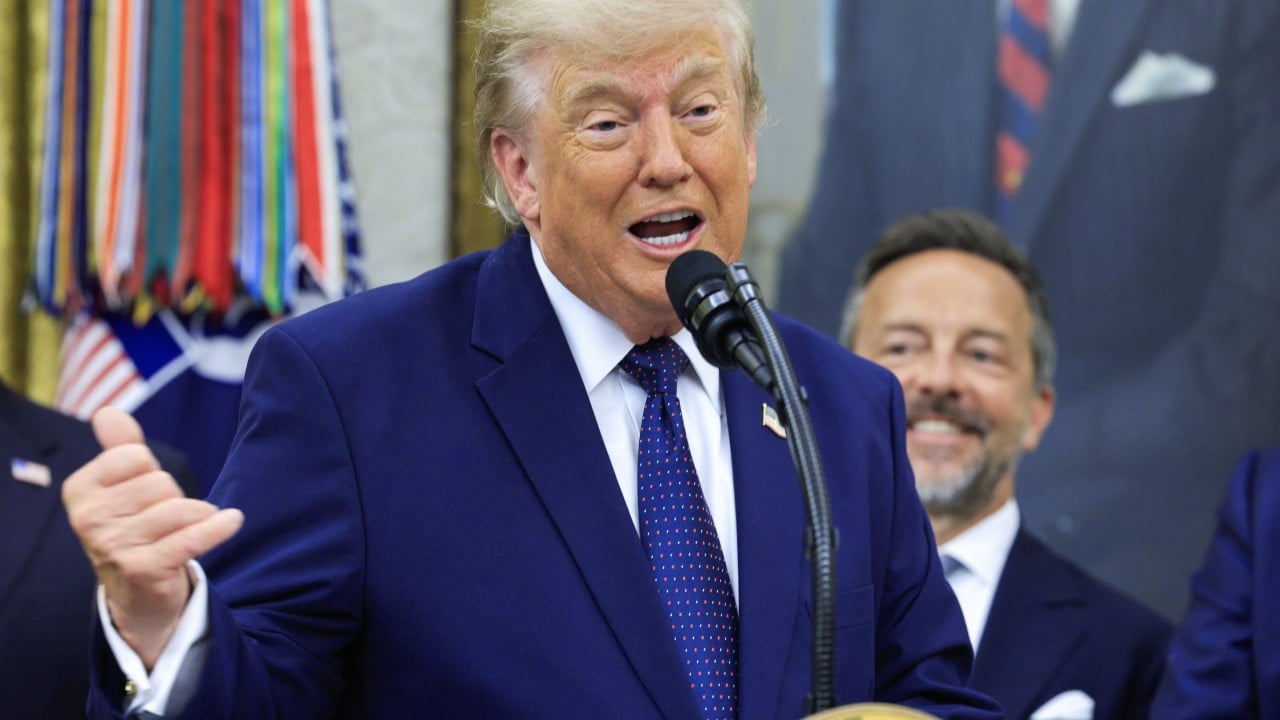
Silicon Valley is terrified of Washington, and they should be. Big tech giants used to run circles around politicians who barely understood how email worked. Not anymore. Right now, the Trump administration is floating a radical idea that could completely shift how the wealth from artificial intelligence gets distributed. Trump wants a public contribution from top US AI firms, basically giving everyday Americans a literal stake in the profits of artificial intelligence.
Let's look past the political theatre. This isn't just an off-the-cuff remark or a random social media post. Real conversations are happening. Reports indicate OpenAI CEO Sam Altman already sat down with Trump, Commerce Secretary Howard Lutnick, and Treasury Secretary Scott Bessent to talk about handing over a 5% equity stake in OpenAI to seed a national public wealth fund.
If you think this is just standard corporate lobbying, you're missing the bigger picture. We are looking at a historic restructuring of how private tech wealth and state power intersect.
The Trillion Dollar Sovereignty Play
The motivation here stems from a growing anxiety. While tech elites rake in billions and valuations for companies like OpenAI march toward $1 trillion, the average worker worries about being automated out of a paycheck.
Trump is tapping into that exact fear. If AI is going to reshape the American workforce, then the American public should own a piece of it. It's an aggressive nationalist approach to economic policy. Take care of home base first.
But don't assume this is a one-sided government shake down. OpenAI actually initiated some of these early conceptual talks. Why? Because tech firms are desperate to smooth out relationship issues with a heavy-handed administration. Washington recently forced OpenAI to delay its GPT-5.6 model release and temporarily choked off Anthropic's access to its advanced Fable and Mythos models over foreign national security concerns. Giving Uncle Sam a piece of the equity pie is a survival strategy to avoid crushing regulations and secure government data center permits.
How the Government Extracts Its Pound of Flesh
How do you actually force private tech firms to hand over equity to the public without looking like a socialist regime? Policymakers and insiders are looking at three distinct mechanisms.
The Stock Tax
Instead of paying corporate taxes in cold cash, companies would pay the federal government in company stock. It sounds wild, but legal scholars have floated this strategy for years. It allows the government to accumulate ownership positions in hyper-growth startups without spending a single dime of taxpayer money. Senator Bernie Sanders pushed an even more aggressive version of this, demanding a 50% stake and board seats for the public. Trump's camp seems to favor a less punitive but still substantial approach.
The Equity for Infrastructure Swap
Building AI models requires insane amounts of power and infrastructure. Tech firms need billions of dollars, fast. The government could step in with massive federal loan guarantees or direct capital injections for data centers and chip manufacturing, but with string attached. We already saw a blueprint for this. The government took a 10% ownership stake in Intel in exchange for an $8.9 billion manufacturing funding package. Trump publicly noted that the government should have negotiated for an even bigger piece of Intel. He won't make that mistake again.
The Alaska Permanent Fund Model
This is the framework Altman and various policy advisers are actively studying. In Alaska, a state-owned corporation takes oil revenues and reinvests them into a diversified portfolio, paying out a yearly dividend check to residents. Replicating this on a national scale with AI equity would create a "Digital Dividend" or a public wealth fund designed specifically to send checks to Americans who don't own traditional stocks.
The Catch Everyone is Ignoring
This sounds great on paper. Big tech gives up shares, a massive sovereign wealth fund grows, and you get a check in the mail to compensate for AI taking your cousin's copywriting job.
It is rarely that simple. If the US government owns a 5% or 10% stake in OpenAI, Google, or Meta, its incentives instantly warp.
Suddenly, regulators aren't just referees making sure these companies play fair and protect consumer privacy. They are shareholders who want the stock price to go up. How aggressively will the government police an AI firm's copyright infringements or data practices if a drop in that firm's stock price defunds a public dividend program right before an election cycle?
There is also a massive international domino effect to consider. If the US demands a 5% cut of OpenAI as a toll to operate, what stops the European Union, Japan, or India from demanding their own local equity slices as a condition for market access? Enterprise buyers across Europe are already hyper-sensitive about data sovereignty. If they see the US executive branch holding equity and pulling strings behind closed doors at major model providers, they might ditch American AI tools entirely for domestic, open-source alternatives.
Where This Leaves Tech Investors and Workers
If you're managing an investment portfolio or working in tech, you need to adapt to this shifting terrain. The days of pure, unchecked free-market tech expansion are over.
Keep a close eye on the impending initial public offerings. Both OpenAI and Anthropic have filed confidentially for IPOs. Watch the regulatory disclosures closely. Any forced equity concessions or public fund mandates will be spelled out there, and they will dramatically alter corporate governance.
Don't wait around for a government dividend check to protect your finances from AI disruption. The political gears grind incredibly slow, and any plan of this scale requires an act of Congress, meaning years of partisan bickering before a single dollar hits your bank account. Instead, focus on building skills that complement AI orchestration rather than tasks easily replaced by a prompt. If the state is trying to secure its stake in the AI boom, you should be doing the exact same thing on an individual level by investing in the underlying hardware, energy infrastructure, and chip suppliers powering this trend. Free-market dynamics are turning structural, and sitting on the sidelines is the only guaranteed way to lose.