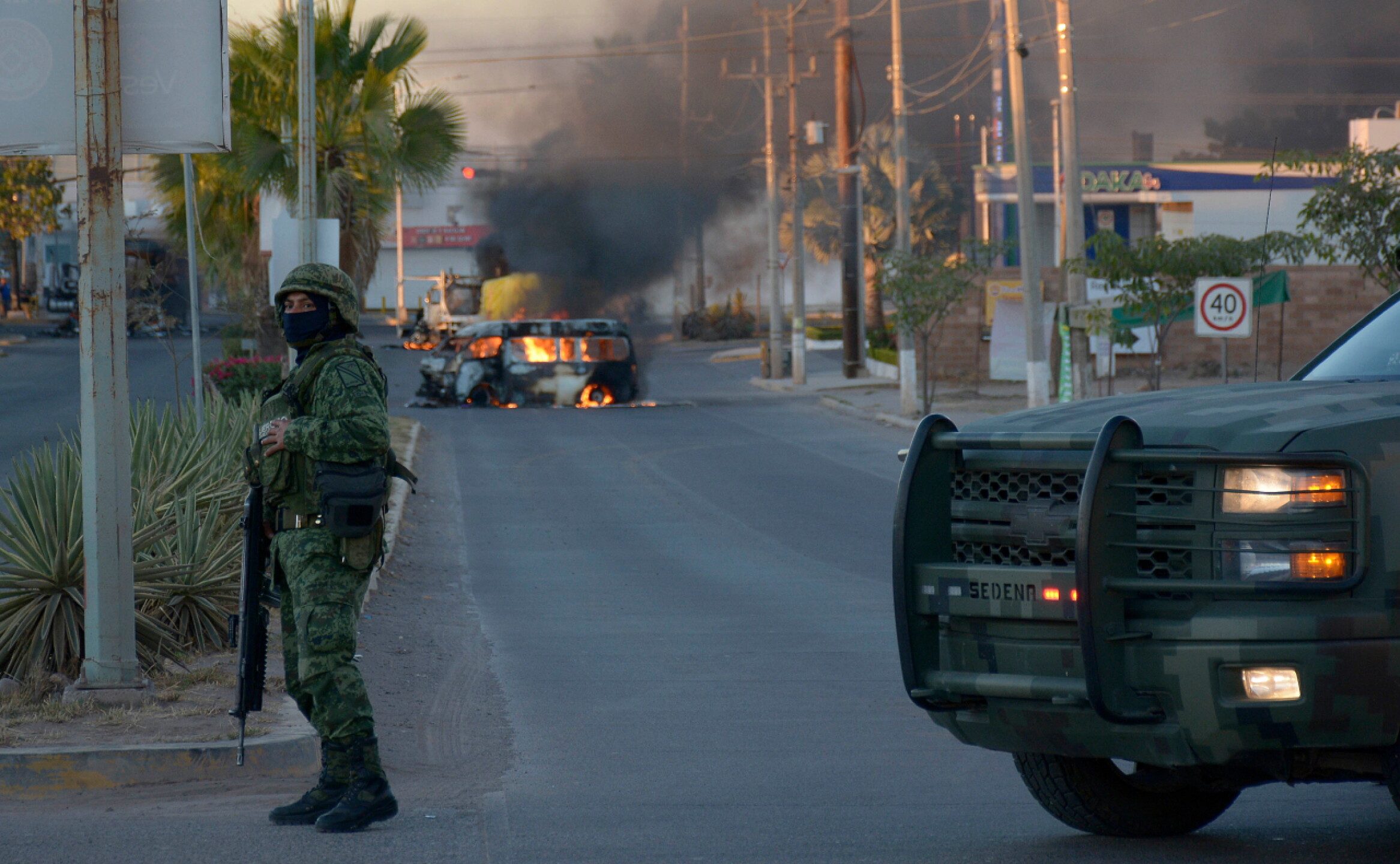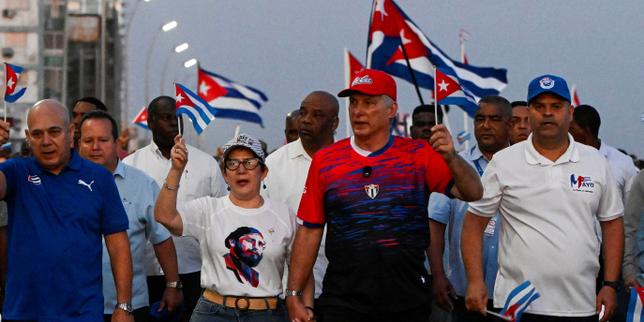
The headlines are screaming about a "dangerous and unprecedented level" of tension between Washington and Havana. The media loves a David vs. Goliath narrative where a military intervention is always one tweet away. They paint a picture of a Cuban government trembling at the prospect of "maximum pressure."
They are wrong. They are falling for the oldest trick in the geopolitical playbook.
Donald Trump's recent threats of military action aren't a death knell for the Cuban Communist Party (PCC). They are its life support. For sixty years, the Cuban regime has survived on a diet of American hostility. Every time a U.S. President shakes a saber, the aging leadership in Havana pops a champagne cork. They need the "Yankee Threat" to justify their own systemic failures. Without a monster under the bed, the Cuban people might start looking more closely at the monster in the mirror.
The Siege Mentality as a Management Tool
To understand why military threats fail, you have to understand the Plaza de la Revolución’s core survival strategy: the Siege Mentality. When a government can convince its population that an invasion is imminent, internal dissent becomes treason. Economic collapse isn't the fault of central planning; it's "warfare by other means."
I have spent decades analyzing the intersection of Caribbean trade and geopolitical risk. I’ve seen how these "unprecedented" threats play out on the ground. When the U.S. leans in hard, the Cuban hardliners win. The reformers—those quiet voices within the bureaucracy pushing for small-scale private property and market liberalization—are silenced. They are branded as "fifth columnists."
If you want to dismantle the Cuban regime, you don't threaten them with a carrier strike group. You threaten them with a Costco.
The Myth of the Military Solution
Let’s look at the logistics of "military intervention." It is the ultimate empty threat. The Pentagon has zero appetite for a messy, long-term occupation of a Caribbean island with a highly mobilized, albeit poorly equipped, territorial militia.
Military analysts often cite the Inter-American Treaty of Reciprocal Assistance (Rio Treaty) or the Monroe Doctrine as if they provide a simple legal roadmap for boots on the ground. They don't. Any kinetic action in Cuba would trigger a refugee crisis that would make the Mariel boatlift look like a Sunday cruise. Florida’s infrastructure would buckle. The political cost for any U.S. administration—especially one focused on "America First"—is prohibitive.
Havana knows this. They aren't "alerting the world" because they are scared of a midnight raid by SEAL Team Six. They are alerting the world to rally international sympathy and solidify their base. It is a performance.
The Real Threat is Not the Pentagon
If Trump actually wanted to destabilize the PCC, he wouldn't talk about missiles. He would talk about high-speed internet and decentralized finance.
The Cuban state survives because it controls the flow of resources. By tightening sanctions and threatening force, the U.S. pushes the Cuban economy further into the shadows. This benefits the GAESA (Grupo de Administración Empresarial S.A.), the military-run conglomerate that controls almost every profitable sector of the Cuban economy, from tourism to remittances.
When the U.S. closes formal channels, GAESA’s black-market dominance grows. They become the only game in town for survival.
Why the "Maximum Pressure" Logic is Flawed
The "Maximum Pressure" crowd argues that if you make life miserable enough, the people will rise up. This is a fundamental misunderstanding of authoritarian dynamics.
- Energy Scarcity as Control: When the lights go out because of fuel sanctions, people don't spend their time plotting a revolution. They spend their time standing in line for bread. Poverty is a tool of pacification.
- The Safety Valve: Hostility encourages the most motivated, pro-democratic Cubans to leave. The U.S. threats facilitate a brain drain that removes the very people capable of leading a transition.
- External Support: Belligerence from D.C. drives Havana straight into the arms of Moscow and Beijing. We are effectively subsidizing Russia’s intelligence outpost at Lourdes by making the U.S. appear as an existential threat.
The Counter-Intuitive Play: Weaponized Capitalism
The status quo is a stagnant loop of rhetoric. To actually disrupt the Cuban power structure, the U.S. needs to stop acting like a bully and start acting like a venture capitalist.
Instead of threatening to blow up a bridge, we should be flooding the island with direct-to-entrepreneur micro-loans. We should be bypassing the state-run banks using peer-to-peer technologies that the Cuban censors can't track.
The regime is terrified of the MIPYMES (Micro, Small, and Medium Enterprises). Why? Because a citizen who doesn't depend on the state for their paycheck is a citizen the state cannot control. Every time Trump suggests military intervention, the regime uses it as an excuse to crack down on these private businesses, claiming they are "trojan horses" for the CIA.
The "Dangerous Level" is a Branding Exercise
When Havana speaks of a "dangerous and unprecedented level" of tension, they are using the language of the victim. It works wonders at the United Nations. It secures credit lines from sympathetic regimes. It provides a convenient excuse for why the electrical grid is failing and why the sugar harvest is at an all-time low.
If the U.S. truly wanted to change the regime, it would become boring. It would remove the "revolutionary" fire that Havana uses to keep its population warm.
Imagine a scenario where the U.S. unilaterally lifted the travel ban and allowed millions of Americans to carry their "contagious" ideas of liberty and consumerism directly into the streets of Old Havana. The PCC wouldn't know how to handle it. They are masters of guerrilla warfare; they are amateurs at managing a middle class.
The High Cost of the Hardline
Let's be honest about the downside of this contrarian view: it's not emotionally satisfying. It doesn't look good on a campaign poster. It’s much easier to yell about "freedom" and "intervention" than it is to navigate the complexities of soft-power subversion.
But we have to look at the data. Sixty years of the same policy has yielded sixty years of the same government in Havana. If this were a business, the CEO would have been fired in 1965.
The current saber-rattling is a gift to the status quo. It validates the old guard’s paranoia. It justifies the presence of the secret police on every corner. It turns a failing, bankrupt dictatorship into a heroic underdog in the eyes of the Global South.
Stop Asking the Wrong Question
The media asks: "Will Trump actually invade Cuba?"
The policy hawks ask: "How can we tighten the screws even further?"
Both questions are irrelevant. They both assume that the U.S. government is the primary actor in Cuba's future. It isn't. The Cuban people are. And every time Washington makes it about the U.S. military, they take the agency away from the Cuban people.
The real "unprecedented danger" isn't a war. It's the continued survival of a failed system because the United States refuses to stop providing it with the perfect enemy.
Stop feeding the dragon and watch it starve.
Take the military option off the table. Not because it’s "immoral," but because it’s ineffective. It’s a blunt instrument in a world that requires a scalpel. If you want to see the Cuban regime collapse, stop threatening to burn the house down and start offering the residents a better mortgage.
The most terrifying thing you can do to a revolutionary is to make him irrelevant.
Don't invade Cuba. Ignore them until they are forced to deal with the reality of their own incompetence.