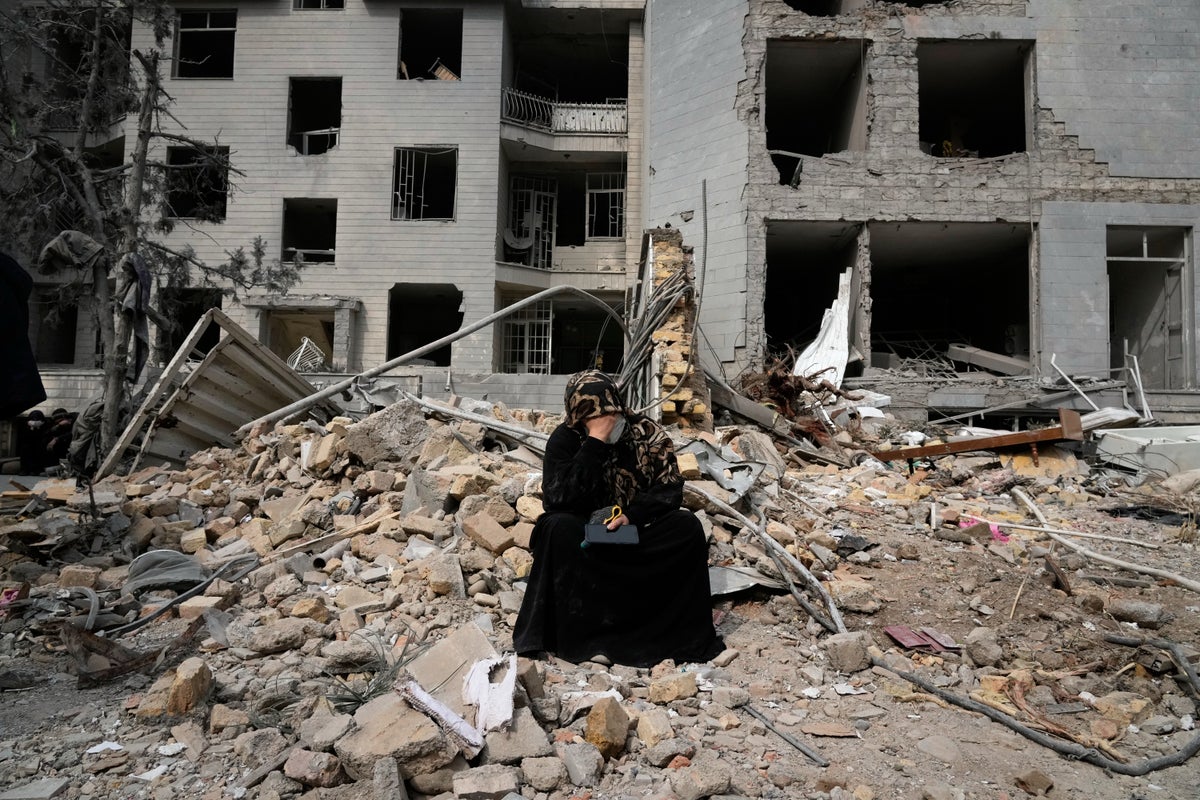
You've probably seen the headlines or heard the frantic reports about military strikes and rising tensions in the Middle East. People are asking one specific, haunting question. How many people have been killed in the US-Israel war on Iran since the conflict began? To answer that, we have to clear up a massive misunderstanding about what's actually happening on the ground right now. If you're looking for a specific body count for a declared, full-scale war between these three nations, you won't find one. That's because a formal, direct war between the United States, Israel, and Iran hasn't officially started.
Wait. Don't close the tab just yet. While there isn't a "Big War" in the traditional sense, people are dying. The reality is much messier than a simple declaration of conflict. We're living through a sprawling, decentralized shadow war. It's a series of proxy battles, targeted assassinations, and regional skirmishes that have claimed thousands of lives across the Middle East. If you want to understand the human cost, you have to look at the individual theaters where these powers collide. For a more detailed analysis into this area, we recommend: this related article.
Why the death toll is so hard to pin down
We can't just look at a single scoreboard. When we talk about the friction between the US, Israel, and Iran, the casualties are spread across several different countries. You've got the ongoing strikes in Syria. You've got the maritime skirmishes in the Red Sea. You've got the devastating conflict in Gaza and the northern border of Israel.
Each of these spots is a pressure point where Iranian interests hit US or Israeli military objectives. Organizations like the Syrian Observatory for Human Rights (SOHR) and various UN agencies track these numbers, but they're often categorized by the local conflict rather than an overarching "War on Iran." For broader details on the matter, extensive reporting is available on TIME.
Honestly, the numbers are staggering when you add them up. Since the escalation following the October 7 attacks, the regional death toll has soared. In Gaza alone, the numbers have surpassed 30,000. In Lebanon, hundreds of fighters and civilians have been killed. If you count these as part of the broader US-Israel-Iran confrontation—which most geopolitical analysts do—then the "war" has already been incredibly lethal.
The shadow war in Syria and Lebanon
For years, Israel has conducted what it calls the "war between wars." This is a campaign of airstrikes in Syria aimed at stopping Iran from shipping advanced weapons to Hezbollah. These strikes don't just hit crates of missiles. They hit people.
According to reports from SOHR, hundreds of Iranian-backed militia members and Iranian Revolutionary Guard Corps (IRGC) officers have been killed in these strikes over the last decade. The pace has intensified. In early 2024, a strike on the Iranian consulate in Damascus killed several high-ranking IRGC officials, including Brigadier General Mohammad Reza Zahedi. This was a massive escalation. It brought the shadow war into the light.
In Lebanon, the situation is even more direct. The skirmishes between Israel and Hezbollah, Iran's most powerful proxy, have displaced tens of thousands and killed hundreds. While the US isn't firing the missiles here, its military aid and diplomatic backing of Israel make it a central player. You can't separate the US from the equation.
Red Sea casualties and the Houthi factor
Let's look at another front. The Houthis in Yemen. They're backed by Iran. They've been launching drones and missiles at international shipping and Israeli territory. The US and UK responded with Operation Prosperity Guardian.
How many have died here? It's fewer than in Gaza or Syria, but it's not zero. Dozens of Houthi fighters have been killed in US-led airstrikes. Iranian "advisors" are often suspected to be on the ground or on ships nearby, providing intelligence. Every time a US destroyer shoots down an Iranian-made drone, the risk of a direct "hot" war increases. The human cost here is often hidden because it happens at sea or in remote parts of Yemen, but it's a vital piece of the puzzle.
The cost of miscalculation
The danger of this shadow war is that it only takes one mistake to turn these proxy deaths into a global catastrophe. Think about the drone strike in Jordan in early 2024 that killed three US service members at Tower 22. That was a direct hit on Americans by an Iranian-backed militia. The US retaliated with strikes across Iraq and Syria, killing dozens of militia members.
This back-and-forth is where the "war" lives. It's a cycle of revenge.
- Targeted Killings: High-level scientists and military leaders.
- Proxy Casualties: Local fighters in Yemen, Iraq, and Syria.
- Collateral Damage: Civilians caught in the crossfire of airstrikes.
- Economic Toll: While not a direct death, the regional instability kills through poverty and lack of resources.
Assessing the total human impact
If you're looking for a total number, you have to decide where to draw the line.
If you mean "How many people have died in a direct invasion of Iran?" the answer is zero.
If you mean "How many people have died because of the strategic rivalry between the US, Israel, and Iran?" the answer is in the tens of thousands.
You have to include the 1,200 Israelis killed on October 7. You have to include the tens of thousands of Palestinians in Gaza. You have to include the IRGC officers in Damascus, the Hezbollah fighters in Southern Lebanon, and the US soldiers in Jordan. It's all connected. Iran's "Axis of Resistance" is the framework for this entire conflict. When one part of that axis moves, people die, and the US and Israel are the primary targets or actors on the other side.
The narrative vs the reality
Most media outlets want to give you a clean number. They want to say "X people died." But that's a lie of simplification. The reality is a fragmented horror show.
I've watched this play out for years. The pattern is always the same. A proxy group does something. Israel or the US hits back. Iran denies direct involvement but praises the "martyrs." Then, a few weeks later, a warehouse in Isfahan "accidentally" explodes or a cyberattack shuts down Iranian gas stations. Sometimes people die in those incidents too, but they're rarely reported in the official tallies.
What happens if this goes full scale
The current death toll is a tragedy. A full-scale war would be an apocalypse.
Iran has a population of over 85 million. Its military is deeply embedded in its civilian infrastructure. Unlike the wars in Iraq or Afghanistan, a war with Iran would involve a sophisticated state actor with a massive missile arsenal and a global network of sleeper cells.
Military simulations by various think tanks, like the Center for Strategic and International Studies (CSIS), suggest that a direct conflict could result in hundreds of thousands of casualties in the first few months alone. We aren't there yet. We're in the "slow-burn" phase. But the burner is getting hotter.
Following the data
If you want to stay updated on the actual numbers, stop looking for a single "war" headline. You need to track several specific areas.
- SOHR reports on Syria: They're the most reliable for tracking Iranian-linked deaths in the Levant.
- Health Ministry data from Gaza and Lebanon: This gives you the scale of the proxy-led conflict.
- CENTCOM press releases: The US military is quite transparent about when they conduct "self-defense" strikes in Iraq or Yemen.
- IAEA reports: While they don't track deaths, they track the nuclear tension that serves as the primary trigger for this whole mess.
The world is holding its breath. The "war" is already happening in the shadows, and the body count is rising every day. To keep yourself informed, watch the borders of Lebanon and the shipping lanes of the Red Sea. That's where the next chapter of this unrecorded war will be written. Stop waiting for a formal declaration. The cost is already being paid in real lives, right now. Look at the maps. Watch the drone footage. The conflict is here, even if the history books haven't named it yet.



