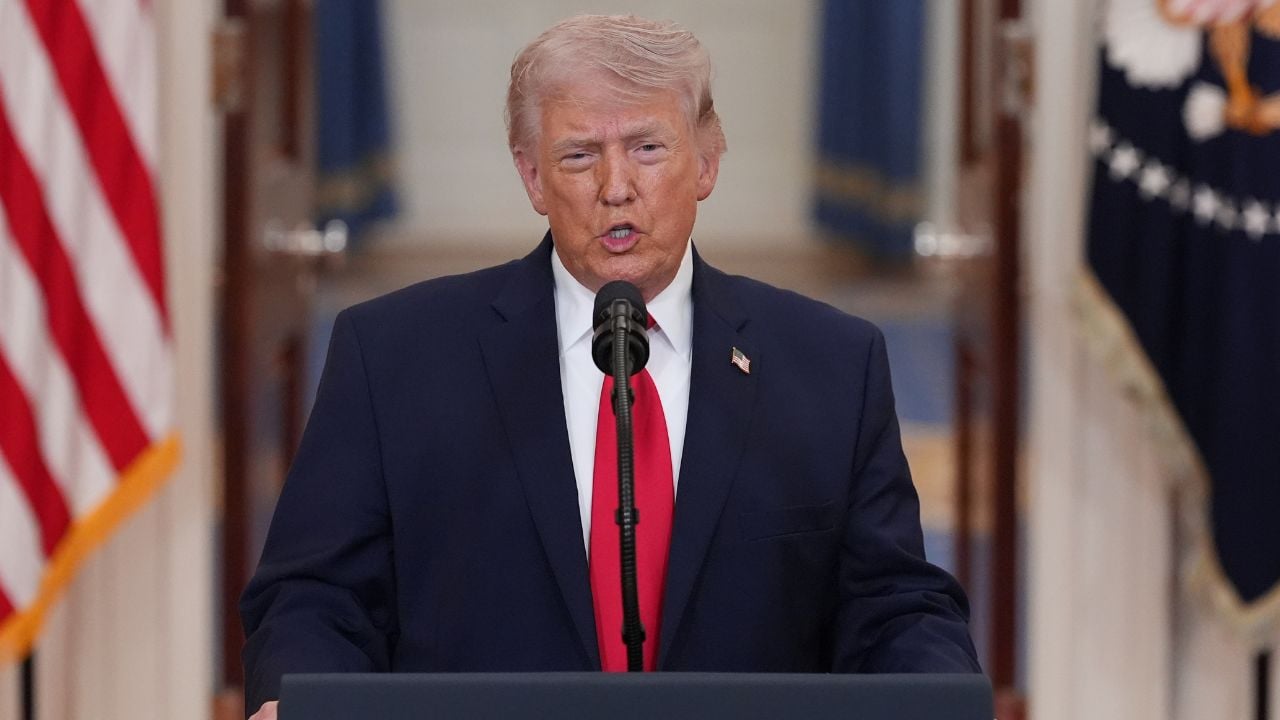
Geopolitics is often treated like a high-stakes poker game, but in reality, it functions more like a scripted professional wrestling match. The headlines are screaming about a "final" Tuesday deadline set by the Trump administration regarding the Iran proposal. The consensus among the laptop class is that we are on the precipice of a binary outcome: a deal or a disaster.
They are wrong.
The "final" deadline is a psychological tool, not a functional one. In thirty years of observing how global powers leverage perceived instability to move markets, I have seen this movie before. The "not good enough" rhetoric isn't a rejection of the deal; it is a price discovery mechanism. When a leader calls a proposal "not good enough" forty-eight hours before a self-imposed cutoff, they aren't walking away. They are anchoring.
The Myth of the Hard Deadline
In the real world of international trade and sovereign security, there is no such thing as a "final" deadline unless there are boots on the ground or ships in the strait. Everything else is a negotiation tactic designed to satisfy domestic bases and squeeze the last drop of blood from the counterparty.
The mainstream media falls for the "ticking clock" narrative every single time. They want you to believe that at 12:01 AM on Wednesday, the world changes. It won't. If a deal isn't reached by Tuesday, the "deadline" will simply be rebranded as a "window for further clarification" or a "transition into a new phase of pressure."
Deadlines in diplomacy are like the "Last Chance" sales at a furniture store. They exist to induce anxiety and force a decision from a hesitant buyer. By framing Tuesday as the end-of-the-road, the administration is forcing Iran’s leadership to weigh the internal cost of looking weak against the external cost of continued economic isolation.
Why Not Good Enough is the Perfect Starting Point
The competitor's analysis suggests that a "not good enough" label is a sign of failure. This is amateur-hour thinking. In any high-level acquisition or treaty negotiation, the moment you say a deal is "good enough" before the clock runs out, you have lost.
Consider the mechanics of the current proposal. It likely addresses the surface-level mechanics of enrichment and monitoring while ignoring the structural reality of regional proxy influence. To accept it now would be to signal that the U.S. is desperate for a win. By trashing the deal publicly, Trump maintains his "Art of the Deal" persona while simultaneously lowering the expectations of the Iranian negotiators.
It’s a classic bait-and-switch. You criticize the terms to make the eventual "compromise"—which was likely the goal all along—look like a hard-fought victory.
The Energy Market’s Massive Miscalculation
If you look at the Brent crude futures or the volatility index, you see a market pricing in a "cliff" event. Traders are betting on a binary:
- Deal: Oil prices soften as the "fear premium" evaporates.
- No Deal: Prices spike on the threat of disrupted supply lines.
This is a flawed premise. The market is ignoring the "Grey Zone"—the most likely outcome where no formal deal is signed by Tuesday, but back-channel talks continue indefinitely. This creates a state of permanent tension that benefits specific players.
High-ranking officials in energy-exporting nations aren't hoping for a resolution. They are hoping for the process of a resolution. The process keeps prices elevated without the actual risk of a kinetic conflict. If you are trading based on the Tuesday deadline, you are being played by the very volatility the deadline was designed to create.
The Logic of Professional Brinkmanship
Let’s dismantle the idea that "hardline" means "no deal." History shows that the most significant breakthroughs often follow the most aggressive rhetoric. Think back to the "fire and fury" directed at North Korea, which was followed shortly by a summit in Singapore.
The current posture toward Tehran follows this exact playbook.
- Step 1: Publicly humiliate the existing proposal.
- Step 2: Set an arbitrary, high-pressure deadline.
- Step 3: Wait for the counterparty to blink or offer a "face-saving" concession.
- Step 4: Rebrand the minor concession as a "historic victory."
The danger isn't the deadline itself; the danger is the Western obsession with linear progress. We want to see A lead to B. But Persian diplomacy—and Trump’s brand of transactionalism—is circular. It’s about fatigue. It’s about who can sit in the room longer while the cameras outside freeze in the cold.
The "People Also Ask" Trap
If you search for "Will there be war with Iran?" or "How will the Iran deal affect gas prices?", you are asking the wrong questions. These questions assume that the players involved are irrational actors driven by ego alone. They aren't. They are driven by survival and capital.
- Will there be war? No. Neither side can afford the insurance premiums, let alone the ammunition. War is bad for the bottom line of the global elite who actually pull the strings.
- Will gas prices drop? Not because of this. Prices are currently being manipulated by supply-side constraints that have nothing to do with whether a piece of paper is signed in a Geneva hotel room this week.
Stop looking at the date and start looking at the flow of money. If the major defense contractors aren't pivoting and the massive tankers aren't changing course, the "deadline" is nothing more than a press release.
The Cost of the "Not Good Enough" Narrative
There is a downside to this strategy, and it’s one the administration’s fans rarely admit: it destroys the value of the American word. When everything is a "final" deadline and every proposal is "not good enough," the currency of U.S. diplomacy is debased.
Eventually, the "boy who cried wolf" effect kicks in. If you set five "final" deadlines and none of them result in action, the sixth deadline is ignored. We are currently at deadline number three or four, depending on how you count. The Iranians know this. The Europeans know this. Only the American news consumer seems to have amnesia.
The Counter-Intuitive Play
If you are a business leader or an investor, the move here isn't to hedge against a Tuesday collapse. The move is to ignore the noise and look at the long-term regional integration.
While the headlines focus on the "not good enough" deal, the real story is the shifting alliances in the Middle East. Countries that were once mortal enemies are now talking because they realize that American "deadlines" are increasingly irrelevant to their internal security.
The "Tuesday Deadline" is a distraction. It’s a shiny object designed to keep you from noticing that the U.S. is losing its ability to dictate terms through sanctions alone. The world has found workarounds. Shadow fleets, non-dollar trade, and regional hubs have rendered the "maximum pressure" campaign a sieve.
The Evisceration of the Status Quo
The competitor’s article wants you to feel a sense of urgency. It wants you to refresh your feed on Tuesday night to see if smoke has emerged from the chimney.
I’m telling you to go for a walk.
Whatever happens on Tuesday—whether it’s a delay, a partial agreement, or a theatrical walkout—the fundamental reality remains: The U.S. is negotiating from a position of perceived strength but actual exhaustion. Iran is negotiating from a position of perceived weakness but actual resilience.
When a "final" deadline is announced with this much fanfare, it is a guarantee that it isn't final. It is a signal that the real deal is being hammered out in a room where no reporters are allowed, far away from the "not good enough" tweets and the Tuesday countdown clocks.
The "not good enough" proposal is likely the exact deal that will be signed six months from now, with three words changed and a different name at the top. The Tuesday deadline is just the theater we have to endure to get there.
Stop buying the drama. Start watching the data. The deadline is a ghost.
Close your browser. The world isn't ending on Tuesday. It’s just being rebranded.