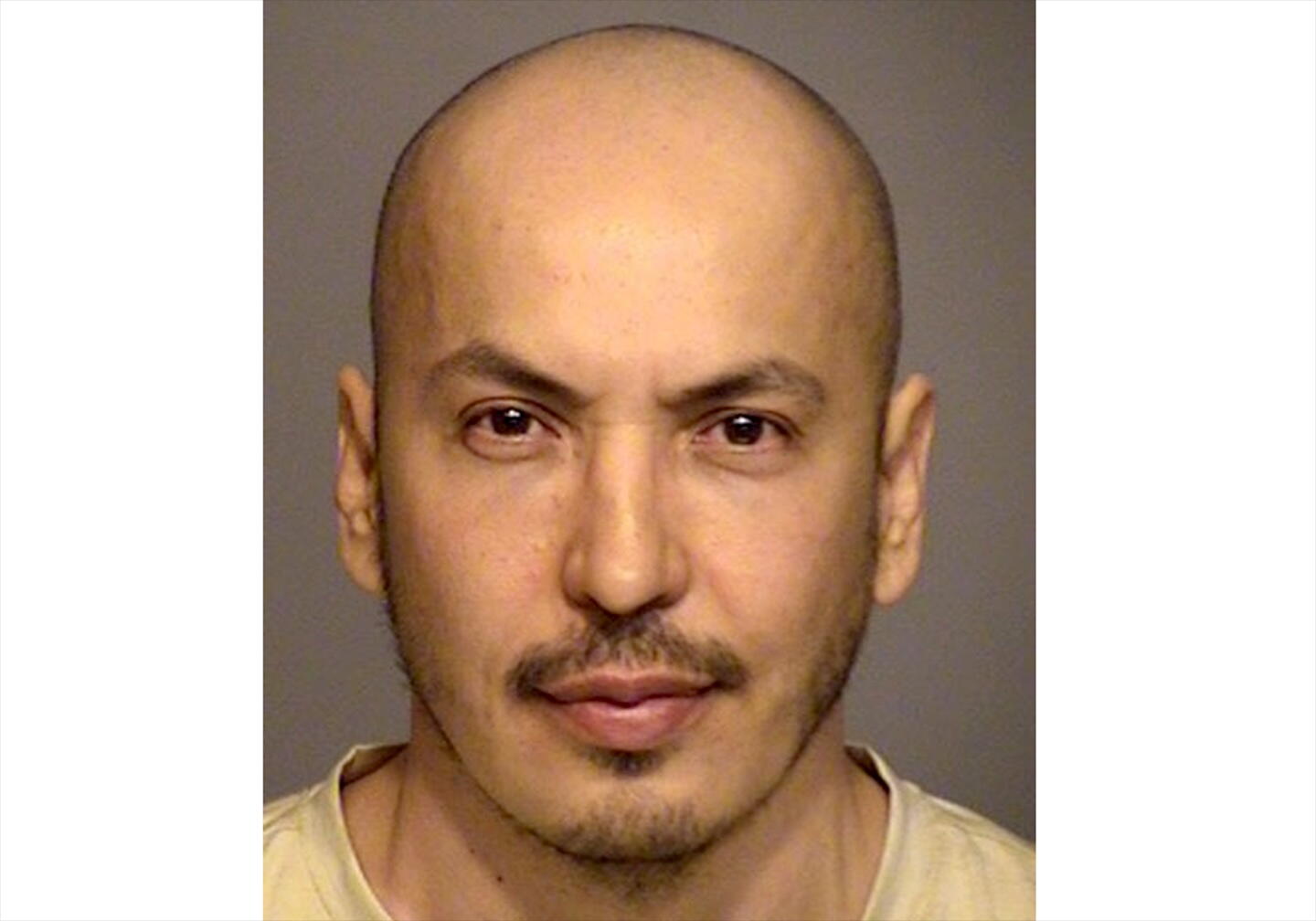
When a Southern California restaurant owner was gunned down during a botched kidnapping nearly three decades ago, the investigation quickly hit the same brick wall that stalls thousands of violent felonies across the United States. Local detectives lacked modern forensic databases, cross-jurisdictional communication was painfully slow, and eyewitness memories faded before leads could be verified. Twenty-eight years later, the victim's family finally secured a measure of justice through a conviction, illustrating a massive shift in how cold case units dismantle decades-old crimes using modern investigative architecture rather than sheer luck.
Most people assume cold cases get solved because a retired detective suddenly stumbles across a dusty cardboard box in a basement archive. That is a television myth. In reality, solving a twenty-eight-year-old homicide requires systemic institutional upgrades, updated forensic processing, and a ruthless re-examination of original witness statements that were discarded during the initial chaos.
The Anatomy of a Stalled Investigation
To understand why it took nearly three decades to close the books on a brazen public abduction gone wrong, you have to look at the policing reality of the late 1990s. Southern California was a patchwork of independent municipal police departments and massive county sheriff jurisdictions. Information moved on paper, via fax machines, or through occasional phone calls between detectives who guarded their turf fiercely.
When a small business owner—specifically a restaurateur known for handling cash—becomes the target of a kidnapping plot, the crime is rarely spontaneous. Targeted abductions of business owners almost always involve surveillance, inside knowledge of daily routines, and multiple conspirators. Yet in the immediate aftermath of a fatal shooting, initial responders naturally focus on the immediate crime scene rather than the broader criminal network.
During those critical first forty-eight hours in the late 1990s, several systemic failures routinely doomed complex homicide cases:
- Fragmented Intelligence: A suspect arrested for a weapons charge in an adjacent county would never be linked to a kidnapping-homicide ten miles away unless someone manually connected the dots.
- Primitive Forensic Preservation: Trace evidence, such as touch DNA on a vehicle door handle or microscopic fibers on discarded duct tape, was either undetectable with 1990s technology or accidentally degraded by improper storage.
- Intimidation in Local Communities: Small business districts operate on tight social networks. Witnesses who saw unfamiliar vehicles casing a restaurant were often terrified of retaliation, and without robust witness protection mechanisms for non-cartel cases, they stayed silent.
The original investigators did not necessarily fail out of incompetence. They simply lacked the technological infrastructure to trace the digital and biological breadcrumbs left behind by the perpetrators.
Why Cash-Heavy Businesses Attract Kidnapping Crews
In the criminal underworld, independent restaurant owners have historically been viewed as prime targets for extortion and abduction. Unlike corporate retail chains that utilize armored car pickups and time-delayed safes, independent restaurateurs often carry substantial cash deposits personally at the end of a long shift.
Kidnapping crews operating in Southern California during that era operated on a simple, brutal calculus. They assumed a business owner's family would pay a quick ransom to avoid involving law enforcement, or that the victim could be forced to open a safe after hours. Botched abductions occur when the victim resists, when a bystander intervenes, or when panicked amateurs lose control of the perimeter.
Once a kidnapping turns into a homicide, the dynamic shifts entirely. The perpetrators suddenly hold zero financial upside and face capital murder charges. Their primary objective becomes immediate dispersal. In a sprawling metropolitan area with direct freeway access to international borders, a crew can vanish within minutes, leaving local detectives with a cold trail and no obvious motive beyond a random street robbery.
The Mechanics of the Twenty-Eight-Year Breakthrough
When a case sits cold for nearly thirty years, the passage of time eventually flips from an advantage for the killers into a liability. Alliances fracture. Prison informants seek sentence reductions. Most importantly, forensic science undergoes generational leaps.
Modern cold case units do not simply re-read old files; they dismantle the entire investigative narrative from scratch. When detectives revisited the murder of the Southern California restaurateur, they relied on a combination of updated science and basic human psychology that only works decades after the event.
Re-testing Degraded Biological Evidence
In the 1990s, DNA profiling required a substantial biological sample—a visible bloodstain or bodily fluid. Today, touch DNA technology can extract a viable genetic profile from just a few skin cells left on a steering wheel, a shell casing, or a victim's clothing.
Cold case investigators routinely submit preserved physical evidence from decades-old evidence lockers to modern crime labs. Even if a suspect's DNA is not in the Combined DNA Index System (CODIS), advanced techniques like investigative genetic genealogy allow analysts to upload crime scene profiles to public ancestry databases. By mapping out distant cousins and building family trees backward, investigators can narrow a suspect pool down to a single individual within weeks.
The Erosion of Criminal Loyalty
Time destroys criminal conspiracies. A twenty-two-year-old getaway driver who kept his mouth shut out of fear or loyalty in 1998 is a fifty-year-old man in 2026, often facing unrelated health issues, estranged from his former associates, or serving time for another offense.
Veteran cold case detectives know exactly how to exploit this erosion. By re-interviewing peripheral figures—ex-girlfriends, former cellmates, and estranged family members—investigators frequently uncover the missing narrative threads that tie physical evidence to specific suspects. People who were too terrified to speak when the killers were young and active on the streets are often willing to talk once those individuals are incarcerated or elderly.
The Brutal Reality of Delayed Justice
Securing a conviction nearly three decades after a murder is widely celebrated in press releases, yet the reality inside the courtroom is grueling and fraught with legal peril. Prosecuting a twenty-eight-year-old homicide requires overcoming massive evidentiary hurdles that defense attorneys aggressively exploit.
Memories decay. Witnesses who were in their thirties during the crime are now in their sixties or seventies; some have passed away, while others suffer from cognitive decline. Physical locations change completely—a parking lot where a getaway car was spotted in the 1990s might now be a high-rise apartment complex, making it difficult for jurors to visualize sightlines and distances.
Furthermore, chain-of-custody logs from the pre-digital era are notoriously messy. Defense lawyers will scrutinize every handwritten transfer receipt from 1998 to argue that evidence could have been contaminated or mislabeled over the decades. To win a conviction after twenty-eight years, prosecutors cannot rely on a single piece of evidence. They must build an airtight mosaic combining modern forensic hits, historical phone or financial records, and corroborated witness testimony.
What This Means for Thousands of Unsolved Cases
The resolution of this Southern California restaurant owner's murder is not an isolated miracle; it is proof of concept for a systematic approach to cold cases. Across the country, tens of thousands of unsolved homicides sit in municipal archives, many of them involving minority business owners and working-class victims whose cases initially received minimal media attention.
When police departments dedicate permanent, specialized personnel to cold cases—rather than treating them as side projects for overworked active-case detectives—clearance rates rise measurably. The combination of mandatory DNA collection for felony arrests, advanced microscopic forensics, and cross-agency data sharing means that the statute of limitations on murder is no longer just a legal technicality.
For the family of the slain restaurateur, the verdict ends a twenty-eight-year limbo that spanned multiple generations, turning an unresolved tragedy into a matter of public record. For violent offenders who escaped capture in the pre-digital era, the message from modern investigative units is straightforward: the evidence collected at the scene did not expire, and the technology required to read it has finally caught up.