Silence.
That is the first thing you notice on a small municipal tarmac at five in the morning, right before the auxiliary power unit whines to life and shatters the cold air into a million vibrating shards. If you have ever sat in the right seat of a light business jet—feeling the cold aluminum of the rudder pedals through thin leather soles while the instrument panel glows like a miniature city—you know that aviation does not care how old you are. The airspeed indicator does not ask for your birth certificate. Gravity does not check your driver’s license. If you enjoyed this post, you should look at: this related article.
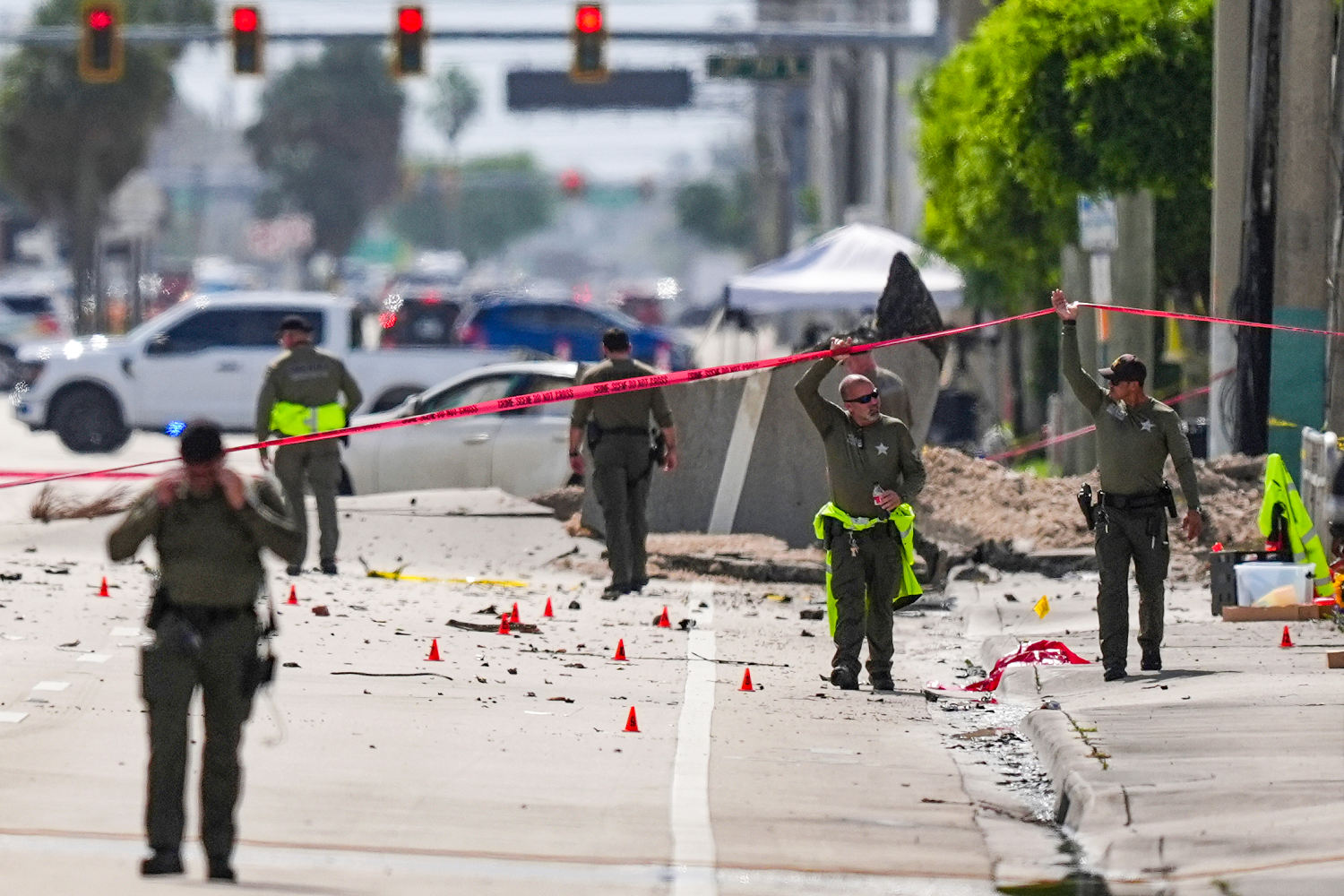
When a Learjet goes down, the headlines arrive within minutes, stripped to the bone. Tail numbers. Weather minimums. Fatalities. And buried somewhere in the fourth paragraph, almost as an afterthought, comes the age of the second-in-command. Twenty years old.
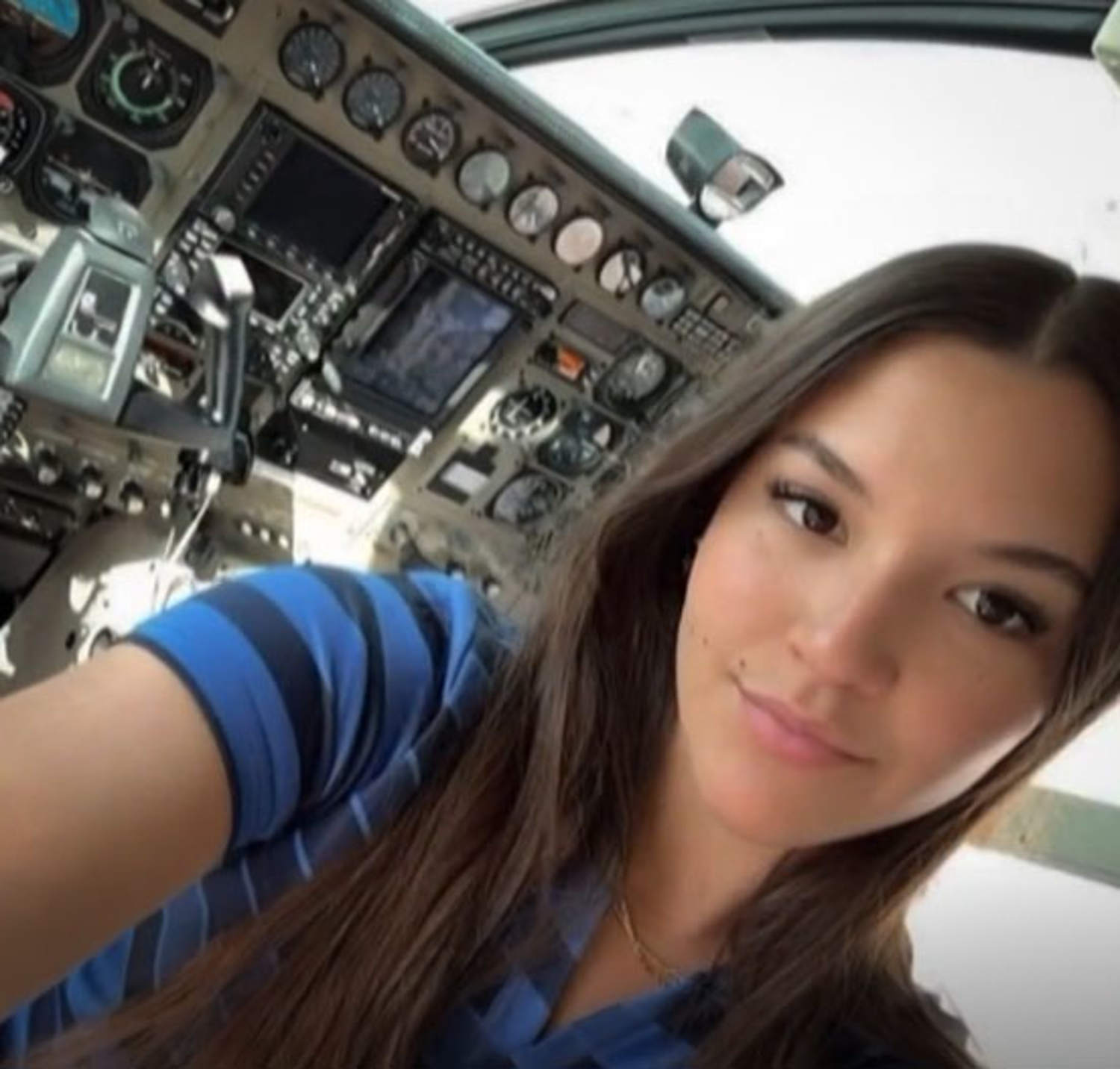
People read that number and pause. Twenty. At twenty, most people are arguing over shared rent, burning pasta in cramped college kitchens, or trying to figure out what they want to do with their lives. They are not supposed to be managing thrust levers at four hundred knots in the dark. When news broke that a 20-year-old co-pilot was among the lives lost in a fatal Learjet crash—a young woman remembered by everyone who knew her for a fierce, lifelong devotion to flight—the public reaction split down a predictable fault line. Half the room mourned a bright light extinguished too soon. The other half whispered a nervous, unspoken question: What was a kid doing flying a jet? For another angle on this event, see the latest coverage from The Guardian.
To understand her, and to understand the invisible stakes of the cockpit she loved, you have to throw away everything you think you know about how pilots are made.
The Architecture of an Early Obsession
You do not accidentally end up in the right seat of a Learjet at twenty. You cannot stumble into a turbine cockpit through mild interest or parental pressure. The sheer volume of exams, checkrides, medical clearances, and bone-deep fatigue required to get there acts like a merciless centrifuge, flinging away anyone who is not entirely consumed by the sky.
Consider a composite portrait of the young aviators who walk this exact path—let us call her Clara, though her real-world counterparts share the same calloused thumbs from tightening fuel caps and the same binder full of dog-eared sectional charts. By sixteen, while her classmates were parallel parking sedans in high school lots, Clara was soloing a single-engine Cessna, feeling the sudden, terrifying lightness of the airframe the first time her instructor stepped out and closed the door. By eighteen, she had her commercial ticket. By nineteen, she was living on black coffee and peanut butter crackers, building multi-engine hours in battered piston twins through summer thunderstorms just to inch closer to the magic numbers required by insurance underwriters.
Why do they do it?
Because once you feel the wings bite into clean morning air, everything on the ground feels slightly out of focus. A love of flying that starts in childhood is not a hobby; it is a low-grade fever that never breaks. You spend your teenage years pressed against chain-link fences at regional FBOs, memorizing the distinct pitch of a Garrett turbofan versus a Pratt & Whitney. You learn to read cloud formations the way other kids read text messages.
When people remember a 20-year-old pilot for her "early love of flying," they often soften it into something quaint, like a childhood fondness for horses or painting. That misses the grit of it entirely. Loving aviation early means choosing isolation while your friends go to parties. It means spending Friday nights memorizing hydraulic schematics and emergency memory items until you can recite them while half-asleep. It means accepting, long before you can legally buy a drink, that a single lapse in judgment at three hundred feet above the ground carries a price that cannot be negotiated.
Inside the Learjet Mythos
To appreciate the sheer intensity of what a 20-year-old co-pilot steps into, you have to understand the machine itself. The Learjet is not a lumbering commercial airliner built to forgive clumsy hands and insulate passengers from the weather.
Think of a commercial widebody jet as a heavy freight train gliding on invisible rails—stable, heavily automated, engineered with massive margins for gentle handling. Now think of a Learjet as a thoroughly bred racehorse strapped to two blowtorches.
Originally derived from a Swiss ground-attack fighter prototype in the 1950s, the Learjet family earned its legendary status precisely because it was fast, sleek, and unapologetically demanding. It climbs like an elevator with a snapped cable. Its swept wings slice through turbulence with minimal flex, giving the pilot direct, unfiltered feedback from the atmosphere. When you fly a Lear, you do not merely monitor systems; you wear the airplane.
In the charter and private aviation world—the operational arena where most young turbine pilots cut their teeth—the rhythm of work is nothing like the rigid, predictable schedules of major airlines. Charter crews live on the tether of a ringing phone. A flight might be dispatched to a short mountain runway at dusk, followed by a repositioning leg in freezing drizzle, followed by a tight turnaround to pick up executives who are already twenty minutes late.
In that cockpit, the 20-year-old first officer is not a decorative passenger. She is the nervous system of the flight deck.
While the captain manages the broader strategic picture, the co-pilot is running checklists, cross-checking approach plates, dialing in frequencies, monitoring engine temperatures, calling out altitude deviations, and watching for wind shear on final approach. In the tight quarters of a Learjet cockpit—where your shoulders nearly touch the person beside you and the glare shield sits inches from your knees—trust is absolute. There is no room for ego, and there is no cushion for hesitation.
The Invisible Stakes of the Right Seat
Here is where the public conversation usually goes sideways, and where we have to be brutally honest about the industry that puts twenty-year-olds into high-performance jets.
Whenever a young pilot dies in a business aviation accident, armchair commentators immediately point to age as a proxy for incompetence. They assume that youth equals recklessness. Statistically and historically, that assumption gets the reality backward.
In aviation, raw stick-and-rudder currency often peaks in a pilot’s twenties. Young pilots are fresh out of rigorous checkrides. Their instrument scan is razor-sharp. They have not yet developed the quiet, creeping complacency that sometimes settles into veterans who have flown the same approach five hundred times without incident. Under Federal Aviation Administration rules, a commercial pilot with an instrument rating and a multi-engine endorsement is legally qualified to serve as second-in-command of a Learjet at eighteen, provided they pass the aircraft-specific training and checkride.
The real vulnerability is rarely technical skill. The real vulnerability is authority.
Imagine yourself at twenty years old. You have finally made it into the right seat of a real jet—the dream you have chased since you were tall enough to see over a cockpit coaming. Sitting three feet to your left is a captain with ten thousand hours, gray hair, and a booming voice. You are on a night approach into an unfamiliar airport. The ceiling is ragged. The descent rate feels a fraction too steep, or the airspeed is bleeding off five knots faster than it should.
You have to speak up. You have to challenge the person who signs off on your performance, who holds the keys to your career progression, and who has been flying since before you were born.
Aviation safety experts call this Crew Resource Management, or CRM. On paper, it is a clean set of communication protocols. In real life, at midnight, in icing conditions, CRM is pure human psychology. It takes an extraordinary amount of courage for a twenty-year-old to look at a seasoned captain and say, "We're unstable. Go around."
Even when both pilots do everything right—even when the communication is crisp, the checklists are complete, and the crew is operating at the peak of their training—the sky still keeps secrets. Mechanical failures happen in seconds. Microbursts slam aircraft toward the terrain faster than turbine engines can spool up to full power. Bird strikes, sudden spatial disorientation in soup-thick clouds, ice accumulating on a thin wing faster than anti-ice boots can shed it—these are the hard, cold realities that sit quietly behind every pre-flight briefing.
I still remember the first time an engine warning light illuminated on a night climb out of a misty valley airfield. For two full seconds, nobody breathed. The cabin noise didn't change, the horizon didn't tilt, yet the entire reality inside that cockpit shifted from routine transit to survival math. You do not think about your dreams in that moment. You do not think about how much you love flying. Your hands move to the switches you practiced touching blindfolded, your voice drops an octave to keep your crewmate steady, and you work the problem until the runway concrete is under your wheels or the sky runs out of room.
That is the bargain every pilot signs, whether they are sixty-two or twenty.
What We Lose When a Young Pilot Falls
There is a particular kind of grief that hangs over an airport ramp after a crash involving a young crew member. Airlines have massive corporate structures, press teams, and layers of insulation. General and business aviation is a village. Everybody knows everybody. People remember the girl who used to wash Cessnas on weekends just to pay for thirty minutes of dual instruction. They remember the grin she had the day she passed her commercial checkride, holding up her temporary paper certificate in the wind.
When a 20-year-old co-pilot is lost, we do not just lose a crew member. We lose thirty-five years of future mentorship. We lose the captain she would have become at thirty, the check airman she would have been at forty, the quiet, steady voice she would have offered to some nervous nineteen-year-old kid sitting in her right seat twenty years from now.
People outside aviation often ask if the reward is worth the risk. They look at a tragedy like a downed Learjet—twisted aluminum in a field, families shattered, a promising life cut off at the threshold of adulthood—and they struggle to reconcile the beauty of flight with its brutality.
They miss the point because they view flying as transportation. For someone who falls in love with the sky before they are old enough to vote, flying is not how you get from one place to another. It is the only place where the noise of the world stops making demands on you, where physics is honest, and where your hands and mind are completely aligned with a machine moving through three dimensions.
She knew the risks. Every pilot who has ever walked out to a cold aircraft in the dark knows the risks. You see them etched on the memorial plaques hanging inside old flight schools, and you feel them every time the wheels leave the pavement and the ground drops away. Knowing the danger does not diminish the love; if anything, it sharpens it into something pure and uncompromising.
The Empty Seat on the Ramp
The next morning, at airports a thousand miles away, other twenty-year-olds will wake up before dawn. They will zip up navy flight jackets, check the winds aloft on their phones, and walk out across damp concrete toward waiting jets. They will run their fingers along the leading edges of swept wings to check for frost. They will climb into the right seat, buckle the four-point harness over their shoulders, and call out the pre-start checklist in clear, steady voices.
They do it because the sky was never something they merely wanted to visit. It was where they belonged.
Somewhere on a quiet tarmac, a headset hangs on a hook beside a flight bag that will not be packed again, while just beyond the perimeter fence, the first takeoff of the morning climbs steep and clean into the breaking light.