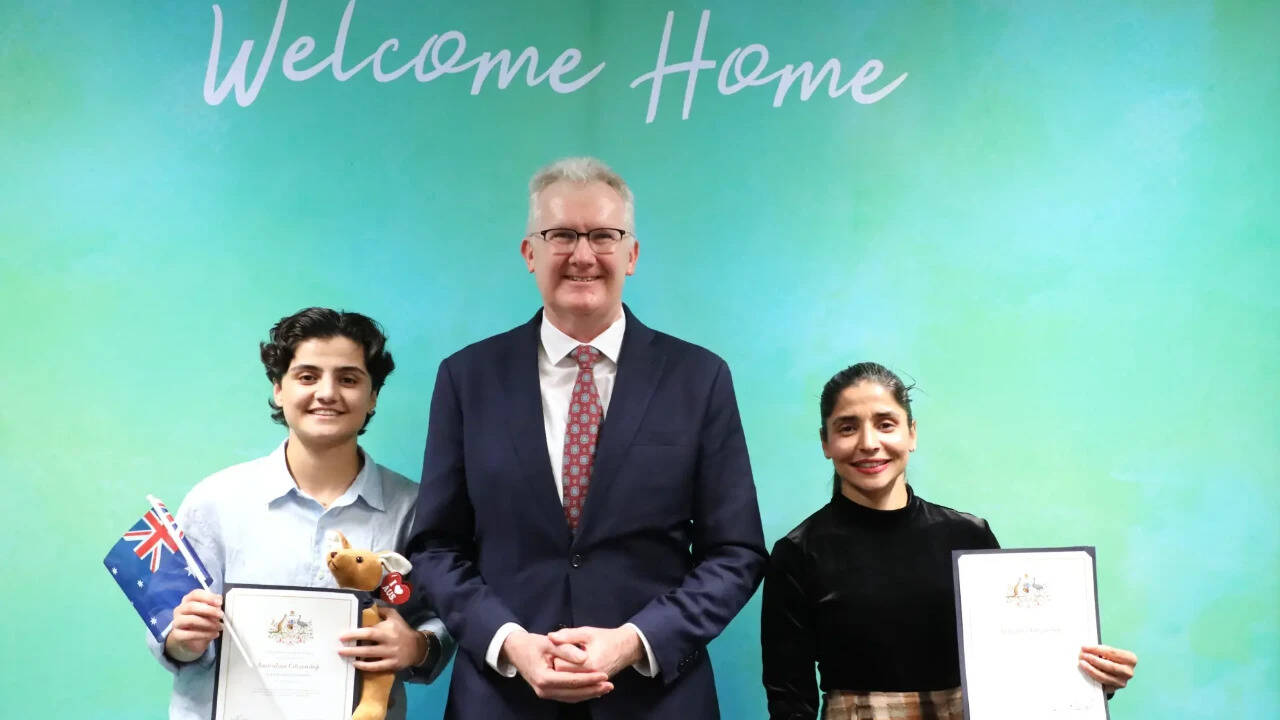
When Fatemeh Pasandideh and Atefeh Ramezanisadeh stood in Brisbane to take their citizenship pledge, they weren't just picking up a new passport. They were closing a terrifying chapter that started on a soccer pitch thousands of miles away.
If you followed the Asian Cup tournament back in March, you probably remember the headlines. Members of the Iranian women's soccer delegation made a silent, powerful statement by refusing to sing their national anthem. In a totalitarian state, that kind of quiet defiance carries a brutal price. Returning home wasn't an option unless they wanted to face severe retaliation, labels of treason, and immediate danger. If you found value in this post, you might want to check out: this related article.
Australia stepped up. Home Affairs Minister Tony Burke officiated the ceremony, handing them their citizenship papers after an expedited process that normally takes years. Out of a group of seven players and handlers who initially sought protection, five eventually buckled under pressure or homesickness and flew back to Iran. Pasandideh and Ramezanisadeh held their ground.
What the Fast Track Tells Us About Asylum Realities
Let's be honest about how immigration systems usually work. They are slow, bureaucratic, and soul-crushing. People wait decades in limbo. So seeing an expedited citizenship ceremony for high-profile asylum seekers raises a natural question. Why do some get immediate sanctuary while thousands of others languish? For another look on this story, check out the recent update from CBS Sports.
Human rights advocates have already pointed out the double standard. Groups like the Human Rights Law Centre have noted that roughly 700 Iranians have lived in Australia for over a decade on temporary visas, many with spouses and children who are full citizens. These families remain stuck in administrative purgatory.
Does high-profile media attention guarantee safety? Absolutely. When your face is plastered across global news feeds for protesting a regime, your individual risk skyrockets. Governments respond differently when the whole world is watching. You can't quietly deport someone who has international sports fans tracking their every move.
The Cost of Standing Up
Athletes mixing politics with sports always triggers a tired debate from people who claim they just want to watch the game. But sports have never existed in a vacuum. For women athletes under strict religious rule in Iran, simply playing professional sports is an act of resistance. Singing or refusing to sing an anthem is a matter of basic conscience.
When Pasandideh and Ramezanisadeh chose silence, they threw away their homeland, their families, and their established careers. They chose uncertainty.
"Australia has given me the opportunity to build my life and my future, and I feel, more than ever, that I belong here," Ramezanisadeh stated after receiving her citizenship.
That gratitude is real. But it sits alongside the grief of permanent exile.
Moving Forward From Here
The story doesn't end with a nice photo op in Brisbane with a government minister. These two athletes now face the gritty reality of rebuilding a professional athletic career from scratch in a foreign country. Language barriers, cultural adjustments, and the mental toll of displacement don't vanish just because you get a blue passport.
Yet they have what matters most right now: safety and agency.
If you want to support athletes caught in political crossfires, stop treating refugee status as a political football. Pay attention to the lesser-known cases that don't make the evening news. Welcome new Australians with the kind of community warmth the Brisbane locals showed these two players.
They risked everything for a moment of quiet honesty. They earned their place.