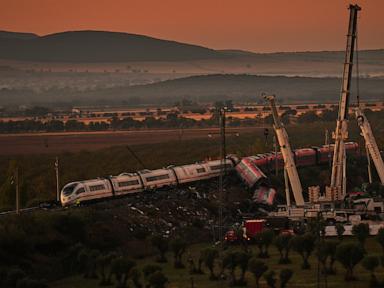
The coffee in the stainless steel thermoses of the Renfe dining car stays hot for hours. On a high-speed line cutting through the arid plains of Andalusia or standard track winding through Galicia, that hot black liquid is usually a quiet companion to commuter life. You sit back. You open a book. You trust the steel beneath your feet because steel is predictable. Steel does not vote, steel does not make campaign promises, and steel does not wear down unless men forget to inspect it.
When metal rends against metal at speed, the noise is not a roar. It is a high-pitched, screeching gasp of friction and tearing alloy that ends in a sudden, sickening silence.
For the second time in a single year, Spain has listened to that silence.
As the country hurtles toward a high-stakes national election, two deadly rail disasters have transformed quiet train tracks into political battlegrounds. What should be an routine journey between towns has become an anxious question for millions of citizens who rely on public transit. Behind the press releases and the angry sound bites exchanged in television studios, there are real passengers holding ticket stubs, real conductors watching signal lights, and a nation trying to understand how its proud modern transit network began to unravel.
The Friction of Metal and Promises
To understand the weight of a train crash in Spain, you have to understand what the rail system represents. The country spent decades building one of the most ambitious transport infrastructures in Europe. The high-speed network was a symbol of modern Spanish identity, a triumph of engineering that connected isolated rural provinces to Madrid and Barcelona in a matter of hours.
Then came the impact.
When a train derails, the immediate response is physical. Rescuers climb through twisted aluminum, tracking down survivors in the dark using the screens of cell phones. Paramedics set up triage tents under cold night air. But once the wounded are carried to ambulances and the debris is tagged with yellow police tape, a second, invisible collision begins.
This second crash happens under the bright lights of press rooms.
In an election year, every disaster is immediately dragged into the political arena. Opposition leaders point to the twisted metal as proof of systemic neglect, chronic underfunding, and bureaucratic incompetence. Government officials rush to blame legacy contracts, unprecedented weather events, or human error on the part of individual operators.
The conversation shifts away from the structural reality of track maintenance and onto polling numbers. Yet for the commuters standing on cold concrete platforms the next morning, the political debates offer no comfort when the morning express pulls into the station.
What Happens When Safety Becomes a Campaign Tagline
Consider a signal technician working the overnight shift on a regional line.
The work is unglamorous. It happens between two in the morning and dawn, when the tracks are cleared of passenger traffic. Walking along the ballast with a flash light, checking hydraulic switches, verifying that automated braking systems communicate with central control hubs—this is the invisible labor that keeps millions of lives moving safely every single day.
When maintenance budgets are squeezed or when rapid expansion outpaces the supply of trained technicians, small oversights compound. A worn rail joint here. A delayed software patch there. Individually, these issues are minor. Together, they create a chain of vulnerability waiting for a single bad night.
The danger of an upcoming national election is that it demands simple answers to complex engineering failures. Voters want to know who is responsible, and they want to know immediately. Politicians respond by offering instant diagnoses before official investigators have even cleared the wreckage.
- The Infrastructure Narrative: One side argues that years of aggressive cost-cutting eroded basic safety standards on regional networks while flashy high-speed projects swallowed the budget.
- The Operational Narrative: The other side insists the technology remains world-class, chalking incidents up to tragic, isolated mechanical failures or procedural errors that no government could predict.
Both explanations miss the central human truth. A passenger buying a second-class ticket is not making an ideological statement. They are simply trying to get home to their family or arrive at work on time. When safety becomes a political bargaining chip, the trust between the citizen and the state fractures.
The Long Road Back to the Track
In the days following a major transit disaster, railway stations take on a strange atmosphere. The usual rush of foot traffic slows down. Passengers stand on the platforms looking down at the tracks, observing the heavy iron rails with a newfound scrutiny. People double-check their seat assignments. They look at the faces of the train staff, searching for signs of fatigue or worry.
Rebuilding confidence in a nation’s transit system takes far longer than repairing torn track beds or replacing broken signal boxes. It requires a level of institutional honesty that is exceedingly rare in the middle of a political campaign.
It requires admitting that modern infrastructure is fragile, that safety requires continuous investment rather than sporadic election-year promises, and that the people who maintain the tracks matter just as much as the politicians who cut the ribbon at grand openings.
The national election will come and go. Ballots will be counted, coalitions will be formed, and new ministers will take their seats in Madrid. But as the sun rises over the southern hills, a early morning train will slip out of the depot, carrying hundreds of sleepy passengers toward their daily lives. They will look out the windows at the passing countryside, watching the morning light catch the olive groves, hoping that the quiet steel beneath them holds fast.