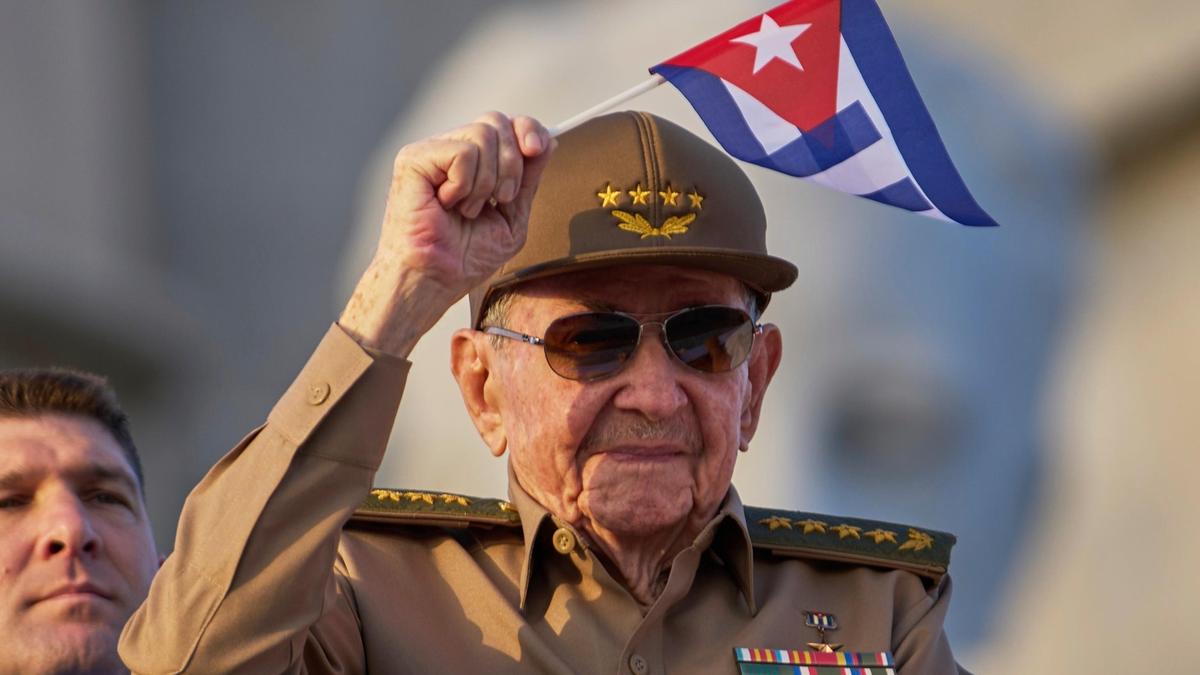
Washington is running the same tired script, and the media is eating it up.
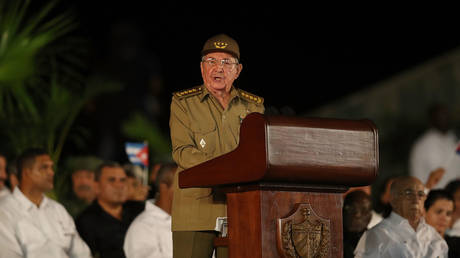
The latest federal indictment against former Cuban leadership is being framed as a historic escalation. Mainstream outlets are spinning a narrative of "mounting pressure" and a "turning point" for the island's regime. They want you to believe that legal maneuvers in a Miami district court will suddenly break a sixty-year political stalemate.
It is a fantasy.
This indictment is not a strategic breakthrough. It is a bureaucratic press release masquerading as foreign policy. By focusing entirely on the legal theater, commentators miss the actual economic mechanics at play. The United States is not tightening the noose; it is managing a status quo that serves political interests in Miami and Washington, while doing absolutely nothing to alter the power structure in Havana.
The Sanction Illusion
For decades, Washington has operated under the assumption that economic pain equals political transition. I have spent years analyzing trade data and sanctions regimes across Latin America, and the data tells a brutal truth: judicial theater does not collapse authoritarian governments. It solidifies them.
When the U.S. issues a high-profile indictment against a foreign leader, it triggers a predictable cycle.
- The Rally Effect: The targeted regime uses the indictment as definitive proof of imperialist aggression, whipping up nationalist sentiment to distract from domestic economic misery.
- The Elites Consolidate: Threatened with international arrest warrants, the ruling class loses any incentive to reform or negotiate. They cling to power harder because stepping down now means a prison cell in Florida.
- The Shadow Market Boom: Traditional trade lines shrink, forcing the economy underground.
The Western press treats these legal filings as objective steps toward justice. In reality, they are economic reorganizations.
Consider what actually happens when you indict the leadership of a closed economy. You do not stop the flow of illicit capital. You merely increase the risk premium. The state-backed monopolies controlling Cuba’s military-run tourism and import sectors—GAESA, for instance—do not dissolve. They adapt. They shift assets to opaque banking jurisdictions, rely heavier on European front companies, and deepen ties with state actors who do not respect U.S. sub-poenas.
Dismantling the Consensus
Let us address the questions standard newsrooms keep asking, which happen to be entirely the wrong questions.
People Also Ask: Will this indictment trigger a transition to democracy in Cuba?
This question assumes that Cuban generals and political elites care about a document filed in a U.S. federal court. They do not. History shows that unilateral legal actions by Washington rarely force domestic change in adversarial states. Nicolas Maduro remains in Caracas despite a $15 million U.S. bounty on his head. The internal mechanics of the Cuban state rely on institutional inertia and a monopoly on domestic force, neither of which is dented by an American judge's signature.
People Also Ask: Does this signal a major shift in U.S. foreign policy?
No. It signals a domestic political reality. Florida remains a critical political battleground, and the anti-regime diaspora holds immense sway. Indictments are a low-cost, high-visibility tool for Washington politicians to signal toughness to an domestic electorate without engaging in the difficult, messy work of actual diplomacy or systemic economic warfare. It is performance art for the voters, not statecraft for the region.
The Cost of Legal Narcissism
The downside of this contrarian reality is bleak. By relying on symbolic judicial victories, the U.S. cuts off its own avenues for genuine influence.
When you criminalize the entire upper echelon of a foreign state, you remove the off-ramps. Change in tightly controlled regimes almost always requires a faction of the elite deciding that reform is safer than stasis. If Washington guarantees that the only reward for elite defection or transition is a trial in a U.S. court, the regime will remain unified until the bitter end.
We have seen this play out globally. Complete isolation forces regimes into the arms of Washington's true geopolitical rivals. By making Cuba a legal pariah state with no room for maneuver, the U.S. effectively guarantees that Havana will keep its doors wide open to Russian intelligence assets and Chinese surveillance outposts. The competitor's article calls this "building pressure." A more accurate term is strategic self-sabotage.
Stop Reading the Legal Script
If you want to understand the future of Caribbean geopolitics, stop reading federal indictments.
Watch the shipping lanes. Track the informal remittance networks moving through third-party apps via Spain and Panama. Monitor the price of fuel deliveries arriving from Venezuela or alternative state backers.
The true leverage never existed in a Miami courtroom. It exists in the daily mechanics of survival on the island. While Washington pats itself on the back for a legally flawless filing, the Cuban state is already pricing in the new risk metrics and moving its capital out of reach. The regime isn't shaking. It is just updating its accounting software.