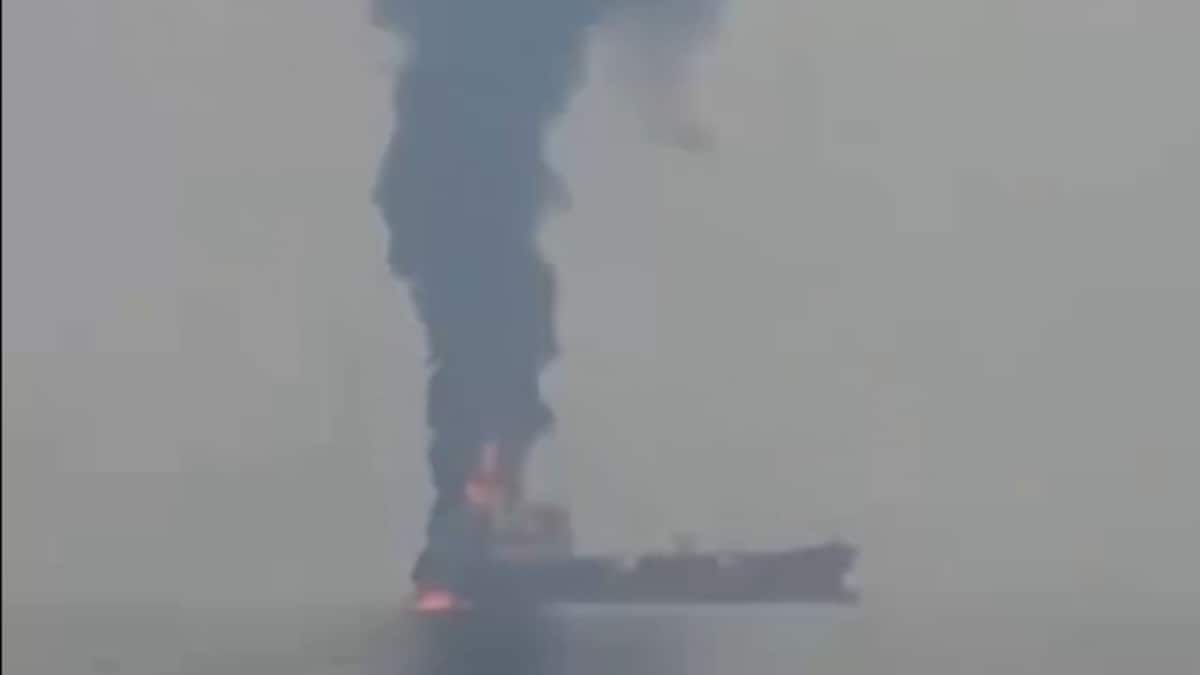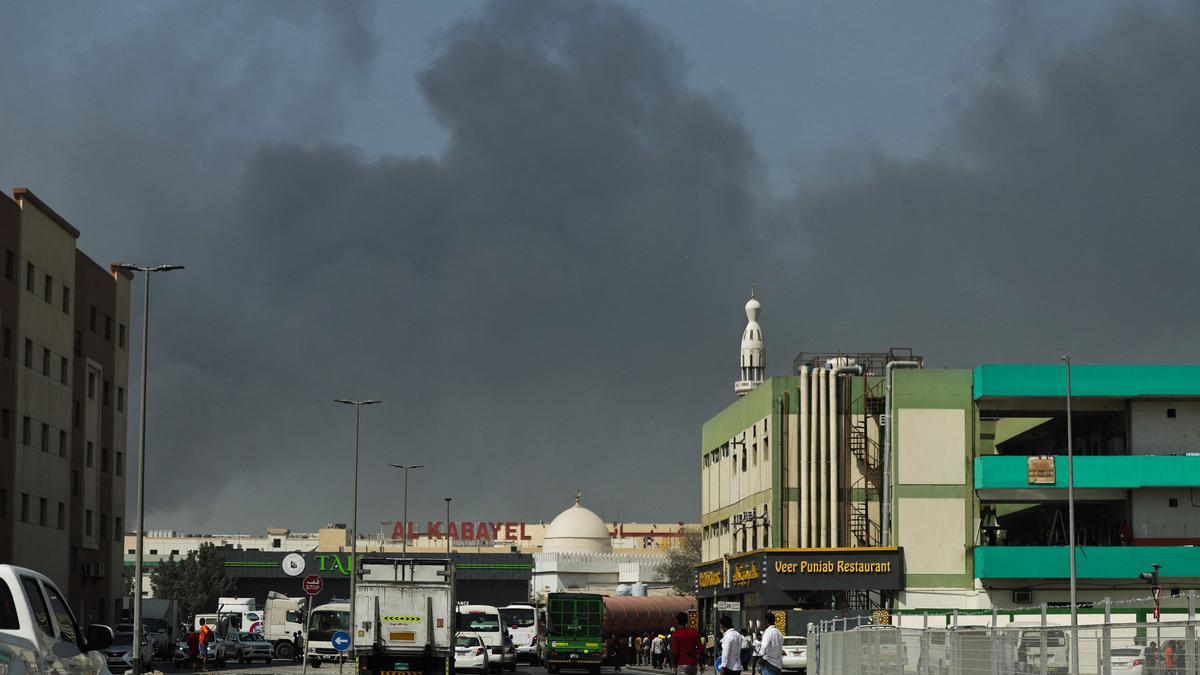
The headlines are bleeding with a predictable mix of tragedy and data. Three dead. Fifty-eight injured. The Ministry of Defence releases a tally, the wires pick it up, and the world nods in somber agreement that "tensions are rising."
They are missing the point.
Most analysts are staring at the casualty count as if it is a scoreboard for a game that ended decades ago. They see a kinetic strike and a response. They see blood and broken glass. What they fail to see is that these numbers are not a measure of military failure or regional instability. They are a distraction from the cold, hard reality of asymmetric theater. If you are looking at the body count to determine who is winning, you have already lost the thread of modern warfare.
The Mirage of Total Interception
The lazy consensus suggests that a sophisticated air defense system should result in zero casualties. We have been fed a diet of Iron Dome highlight reels and Patriot missile press releases that imply a "dome" is actually a solid object. It isn't.
In any saturation attack, the goal of the aggressor is not necessarily to hit a high-value target. The goal is to force the defender to trade a $2 million interceptor for a $20,000 "lawnmower" drone. When the UAE reports injuries and deaths, the media treats it as a breach of the shield. It’s not a breach; it’s a mathematical certainty.
Modern air defense is an exercise in Kinetic Calculus.
Imagine a scenario where 100 projectiles are launched. Even with a 95% interception rate—which is world-class by any standard—five objects are getting through. But "getting through" is a misnomer. In a dense urban environment like Abu Dhabi or Dubai, even a "successful" interception creates a debris field. Falling shrapnel from a destroyed ballistic missile can still weigh hundreds of kilograms and travel at supersonic speeds.
We are not seeing a failure of the UAE’s defense architecture. We are seeing the physical limits of gravity. When you blow something up at 30,000 feet, it doesn't vanish into a video game puff of smoke. It comes down.
The Sovereignty Tax
People ask, "Why can't the UAE just stop these attacks?" This is a flawed premise. You don't "stop" an neighbor committed to proxy attrition; you manage the cost of their obsession.
The UAE is currently paying what I call a Sovereignty Tax. Every injury reported is a line item in a broader geopolitical ledger. The Emirates have spent billions on the THAAD (Terminal High Altitude Area Defense) and the Globaleye surveillance platforms. I have sat in rooms with defense contractors who promise "seamless integration," a word they use to hide the fact that no system can account for the "golden BB"—that one piece of random luck that slips through the net.
The real story isn't that three people died. The real story is that the UAE’s economy didn't blink.
In a traditional 20th-century conflict, an attack of this scale would have triggered a stock market collapse and a mass exodus of ex-pats. It didn't. The resilience of the state is now measured by its ability to absorb kinetic impact and maintain "business as usual." The casualty count is tragic, but in the eyes of the state’s grand strategy, it is a manageable overhead.
Stop Focusing on the Launcher
The obsession with the "retaliatory" nature of these strikes is a trap. The media frames this as a ping-pong match: Iran does A, the UAE supports B, so Iran hits C.
This ignores the Supply Chain of Chaos.
We spend all our time analyzing the point of impact and zero time analyzing the point of assembly. These drones and missiles are not "Iranian" in the way a Ford is "American." They are decentralized products of a globalized grey market. You can dismantle a launch site today, and another one will pop up in a garage in Sana'a or a warehouse in Basra tomorrow.
If the UAE Ministry of Defence wanted to be brutally honest, they would admit that you cannot "defend" your way out of this. Defense is a reactive, losing game over a long enough timeline. The only way to win is to make the cost of the attack higher than the political capital gained by the attacker.
The High Cost of the "Safe" Label
There is a danger in the UAE’s current PR strategy. By emphasizing their defensive capabilities, they create an expectation of invulnerability.
I’ve seen this before in the corporate world when a tech giant claims their "robust" encryption is unhackable. It invites the breach. When the government highlights that they intercepted "the majority" of threats, they are inadvertently highlighting the ones they missed.
The contrarian move? Stop talking about the interceptions.
Every time a ministry official stands in front of a microphone to confirm a casualty count, they are giving the aggressor exactly what they want: Validation of Impact. The injury count is the only metric the attacker cares about because it proves they can still touch the "untouchable" Gulf hubs.
The Math of Attrition
Let’s look at the variables. If we define the effectiveness of a strike $E$ as:
$$E = \frac{(C + P)}{I}$$
Where:
- $C$ is the cost of damage/casualty.
- $P$ is the psychological impact/media coverage.
- $I$ is the cost of the interceptors used.
The attacker wins even if $C$ is low, as long as $P$ is high and $I$ is astronomically higher than the cost of the launch. By publishing detailed injury reports, the UAE is artificially inflating $P$. They are helping the enemy’s ROI.
The Brutal Reality of Urban Defense
We need to stop asking "How did this happen?" and start asking "How do we live with it?"
The UAE is a collection of vertical cities. High-rise glass towers are the worst possible place to be during a shrapnel shower. Most of the injuries reported in these strikes are not from direct hits; they are from secondary effects—shattered glass, falling debris, and traffic accidents caused by the shockwave.
The defense ministry’s reports focus on the missiles. They should be focusing on building codes. If you want to reduce the injury count by 50%, you don't buy another Patriot battery. You mandate blast-resistant filming on every window in the flight path. But that isn't sexy. It doesn't look good at an arms fair. It doesn't signal "strength" to the neighbors.
The Intelligence Failure Nobody Mentions
The most uncomfortable truth of this entire saga is the failure of pre-emption.
We are told that the UAE has "world-class intelligence capabilities." If that were true, these drones would be neutralized while they were still being fueled. The fact that the defense ministry is reporting injuries after the fact proves that the "left of launch" strategy is failing.
We are fighting a 21st-century drone war with a 20th-century "Fortress" mindset. You cannot build a wall high enough to stop a swarm. You cannot buy enough missiles to outpace a 3D printer.
The UAE’s focus on the "retaliatory" nature of the strikes is a way to shift blame. It suggests that the UAE is a passive victim of a specific political moment. It’s a lie. This is the new baseline. This is the permanent state of play for any nation-state that dares to be a global hub in a fractured region.
Accept the Friction
The "Three Dead, 58 Injured" headline is a snapshot of a transition. We are moving from an era of "Absolute Security" to an era of "Calculated Risk."
The UAE is not becoming less safe; it is becoming more honest about the price of its ambition. The status quo dictates that we mourn the failure of the shield. I suggest we recognize the shield for what it is: a temporary, expensive, and porous filter.
Stop looking at the Ministry of Defence for a solution to the violence. They are just the accountants of the debris. The real solution requires a pivot away from the "interception" theater and toward a strategy of absolute indifference.
When the world stops counting the shrapnel, the shrapnel stops being a weapon. Until then, we are just helping the attackers fill out their spreadsheets.
Build the glass thicker. Stop the press releases. Let the missiles fall on deaf ears.