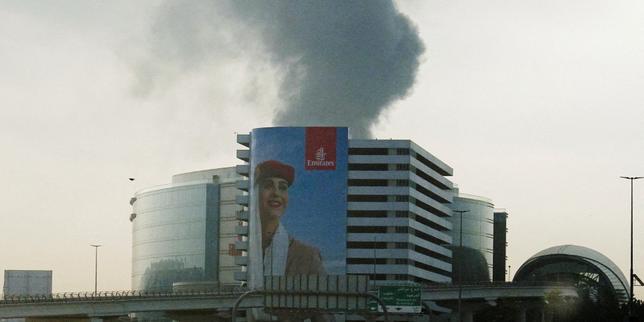
Fifteen missiles. Four drones. Zero impact.
That is the headline the world wants you to swallow. It paints a picture of a digital dome, a flawless shield where Western-engineered interceptors pluck Iranian hardware out of the sky like low-hanging fruit. The mainstream media is currently obsessed with "kill rates" and "interception ratios." They treat these events like a scoreboard in a vacuum.
They are looking at the wrong map.
The narrative of "successful defense" is a sedative. While the United Arab Emirates and its allies celebrate a tactical win, they are sprinting toward a strategic bankruptcy. We need to stop talking about whether the missiles were hit and start talking about the ruinous economics of the defense industry that makes these "victories" unsustainable.
The Mathematical Trap of Modern Defense
Defense contractors love a kinetic interception. Every time a $2 million interceptor destroys a $50,000 "suicide" drone, a shareholder gets their wings.
Let’s look at the cold, hard math that the standard news cycle ignores. Iran, and by extension its proxies, are utilizing an asymmetrical cost curve that is effectively bleeding the Gulf states dry.
- Cost of Attack: A generic long-range loitering munition or a basic ballistic missile can be assembled for the price of a mid-sized sedan.
- Cost of Defense: A single Patriot PAC-3 MSE missile costs roughly $4 million. A THAAD interceptor? Closer to $12 million.
When the UAE "intercepts" 15 missiles, they aren't just saving buildings. They are burning through a specialized inventory that takes years to replenish and hundreds of millions of dollars to maintain. If I can force you to spend $60 million to stop $750,000 worth of scrap metal and fertilizer, I am winning. I don't need the missile to hit the target; I just need you to fire yours.
We are witnessing the weaponization of the ledger. The "interception" is the bait. The exhaustion of the treasury is the hook.
Why Your "Iron Dome" Logic is Flawed
People often point to Israel’s Iron Dome as the gold standard, asking why the Gulf cannot simply replicate that "impenetrable" status. This question is built on a fundamental misunderstanding of geography and physics.
Israel is a compact theater. The UAE is a sprawling hub of critical infrastructure, desalination plants, and glass-and-steel icons spread across a massive coastline. The "defended footprint" required for the Emirates is exponentially larger.
Furthermore, the "perfect defense" creates a dangerous psychological feedback loop called Risk Compensation. When a state believes it is invulnerable, it stops pursuing the messy, difficult work of diplomatic de-escalation. It leans into the shield. But shields break.
Imagine a scenario where a saturation attack involves not 15 missiles, but 150. No system on Earth—not Aegis, not THAAD, not Patriot—is designed to handle that kind of volume without "leakers." By focusing on the 15 that were hit, the media ignores the fact that the 16th is the only one that actually matters.
The Myth of the "Silent" Interception
The news reports make it sound clean. A missile meets a missile; the threat vanishes.
I’ve spent enough time around defense logistics to know there is no such thing as a clean kill. What goes up must come down. When you intercept a ballistic missile at high altitude, you aren't vaporizing it into nothingness. You are creating a debris field of supersonic shrapnel.
In a densely populated urban environment like Dubai or Abu Dhabi, an "interception" can still cause significant civilian casualties and infrastructure damage. The obsession with the "hit" ignores the "fallout." We are prioritizing the optics of the kill over the reality of the kinetic aftermath.
The Tech Industry’s Dirty Secret
Why isn't the technology getting cheaper? In every other sector—computing, telecommunications, energy—costs drop as efficiency rises. In the defense world, the opposite happens. We are building "Gold-Plated" solutions for "Tin-Can" problems.
We are using Ferraris to stop go-karts.
The defense industry has no incentive to create a $10,000 interceptor because there is no profit in it. They would rather sell the UAE a billion-dollar battery upgrade. This creates a systemic vulnerability: the Gulf is now tethered to a Western supply chain that cannot produce interceptors fast enough to match the production cycles of a sanctioned, localized Iranian assembly line.
Stop Asking if the Shield Works
The question "did we stop the missiles?" is a distraction. The real questions are:
- How many interceptors are left in the warehouse?
- How many months of production does it take to replace one day of "successful" defense?
- At what point does the cost of the shield exceed the value of what it is protecting?
The UAE is currently winning the battle of the sky and losing the war of the wallet. If the goal of the Iranian strikes is to prove that the Gulf’s "security" is a fragile, expensive illusion bought from foreign powers, then 15 intercepted missiles aren't a failure for Tehran. They are a proof of concept.
The status quo isn't security. It's a subscription service to a disappearing inventory.
Fire another 20. See who runs out of money first.