The civil war in Sudan isn't just a local spat between two generals. It's a high-stakes proxy battle where the United Arab Emirates (UAE) plays a role so significant it’s practically steering the ship. While the world watches the Middle East burn, the flow of Emirati weapons to the Rapid Support Forces (RSF) hasn't slowed down one bit. It’s actually getting more sophisticated.
You've probably heard the official line. The UAE claims they're only providing "humanitarian aid" through a field hospital in Amdjarass, Chad. Honestly, it's a cover that’s thinner than a sheet of paper. Intelligence reports, satellite imagery, and UN investigators have already connected the dots. Those "aid" flights are carrying crates of ammunition, drones, and sophisticated weaponry instead of bandages.
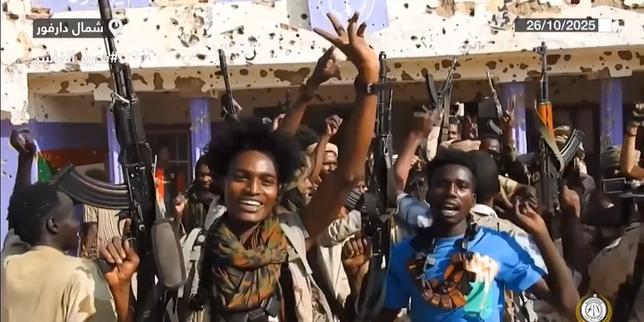
The RSF, led by Mohamed Hamdan "Hemedti" Dagalo, is fighting the Sudanese Armed Forces (SAF) for total control. Without the UAE’s logistical backbone, the RSF’s ability to sustain high-intensity urban combat would likely crumble in weeks. This isn't just about regional influence. It's about gold, strategic Red Sea access, and a long-term play for African hegemony that the West seems too scared to touch.
Why the UAE won't let go of Hemedti
Hemedti isn't just a paramilitary leader. He's a business partner. For years, the RSF has controlled the vast majority of Sudan’s gold mines. Most of that gold doesn't stay in Khartoum. It flies straight to Dubai. This creates a self-sustaining cycle of violence where Sudanese gold pays for Emirati weapons, which are then used to secure more gold mines.
The UAE sees Hemedti as a bulwark against political Islam. They're terrified of any Sudanese government that might lean toward the Muslim Brotherhood or Iranian influence. By backing a strongman who owes them everything, Abu Dhabi ensures they have a loyal client state on the Red Sea.
We’re seeing a massive disconnect in global diplomacy. The US and the EU talk about "ceasefires" and "humanitarian corridors" while their primary regional ally fuels the fire. It’s a classic case of looking the other way because the UAE is too "important" for energy markets and Abraham Accords stability.
The Chad connection and the Amdjarass pipeline
If you want to see how this works, look at the border. The town of Amdjarass in eastern Chad has become the primary logistics hub for the RSF. Since mid-2023, cargo planes have been landing there with suspicious frequency.
UN experts monitored these flights and found that the manifests didn't match the cargo. While the UAE insists they're treating "war victims," the "victims" seem to be RSF fighters getting re-upped with 120mm mortars and Man-Portable Air Defense Systems (MANPADS).
What the logistics look like on the ground
- Cargo Flights: Il-76 transport planes flying from Al Dhafra Air Base or various hubs in Libya.
- Ground Transport: Convoys moving from Chad directly into Darfur, the RSF’s heartland.
- Technicals and Drones: Evidence shows the RSF is now using sophisticated loitering munitions—basically "suicide drones"—that bear a striking resemblance to models seen in other Emirati-backed conflicts.
This isn't a secret. The Sudanese government at the UN has openly accused the UAE of "igniting the war." Yet, the international response has been a collective shrug. Sanctions have hit a few individual commanders, but they haven't touched the financial networks in Dubai that actually make the war possible.
Human costs that the world ignores
The RSF has a horrific track record. We're talking about ethnic cleansing in Darfur that echoes the genocide of the early 2000s. The Masalit community is being targeted systematically. When the UAE sends drones and ammo to the RSF, they’re directly enabling these atrocities.
Khartoum is a shell of its former self. Millions have fled. The economy is non-existent. People are eating boiled leaves to survive in some areas. This isn't just "collateral damage." It's the direct result of a well-funded military machine that doesn't have to worry about running out of supplies because the tap is always open.
The failure of the international community
Washington’s approach has been frustratingly soft. They've sanctioned RSF leaders like Abdelrahim Dagalo (Hemedti’s brother), but they haven't put real pressure on Abu Dhabi. Why? Because the UAE is a key partner in counter-terrorism and intelligence sharing.
It’s a cynical trade-off. We trade Sudanese lives for regional "stability" that isn't even stable. The war is already spilling over into Chad and South Sudan. It’s creating a massive refugee crisis that will eventually hit Europe’s shores.
The SAF isn't innocent either. They've used indiscriminate airstrikes and have their own questionable backers, including reported ties to Iran and Russia’s Wagner Group (which, ironically, has worked with both sides at different times). But the UAE’s support for the RSF is the most consistent and well-documented external factor keeping this war alive.
The Dubai gold market link
You can't understand this war without looking at the bullion. Sudan is Africa's third-largest gold producer. The RSF controls the Jebel Amer mines and several others. This gold is smuggled out, refined in Dubai, and sold on the global market as "clean" gold.
This is the RSF’s war chest. It’s how they pay their mercenaries. It’s how they buy the loyalty of tribal leaders. If the international community actually wanted to stop the war, they’d start by auditing the gold refineries in the UAE. They won't. It's too messy. It involves too many powerful people.
Strategic steps to actually change the situation
Waiting for a "peace deal" between Hemedti and the SAF is a waste of time. Neither side wants to share power. They want to own the country.
- Direct Sanctions on Logistics: Target the aviation companies and shipping firms involved in the Amdjarass pipeline.
- Gold Transparency: Force the UAE to prove the origin of every ounce of Sudanese gold entering their market.
- Diplomatic Ultimatums: Western nations need to make it clear that the "special relationship" with the UAE is at risk if they continue to arm paramilitaries accused of ethnic cleansing.
The weapons keep flowing because the cost of sending them is zero. Until the UAE feels a real diplomatic or economic sting for their involvement in Sudan, the RSF will keep fighting, and Darfur will keep burning.
If you're following this, stop looking for "breakthroughs" in peace talks. Watch the flight trackers and the gold prices. That’s where the real war is being won and lost. You should support organizations like the Sudan Policy and Transparency Tracker (SPTT) or Human Rights Watch, which are doing the heavy lifting of documenting these arms flows while the rest of the world looks away.