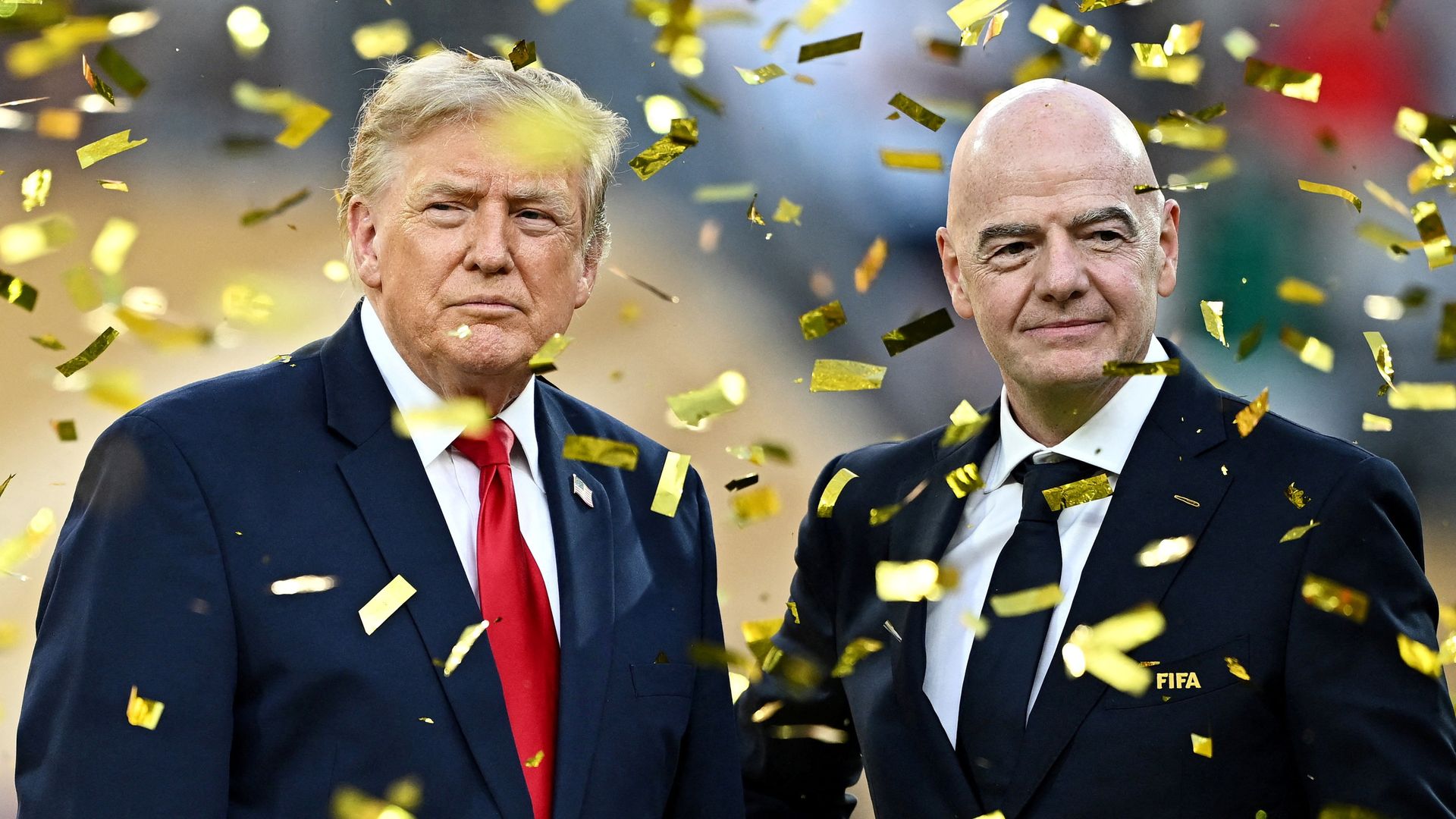
Football governing bodies rarely pick a public fight with their own global boss unless something serious breaks behind closed doors. Right now, UEFA is pressing FIFA hard over Trump and Infantino dealings, turning what started as boardroom grumbling into a full-blown institutional showdown.
In mid-October 2026, UEFA General Secretary Theodore Theodoridis sent an eight-page letter to FIFA demanding written answers to 42 questions by November 2. That wasn't a polite note asking for clarity. It was a formal challenge to FIFA President Gianni Infantino's governance, financial maneuvers, and political proximity to U.S. President Donald Trump.
Why UEFA Is Demanding Answers on Trump and Infantino Dealings
To understand why European football leaders pushed back so forcefully, look at the timing. After the 48-team 2026 World Cup wrapped up in July, Infantino looked almost untouchable heading toward the March 2027 FIFA presidential election in Rabat, Morocco. More than 200 member federations had already signaled backing for another term.
Then the cracks widened. Following a tense FIFA Council meeting on October 15 where European and other council members felt they left without real explanations, Theodoridis put the pressure in writing. UEFA argued that verbal apologies and vague pledges of future governance tweaks don't explain how controversial calls were made or why council members were kept in the dark until late in the process.
Even English Football Association chair and FIFA Vice-President Debbie Hewitt didn't mince words, warning that if Infantino fails to answer the questions properly, he isn't fit to lead FIFA. When a sitting FIFA vice-president talks like that in public, you know the pressure isn't coming from outsiders alone.
The Flashpoints Behind the Clash
This standoff isn't built on one single grievance. It's a pile-up of financial, political, and on-pitch disputes that keep intersecting around Infantino's orbit.
The Abandoned World Cup Investment Plan
At the center of the storm is FIFA Forward Enterprise (FFE), a scrapped commercial proposal that would have brought outside private equity investment into a new FIFA commercial vehicle. Reports around the plan pointed to a $4.2 billion structure tied to Thrive Capital—a firm founded by Joshua Kushner, brother of Trump's son-in-law—alongside JPMorgan.
Critics and confederations pushed back hard, questioning why exclusivity was floated without a broad, transparent auction and why FIFA needed to sell a piece of its commercial upside at all when the expanded 2026 World Cup generated massive revenue. French Football Federation president Philippe Diallo, who later announced a run against Infantino for the FIFA presidency, called the sell-off baffling given record World Cup profits and existing FIFA reserves.
Even after FIFA dropped the FFE plan and talked about boosting member allocations from its own resources, UEFA wasn't satisfied. Scrapping a proposal doesn't erase how it was negotiated or who had early access.
The Balogun Red Card Row and Political Optics
Politics and sporting rules collided during the 2026 World Cup when U.S. striker Folarin Balogun had his match suspension lifted ahead of a high-stakes knockout clash against Belgium after receiving a red card against Bosnia and Herzegovina. Trump publicly boasted on stage with Infantino that he had called the FIFA president to recommend letting the player take part—a claim that triggered outrage in Europe and drew scrutiny from lawmakers, including members of the European Parliament and U.S. congressional critics.
Infantino insisted FIFA's independent disciplinary bodies make their own calls and that he respects their autonomy. Still, when a head of state publicly takes credit for nudging a sporting outcome involving his own country's team, neutrality takes a beating. Add in controversies around FIFA's Trump Tower presence and the creation of a FIFA Peace Prize linked to Trump, and UEFA's demand for transparency looks less like nitpicking and more like a bid to force basic boundaries.
Courts, Congress, and Governance Questions
The pressure hasn't stayed inside Zurich or Nyon. In mid-November 2026, a federal judge in Manhattan rejected a bid by FIFA entities to block UEFA's disclosure push involving Thrive Capital and JPMorgan over the collapsed FFE project, ruling those FIFA parties lacked a direct, protectable interest to intervene at that stage. Meanwhile, reports have surfaced about potential U.S. congressional scrutiny in 2027 surrounding FIFA's ties to the Trump administration.
UEFA's 42 questions also zero in on internal guardrails—including FIFA's electoral committee arrangements ahead of the 2027 vote and compensation questions such as extra pay tied to FIFA's U.S. World Cup subsidiary.
Common Misconceptions About This Fight
- Misconception: UEFA wants to privatize football itself. Honestly, that's backwards. UEFA has pushed for clarity and backed away from a private-equity commercial sell-off of FIFA's core business. What UEFA is challenging is opaque dealmaking and governance shortcuts, not commercial sponsorship in general.
- Misconception: A red card was completely wiped from the record books. Not quite. FIFA's explanation centered on lifting the suspension rather than erasing the card itself, which only made the precedent feel messier to rival federations like Belgium.
- Misconception: This is purely a Trump vs. Europe story. Politics is a huge piece of it, sure, but FIFA's internal power dynamics matter just as much. Smaller federations often back FIFA leadership because of financial distributions, whereas European associations carry massive commercial weight and frequently clash with Zurich over calendars, tournaments, and authority.
- Misconception: Infantino is already out. Not yet. He still commands wide formal support across many of FIFA's 211 member associations, though challengers like Diallo and others entering the conversation show his path to another term isn't the walkover it once looked like.
What It Means for Fans, Clubs, and the Game
At first glance, boardroom letters and court filings feel miles away from a Saturday afternoon match. They aren't.
When governing bodies blur the line between political diplomacy, private finance, and sporting rules, trust erodes fast. Fans notice when ticket prices spike, when rules look inconsistent from one team to the next, or when major commercial ideas surface without clear member oversight. Clubs and leagues pay attention too because unstable governance at the top creates calendar chaos and legal headaches down the line.
That doesn't mean UEFA has spotless hands in every football debate—far from it. European football has its own super-league battles, broadcasting disputes, and power struggles. Still, forcing paper trails into the open is a healthy test for any global sport.
Practical Next Steps If You're Following the Story
If you want to track how this plays out without getting lost in rumor mills, keep an eye on four concrete markers:
- Read primary filings and official statements rather than second-hand hot takes. Look for court dockets in New York on disclosure requests and official releases from UEFA and FIFA rather than viral social posts.
- Watch the FIFA Council's December 2026 meeting. Pay attention to whether documented answers are actually shared with council members or kicked down the road again.
- Track the presidential nomination and campaign trail toward March 2027. Watch which confederations stick with Infantino and which ones openly back challengers.
- Separate legal procedure from political spin. A court ruling on who can seek documents or a congressional inquiry doesn't automatically prove wrongdoing—it determines what evidence gets examined.