Diplomats love a good press release. They love standing behind podiums in Geneva and New York, drafting sternly worded joint statements about the "rules-based international order," and pretending that a signature on a piece of stationery stops a Treasury Department asset freeze.
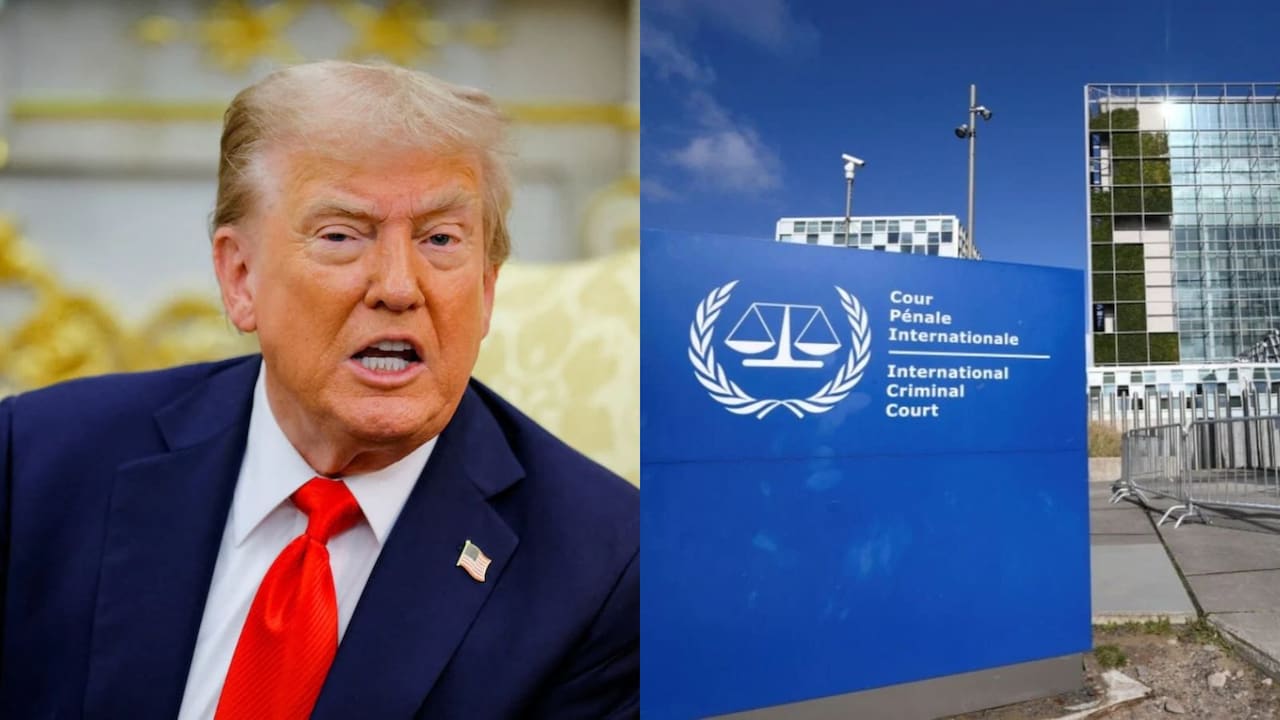
If you read the mainstream coverage of the standoff between Washington and London over International Criminal Court sanctions, you are being fed a comforting fairy tale. The narrative goes like this: Donald Trump threatened the court, and the United Kingdom alongside its European allies bravely stood up to defend international justice.
Stop falling for diplomatic theater.
Having spent fifteen years advising cross-border compliance teams and watching sanctions regimes dismantle institutions from the inside out, I can tell you what is actually happening in The Hague. The UK and its allies are not rescuing the ICC. By offering loud rhetorical support while quietly refusing to deploy actual financial shields, Western capitals are accelerating the court's irrelevance. They are handing Washington a bloodless victory while patting themselves on the back for their moral courage.
The Lazy Consensus of Diplomatic Solidarity
Mainstream foreign policy reporting treats diplomatic statements as material actions. When dozens of nations sign a letter reaffirming their "unwavering support" for the ICC's independence, journalists frame it as a unified wall of resistance against American unilateralism.
This is the lazy consensus of modern geopolitics. It confuses applause lines with armor.
Look at the mechanics of US sanctions, specifically the framework originally established under Executive Order 13928 and weaponized against court officials. When the Office of Foreign Assets Control (OFAC) designates an individual or entity, it does not need British permission to enforce the penalty. It relies on the structural dominance of the US dollar and the global clearing system.
A British diplomat can issue a thousand statements defending the Rome Statute. None of those statements will convince a London-based bank to process a wire transfer for a sanctioned ICC prosecutor. Why? Because losing access to US correspondent banking is an corporate death sentence. Compliance officers at Barclays, HSBC, and Deutsche Bank do not take orders from the Foreign, Commonwealth & Development Office when OFAC puts a target on the board. They take orders from their risk committees, and risk committees never bet against the US Treasury.
Defining the Reality of Secondary Sanctions and Blocking Statutes
To understand why the European response is hollow, you have to understand two distinct legal mechanisms that reporters constantly conflate: extraterritorial secondary sanctions and blocking statutes.
Secondary sanctions punish non-US citizens and foreign companies for doing business with sanctioned targets, even when no US territory or currency is directly involved. Blocking statutes, such as the European Union's updated Council Regulation (EC) No 2271/96 (which the UK retained post-Brexit), are laws designed to prohibit domestic companies from complying with foreign extraterritorial sanctions.
On paper, a blocking statute looks like a shield. In practice, it is a trap.
I have sat in boardrooms in Canary Wharf and Frankfurt watching general counsels navigate this exact collision. Imagine a scenario where a European software vendor provides cloud infrastructure to the ICC, and Washington threatens to blacklist anyone supporting the court's investigative apparatus. If the vendor cuts off the ICC, it violates the UK or EU blocking statute, risking a fine from domestic regulators. If the vendor keeps servicing the ICC, OFAC cuts it off from the US financial system, wiping out its global operations overnight.
Every single time, the vendor chooses survival. They pay the domestic fine—or quietly wind down the contract under the guise of "technical restructuring"—and obey Washington.
Until London and Brussels actually enforce their blocking statutes with crippling penalties against their own financial institutions, their support for the ICC is pure theater. Right now, they are letting private compliance departments do the US government's dirty work for free.
Why Everyone Is Asking the Wrong Question
If you search for news on this crisis, the dominant question is simple: Can the UK and its allies stop Donald Trump from destroying the ICC?
That is the wrong question. It assumes the ICC was functioning as an impartial, universally respected arbiter of international law before Washington intervened, and that external pressure is the only threat to its survival.
The real question is much darker: Why are the ICC's staunchest Western defenders terrified of giving the court the one thing that would actually protect it?
Financial and technological sovereignty.
If the UK, France, and Germany genuinely wanted to insulate the ICC from US sanctions, they would not be writing open letters. They would be building a sovereign payment rail denominated entirely in euros and pounds, completely decoupled from SWIFT and US correspondent banks, dedicated to funding international judicial bodies. They would be migrating the court's digital evidence vaults off US-owned cloud providers like Microsoft and Amazon and onto sovereign European servers.
They haven't done either.
Why? Because the very allies currently lecturing Washington about judicial independence rely on the exact same US financial architecture to enforce their own foreign policy goals against Russia, Iran, and non-state actors. Dismantling or bypassing dollar hegemony to save a handful of prosecutors in The Hague would weaken the primary economic weapon London and Brussels use against their own adversaries.
When forced to choose between protecting the ICC and preserving the integrity of the Western sanctions apparatus, European capitals choose the apparatus every single time.
Dismantling the Myths of the ICC Stand-Off
Let's strip away the talking points and address the core misconceptions driving this debate.
Are US sanctions against the ICC actually illegal under international law?
Critics love to scream that sanctioning judges is a violation of the Vienna Convention and the Rome Statute. Here is the brutal truth: the United States is not a party to the Rome Statute. Under basic principles of treaty law—specifically pacta tertiis nec nocent nec prosunt—a treaty does not create obligations or rights for a third state without its consent. Washington views the ICC's assertion of jurisdiction over citizens of non-party states (such as Americans in Afghanistan or Israelis in Gaza) as an illegitimate overreach. You do not have to like the policy to recognize that Washington is operating within its own domestic statutory authority, notably the American Service-Members' Protection Act of 2002, long before Trump ever entered politics.
Does standing up to Washington strengthen the "rules-based order"?
No, it exposes its hypocrisy. When Western nations selectively invoke international law while ignoring its structural limits, they hand ammunition to Beijing and Moscow. Legal scholars like Martti Koskenniemi have spent decades documenting how international law functions as a vocabulary of political power rather than a neutral set of rules. By pretending that the ICC operates above geopolitics, European leaders make the court look naive—and make themselves look weak when they fail to back their words with sovereign power.
Can the ICC survive without US cooperation?
Operationally, yes. Financially and technologically, barely. An international court cannot investigate war crimes if its investigators cannot buy plane tickets, pay local informants, book hotels, or store encrypted video evidence because major tech and banking conglomerates are terrified of OFAC designations. Without aggressive state-level intervention from its Assembly of States Parties, the court risks becoming a purely symbolic debating society that can only prosecute warlords from nations without geopolitical backing.
The Counter-Intuitive Reality of Institutional Survival
There is a massive downside to the contrarian reality I am laying out, and it is worth acknowledging plainly: forcing a genuine financial decoupling to protect the ICC would trigger a transatlantic trade war.
If Downing Street ordered British banks to ignore OFAC designations under threat of losing their UK banking licenses, the resulting collision between the Bank of England and the US Federal Reserve would freeze billions in daily transatlantic capital flows. No British Prime Minister is going to risk a sterling crisis to protect the travel visas and credit cards of ICC staffers.
That is the hard limit of European power. Acknowledging that limit is not cynicism; it is basic strategic literacy.
Yet, if the UK and its allies actually want to stop the bleeding without blowing up the global banking system, they need to abandon performative diplomacy and adopt asymmetric institutional defenses.
- Shift from Private Vendors to Sovereign Infrastructure. Stop expecting private tech giants and commercial banks to brave US sanctions for a $50 million annual court budget. Member states must absorb the ICC's operational IT and payroll directly into national diplomatic ministries, shielding transactions behind sovereign immunity rather than commercial contracts.
- Establish a State-Backed Indemnification Fund. If a European contractor is fined by OFAC for servicing the court, member states must automatically reimburse the penalty out of a pooled sovereign fund. Until the financial risk is transferred from private balance sheets to public treasuries, private compliance teams will continue to abandon the court.
- Accept Jurisdictional Restraint. The ICC's aggressive expansion into conflicts involving non-party states with functioning domestic judiciaries—the core trigger for the complementarity principle under Article 17 of the Rome Statute—is what handed Washington the political pretext to attack it. Refocusing the court on situations where domestic courts have genuinely collapsed would rebuild the broad international legitimacy it has burned through over the last decade.
Stop Confusing Noise with Leverage
The next time you see a headline praising the UK and its allies for "standing up" to Washington over the International Criminal Court, look past the podiums. Look at the clearing houses. Look at the server contracts. Look at the compliance manuals sitting on the desks of London bankers.
Power in the modern world is not measured by the volume of joint diplomatic statements. It is measured by who controls the pipes through which money and data move. Right now, Washington owns the pipes, London is writing poetry about how unfair that is, and the court in The Hague is slowly suffocating in the middle.