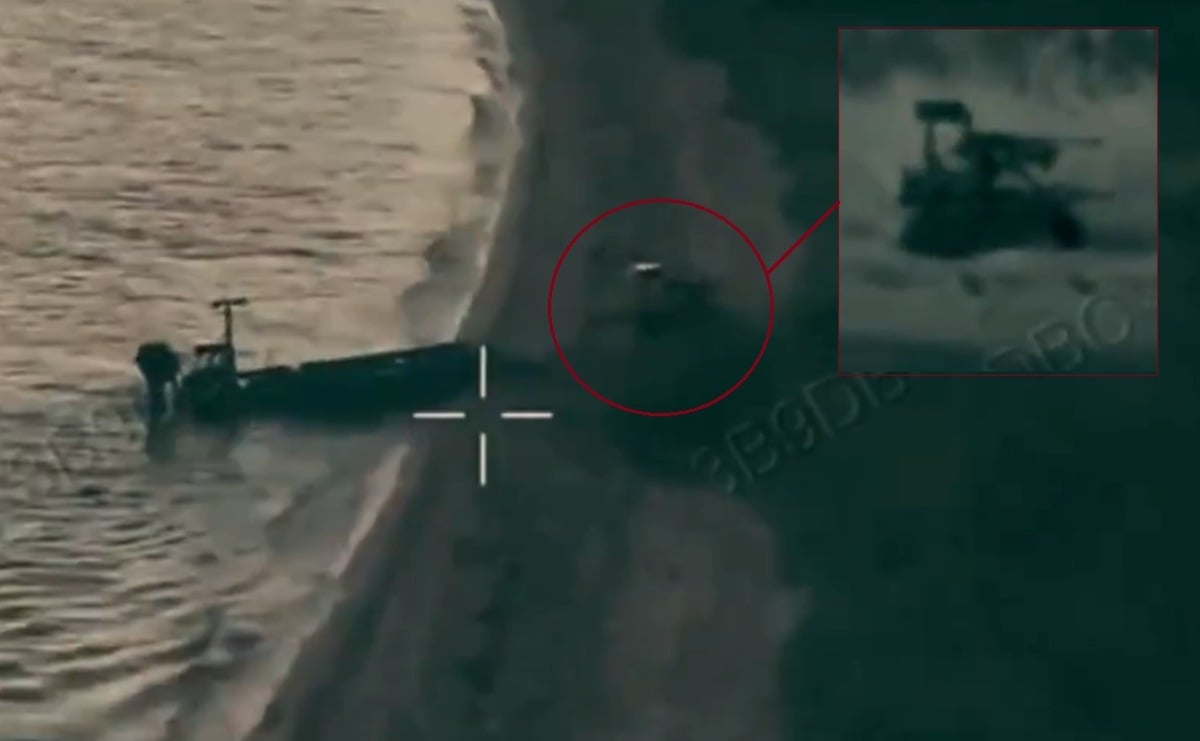
Black Sea naval operations changed forever when low-cost, explosive-laden uncrewed surface vessels (USVs) successfully breached heavily defended harbors. This was not a minor tactical shift. It was the world’s first coordinated robot assault from the sea, a campaign that effectively neutralized a traditional blue-water navy without Ukraine possessing a conventional fleet of its own. By utilizing swarm intelligence, commercial components, and satellite communication networks, these maritime drones forced a nuclear-armed superpower to relocate its primary warships away from contested coastlines.
The immediate result was the reopening of vital shipping corridors, proving that asymmetric robotic warfare can defeat multi-billion-dollar naval assets.
The Illusion of Maritime Supremacy
Traditional naval doctrine dictates that dominance requires tonnage. For centuries, nations projected power through massive hulls, heavy armor, and complex missile defense systems. The assumption was that a large warship could absorb or intercept incoming threats while projecting lethal force over the horizon.
That assumption sank in the waters off Sevastopol.
The vulnerability of modern surface fleets to low-profile, high-speed kinetic threats is now undeniable. When a vessel costing less than a high-end sports car can disable a guided-missile frigate, the economic calculus of defense collapses. Governments spend decades and billions building cruisers and destroyers, yet these platforms can be rendered useless or destroyed by a cluster of fiberglass boats guided by operators sitting in basement command centers hundreds of miles away.
This is the new reality of naval friction. Armor is too thin, and reaction times are too slow.
Anatomy of a Sea Baby
To understand how these systems bypassed standard military defenses, one must look at their construction. These are not highly classified, custom-built military vessels developed over fifteen years by legacy defense contractors. They are agile, iterative products of urgent necessity.
+---------------------------------------------------------------+
|                       MAGURA V5 USV                           |
+---------------------------------------------------------------+
|  [Low-Profile Fiberglass Hull] -> Hard to detect via radar    |
|  [Commercial Jet Ski Engine]   -> High speed, low acoustic    |
|  [Starlink/Satcom Antenna]     -> Real-time remote control     |
|  [Optical/Thermal Cameras]     -> Night operations / targeting |
|  [Front-Mounted Detonators]    -> Impact-triggered explosives  |
+---------------------------------------------------------------+
The typical Ukrainian USV, such as the Magura V5 or the Sea Baby, utilizes a sleek fiberglass hull that sits incredibly low in the water. This design serves a specific purpose. It makes them exceptionally difficult to detect by standard surface-search radars, which struggle to distinguish a small, fast-moving object from wave clutter and sea spray.
Power comes from modified commercial jet ski engines. These propulsion systems are reliable, mass-produced, and capable of pushing the craft to speeds exceeding forty knots. Furthermore, their water-jet outputs generate minimal acoustic signatures compared to traditional propellers, rendering standard passive sonar arrays largely ineffective.
The real innovation lies in the guidance system. By integrating commercial satellite communication terminals into the superstructure, operators maintain real-time video feeds and control over the vessel from secure locations inland. If one satellite network faces jamming, the systems are programmed to hop to alternate frequencies or use backup mesh networks established by nearby drones.
The payload is simple. Hundreds of pounds of military-grade explosives packed into the nose, triggered by impact fuses derived from old aviation bombs. It is a flying bomb disguised as a speedboat.
Swarm Tactics and Target Overwhelm
A single maritime drone is an annoyance. A dozen coordinated drones arriving simultaneously from multiple vectors is a catastrophe.
Defending a warship against a surface attack requires rapid identification, tracking, and engagement. Modern warships use automated close-in weapon systems (CIWS) like the Phalanx or heavy machine guns manned by sailors. However, these systems are designed to track a limited number of targets at once.
During the most successful engagements in the Black Sea, Ukrainian operators did not attack in a straight line. They utilized wolfpack tactics.
Initial waves of USVs approach a target vessel to draw its attention and fire. While the ship’s crew focuses their weapons on the visible threats to the port side, additional drones creep up from the starboard or stern quarters. The goal is to exhaust the crew's ammunition and situational awareness.
Once a single drone punches a hole at the waterline, the ship slows down. A stationary vessel is a dead vessel. Subsequent drones then target the specific breach point or strike the steering gear to ensure the ship cannot escape or return to port under its own power.
The Cheap Commercial Tech Beating Military Jamming
Electronic warfare (EW) was supposed to be the ultimate shield against uncrewed systems. By flooding the airwaves with noise, military forces can sever the connection between a drone and its pilot, causing the vehicle to lose steerage or drift aimlessly.
In the maritime environment, this defense has proven flawed.
Ukrainian engineers solved the jamming problem through a mix of optical guidance and autonomous software. When a USV approaches within a few miles of its target, it no longer relies solely on GPS or satellite feeds that are prone to localized jamming. Instead, onboard cameras utilize basic machine-vision algorithms to lock onto the contrast of a large ship against the horizon.
The drone becomes a self-guided missile. Even if the operator loses the video link completely, the internal guidance computer takes over, steering the craft toward the largest solid object in its field of view.
Additionally, the use of commercial off-the-shelf components allows for rapid software updates. If a new jamming frequency is detected on Tuesday, the drone fleet can be reprogrammed with a software patch by Thursday. Legacy military procurement cycles cannot match this speed.
The Geopolitical Shift in Shallow Waters
The strategic implications extend far beyond the Black Sea. Every nation with a coastline and a powerful neighbor is watching this conflict with intense scrutiny.
For decades, small coastal states faced intimidation from larger neighbors with substantial navies. The barrier to entry for naval defense was simply too high. Buying a single modern corvette costs hundreds of millions of dollars, a price tag out of reach for many developing nations.
Now, that equation is inverted.
A nation can build a fleet of several hundred strike USVs for the cost of one traditional patrol boat. This development shifts the balance of power toward coastal denial. It means that entering a closed body of water—such as the Baltic Sea, the Persian Gulf, or the Taiwan Strait—with large, expensive surface ships is now an incredibly high-risk proposition.
Naval superiority can no longer be assumed just because a nation possesses aircraft carriers or guided-missile cruisers. If those assets cannot get within two hundred miles of a coast without risking destruction by a swarm of cheap robots, their utility drops significantly.
The Flaws in the Drone Revolution
It would be a mistake to assume that the surface warship is entirely obsolete. Maritime drones have glaring limitations that prevent them from completely replacing traditional navies.
First, they are heavily dependent on weather conditions. High waves and rough seas severely degrade their speed and accuracy. A three-meter swell can easily swamp a low-profile USV or flip it over, rendering its optical sensors useless. Traditional warships can operate in weather that would grounded or destroy a robotic swarm.
Second, they lack endurance. While a nuclear-powered carrier or a diesel frigate can cruise for thousands of miles and remain on station for months, a USV is limited by its small fuel tank. They are excellent for coastal defense and regional interdiction, but they cannot project power across global oceans.
Finally, the defense industry is already adapting. Navies are beginning to equip their ships with specialized laser weapons, rapid-fire autocannons, and dedicated anti-drone nets designed to catch surface craft before they make impact. The window of absolute vulnerability for surface ships is closing as countermeasures improve.
Rethinking Naval Procurement
Military leadership around the globe must now reckon with their current shipbuilding programs. Buying fewer, more expensive ships is a strategy designed for a world that no longer exists.
Instead of focusing exclusively on massive hulls, future naval budgets will likely shift toward hybrid fleets. Navies will need to deploy their own defensive USVs to screen larger ships, acting as a buffer against incoming robotic swarms. The future of naval combat will involve robots fighting robots in the open water, while human crews remain further back, out of harm's way.
The era of uncontested naval power projection is over. Victory no longer belongs automatically to the side with the biggest budget or the largest ships. It belongs to the side that can innovate, adapt, and deploy massed technology faster than the enemy can adjust their radar frequencies.


